
Summary
Editor's rating
Are they worth the money?
Looks and fit: practical more than stylish
Comfort and fit: fine after break‑in, with a couple of caveats
Leather, Gore‑Tex and rubber: decent mix with a couple of quirks
Build quality and how they seem to hold up
On the trail: grip, waterproofing and real-world behaviour
What you actually get with these Berghaus boots
Pros
- Gore‑Tex lining and leather upper give reliable waterproofing in wet conditions
- Decent comfort and support after a short break‑in period
- Good all-round grip from the OPTI‑STUD rubber sole on typical hiking terrain
Cons
- Needs a bit of break‑in; ankle and top of foot can feel stiff at first
- Basic insole; many people will want to upgrade for longer hikes
- Not especially light or stylish compared to more modern trail shoes

Specifications
View full product page →| Brand | Berghaus |
Solid all‑round boots without too much fuss
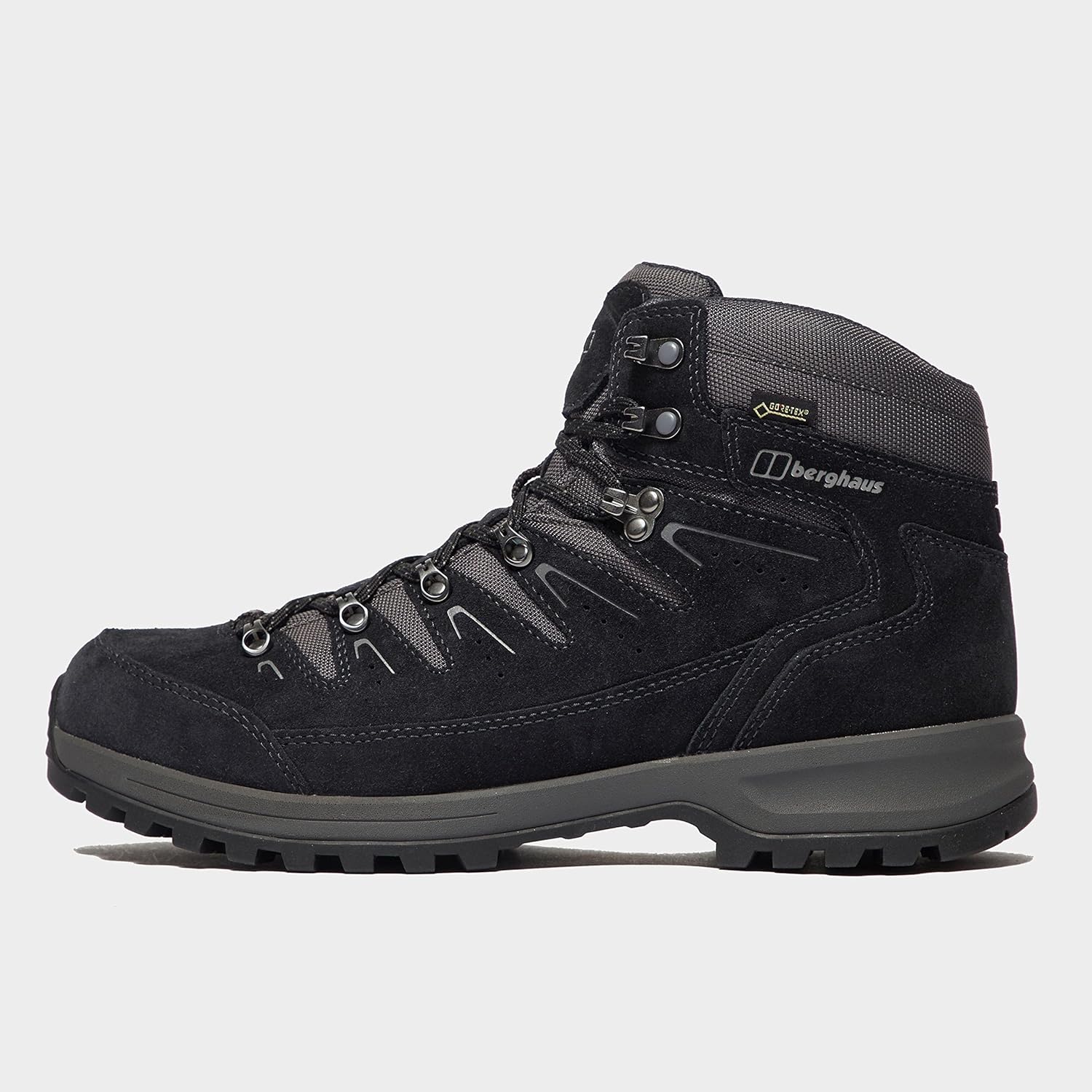
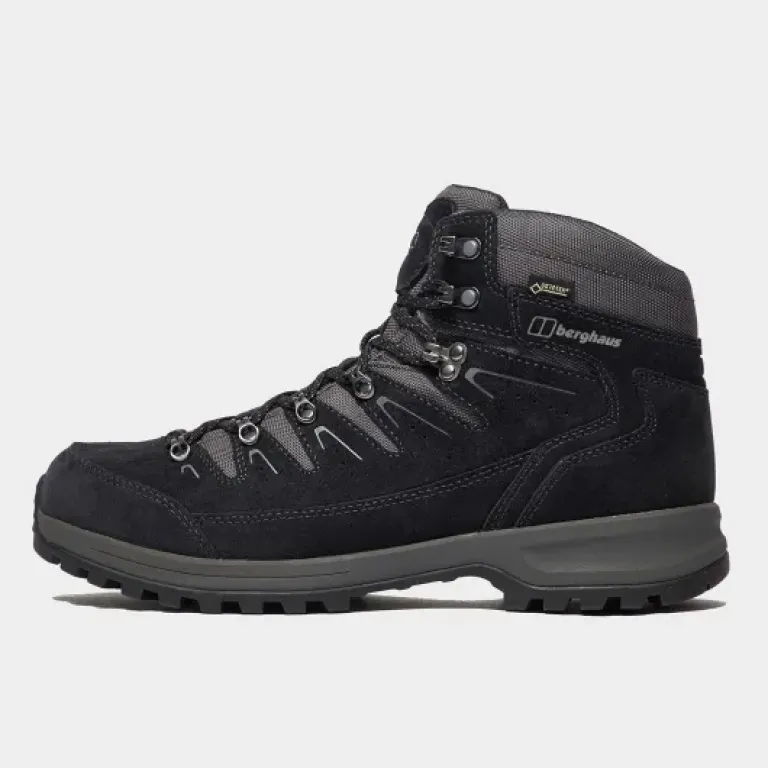
I’ve been using the Berghaus Mens 2024 Expeditor Ridge 2.0 boots in Navy Grey (size 12 UK) for a few weeks now on local trails, wet dog walks, and a couple of full‑day hikes. I’m not a mountaineer, just someone who walks a lot and hates wet socks and sore feet. I bought these mainly because they were lighter than my old clunky leather boots and had a Gore‑Tex lining.
First impression when I pulled them out of the box: they look like straightforward hiking boots. Nothing flashy, fairly neutral colours, mid-height ankle. They feel lighter in the hand than they look, which is nice when you know you’ll be wearing them 6–8 hours. The leather was a bit stiff out of the box, but that’s pretty standard for this type of boot.
I’ve used them in typical UK conditions: wet pavements, muddy woodland, gravel paths, a bit of rocky stuff, and some shallow puddles. No snow yet, but enough rain to see if the waterproofing is real or just a label. I also did a couple of longer days, around 15–18 km, to see how my feet felt at the end of it.
Overall, they’re pretty solid all‑rounders. Not perfect, and there are trade‑offs, but they get most basics right: they keep water out, they’re reasonably comfy once broken in, and the grip is decent. If you expect top‑tier mountaineering performance, you’ll be underwhelmed, but for regular hiking and dog‑walking, they mostly do what they’re supposed to do.
Are they worth the money?
Looking at the features – leather upper, Gore‑Tex lining, rubber OPTI‑STUD sole, mid-top support – and the fact they sit somewhere in the mid-range price bracket, I’d say the value is decent but not mind-blowing. You’re partly paying for the Berghaus name and for Gore‑Tex, which always bumps the price a bit compared to non-membrane boots.
What you actually get for your money:
- Reliable waterproofing (in my experience so far)
- Reasonable comfort after a short break‑in
- Good grip on typical hiking terrain
- Materials that feel like they’ll last a fair while if you look after them
Compared to cheaper non-Gore‑Tex boots I’ve owned, these do feel better built and more reliably waterproof. Compared to more expensive high-end brands, you don’t get the same premium feel or really refined fit, but you’re also not paying that premium price. So they sit in a sensible middle ground: good enough for most people who hike regularly but aren’t doing extreme stuff.
If you walk a lot in wet conditions and want one pair of boots that can handle dog walks, weekend hikes, and the odd longer trek, I think the price is fair. If you only walk a couple of times a month on dry days, you could probably get away with something cheaper. And if you’re into serious mountain adventures, you might want to invest more in something stiffer and more technical. For the average user, though, the price-to-performance ratio is pretty reasonable.
Looks and fit: practical more than stylish
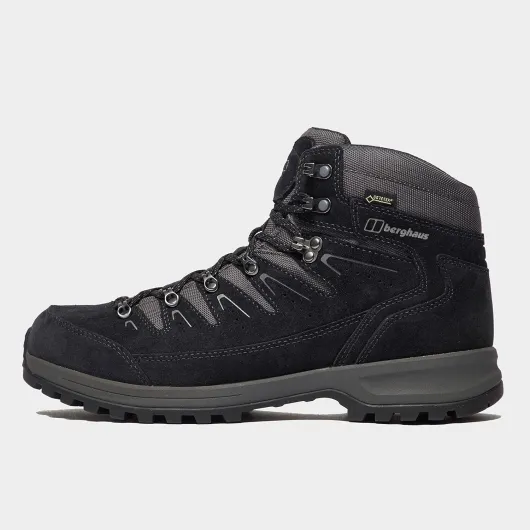
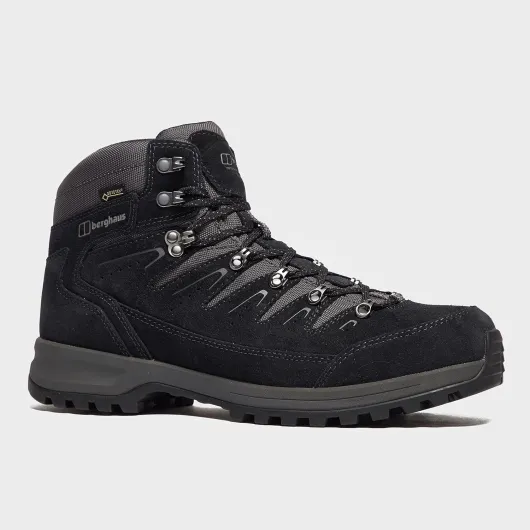
Design-wise, these are pretty low-key. The Navy Grey colour is actually quite nice in a simple way: dark blue-ish with grey accents, so they don’t scream “technical hiking boot” when you wear them into a pub or the supermarket after a walk. If you like bright colours, these won’t excite you, but if you want something that hides mud and looks decent with jeans, they’re fine.
The shape is fairly standard: round toe, mid-top ankle, slightly wide forefoot (at least on my pair). For my size 12 UK feet, they run true to size, maybe slightly on the snug side if you use thick hiking socks. I’d say if you’re between sizes or like extra room for thick socks, consider going up half a size if that’s an option. The toe box isn’t super roomy, but I didn’t get crushed toes on descents, which is usually my main issue.
The lacing system is basic but functional. You’ve got regular eyelets down low and metal hooks at the top. They allow you to get a decent heel lock if you take your time lacing. The tongue is gusseted high enough to keep out most splashes and small debris. No fancy quick-lace or hidden locks, but frankly, I prefer simple laces that are easy to replace if they snap.
One thing I noticed is that the boots look a bit “blocky” compared to some more modern, trainer-style hiking shoes. That’s not a big deal on the trail, but if you’re picky about style, they lean more towards old-school hiking boot than sleek outdoor sneaker. For me, that’s fine – function first, looks second – but if you’re hoping for something that passes as everyday fashion footwear, they’re a bit too obviously outdoorsy.
Comfort and fit: fine after break‑in, with a couple of caveats
Out of the box, comfort was okay but not great. The leather was a bit stiff, especially around the ankle and across the top of the foot. On the first 2–3 walks (around 5–7 km each), I could feel some pressure points near the top lace hooks and a bit of rubbing on the heel. Not full-on blisters, but enough to remind me I was breaking in new boots. I wore mid-weight hiking socks and that helped a lot.
After about a week of on-and-off use, they loosened up. The heel hold improved once the padding settled, and the flex point at the ball of the foot felt more natural. On a 15 km hike with mixed terrain, my feet were tired by the end (that’s normal), but I didn’t have hot spots or serious pain. The EVA midsole gives reasonable cushioning – not super soft, but enough that you don’t feel every rock. If you’re used to trail runners, these will feel firmer; if you’re used to heavy leather boots, they’ll feel lighter and more forgiving.
The arch support is moderate. If you’ve got very flat feet or weird arches (like me), you might want to swap the insole for something more supportive. With my own aftermarket insoles, comfort jumped up a level, especially on longer days. The standard insole is just decent – it gets the job done, but it’s nothing special. For shorter walks, it’s fine; for big days out, I’d upgrade.
One small downside: the ankle padding is quite firm at first. If you lace them too tight early on, you’ll feel it digging in a bit. My advice: for the first few walks, don’t crank the top hooks too tight, let the boot mould to your ankle, and then gradually increase tension once the material softens. After break‑in, ankle comfort was good and I felt supported without feeling locked in a cast.
Leather, Gore‑Tex and rubber: decent mix with a couple of quirks
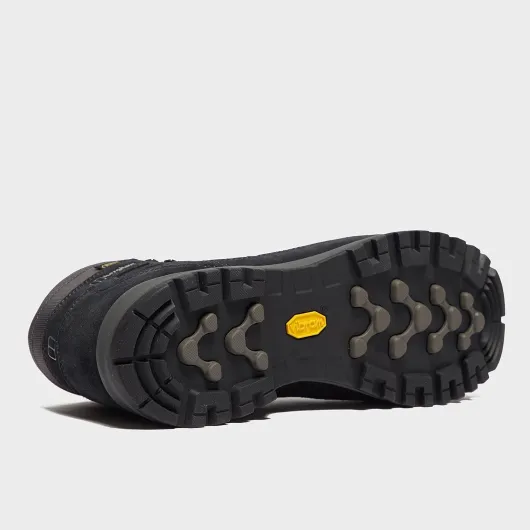
The upper is mostly leather with some synthetic bits, and the lining is synthetic with a Gore‑Tex membrane. The sole is rubber with Berghaus’ OPTI‑STUD pattern, and the insole is manmade foam. On paper, that’s a pretty standard recipe for mid-range hiking boots, and in practice it feels that way too – nothing fancy, but generally solid.
The leather itself felt slightly stiff out of the box, but after a few walks it softened up nicely around the flex points. It’s not super thick, so that’s where a lot of the “lightweight” feel comes from. The trade-off is that it doesn’t feel as bombproof as heavier full-grain leather boots. I wouldn’t be kicking sharp rocks all day in these, but for paths, hills, and forest tracks, they’re fine. The suede/rubber mix around the toe gives a bit of extra protection, but it’s not a full rand.
The Gore‑Tex lining does its job: water stays out, and sweat mostly escapes. After a couple of long, wet walks, the outside was soaked but the inside stayed dry, which is basically what you want. Breathability is good for a waterproof boot, but it’s still a waterproof boot – on warm days, my feet did get warm, just not unbearably so. If you run very hot, you’ll notice it, but for cool and wet weather, the balance is fine.
The rubber sole feels durable enough. The lugs haven’t worn down much after several outings on mixed terrain. The midsole (EVA) gives some cushioning but it’s not super plush; it’s more on the firm side, which I actually like for stability. If you want a very soft, bouncy feel, you might be a bit underwhelmed. Overall, the material choice is sensible: they’ve cut weight without going too flimsy, but they’re not tanks either.
Build quality and how they seem to hold up
I haven’t had these for years obviously, but after a few weeks of regular use, I can at least comment on early durability. So far, the stitching is holding up fine, no loose threads, no peeling at the seams. The leather has picked up the usual creases around the flex points, but nothing that looks like it’s going to crack anytime soon. A quick clean and a bit of conditioner or proofing spray brings them back to looking decent.
The sole wear is minimal after several walks on mixed terrain (tarmac, gravel, mud, forest tracks). The lugs still look sharp, and there are no chunks missing. The bond between the sole and the upper looks clean and solid; I haven’t seen any signs of separation or gaps. Given the weight and build, I’d expect these to last a couple of hiking seasons with regular weekend use, maybe longer if you look after them and don’t abuse them on sharp rock all the time.
One thing to watch with boots like this is the Gore‑Tex lining. On some older boots I’ve owned (not Berghaus, to be fair), the lining eventually wore through at the heel from friction, and that’s when they start leaking. On these, the heel area feels reasonably well padded, so hopefully that slows down wear. Too early to say for sure, but there’s nothing worrying at the moment.
Overall, the build quality feels pretty solid for the price bracket. They don’t have the tank-like feel of very heavy leather boots, but they’re not flimsy fashion boots either. If you clean them occasionally, let them dry properly (not on a radiator), and maybe reproof the leather now and then, I don’t see any obvious reason they wouldn’t last a good while for normal hiking and everyday wet‑weather use.
On the trail: grip, waterproofing and real-world behaviour
In actual use, these boots do most of the important stuff well. Grip from the OPTI‑STUD sole is solid on typical UK terrain. On wet grass, muddy paths, and gravel, I felt stable. The lugs are deep enough to bite into soft ground, and they shed mud reasonably well. On wet rock, they’re okay – not magical, but I didn’t feel like I was skating around. Obviously, if you step on smooth, mossy rock, nothing will save you, but for normal conditions they’re fine.
The big question with any Gore‑Tex boot is waterproofing. So far, these have been properly waterproof. I’ve walked through wet fields, shallow puddles, and steady rain for a few hours, and my socks stayed dry. The gusseted tongue helps keep water out unless you go over the top. The only time I got damp feet was when water went in from above when I stepped in a deeper-than-expected puddle – that’s on me, not the boot.
Breathability is decent for a waterproof leather boot. On cooler days (under 10–12°C), no issues at all. On milder days (around 15–18°C), my feet got warm but not soaking with sweat. If you plan to hike a lot in hot summer conditions, a lighter fabric boot or trail shoe will obviously be more comfortable, but for autumn/winter and wet spring, these are in their element.
Stability-wise, the mid-top height and reasonably stiff sole give good support on uneven ground. I didn’t feel my ankles rolling around on rocky paths. At the same time, they’re not so stiff that walking on tarmac feels horrible. You can wear them for a mix of road and trail without feeling like you’re in mountaineering boots. For casual walkers and weekend hikers, the performance is pretty solid. If you’re carrying very heavy loads or going into very rough terrain, you might want something stiffer and more protective.
What you actually get with these Berghaus boots
On paper, these are marketed as lightweight leather waterproof walking boots with Gore‑Tex and a rubber sole. Size 12 UK in Navy Grey, mid‑top height, flat heel, ankle support, and a listed weight around 1–1.1 kg for the pair. They sit in that middle ground between chunky mountain boots and flimsy trail shoes. They’re meant for general hiking, not technical climbing.
In the hand and on the foot, they match the spec fairly well. The upper is mainly leather with some synthetic panels, and the lining is synthetic with Gore‑Tex for waterproofing. The sole uses Berghaus’ OPTI‑STUD pattern, which is basically a bunch of medium-depth lugs arranged to shed mud and still grip on rock and wet paths. Lacing is standard: fabric loops and a couple of metal hooks at the top for ankle lock.
They come with a basic manmade insole – nothing fancy, just a bit of foam with light shaping. The shaft height is around the ankle, so you get some support without feeling like you’re in ski boots. They’re clearly made for autumn/winter use, but I’ve worn them on warmer days and my feet didn’t overheat too badly, thanks to the breathable lining and the not-too-thick padding.
From a positioning point of view, I’d say they’re aimed at people who do:
- Regular weekend hikes on mixed terrain
- Daily dog walks in wet grass and muddy fields
- Occasional longer treks but not heavy alpine stuff
Pros
- Gore‑Tex lining and leather upper give reliable waterproofing in wet conditions
- Decent comfort and support after a short break‑in period
- Good all-round grip from the OPTI‑STUD rubber sole on typical hiking terrain
Cons
- Needs a bit of break‑in; ankle and top of foot can feel stiff at first
- Basic insole; many people will want to upgrade for longer hikes
- Not especially light or stylish compared to more modern trail shoes
Conclusion
Editor's rating
After using the Berghaus Mens Expeditor Ridge 2.0 boots for a while, my overall take is simple: they’re good, honest hiking boots that do the basics well without trying to be fancy. They keep water out, they grip well enough on most terrain, and once you’ve broken them in, they’re comfortable for full days on the trail. They’re not super light, not super stylish, and not built like tanks, but they hit a sensible middle ground that will suit a lot of everyday walkers.
They make the most sense if you regularly walk in wet, muddy conditions and want one pair of boots that can handle dog walks, weekend hikes, and general bad-weather use. If you’re expecting top-level performance for mountaineering or carrying heavy loads over very rough ground, these aren’t the right tool. And if you only do the odd short stroll on dry paths, you could probably save money with something simpler.
For me, they sit firmly in the “pretty solid and practical” category. Not something I’m raving about, but also not something I regret buying. If you go in with realistic expectations – mid-range boot, mid-range price, reliable waterproofing – you’ll likely be satisfied with what you get.