
Summary
Editor's rating
Is it worth the money compared to other hiking boots?
Classic look, wide shape, and a few design choices you should know about
Wide, comfy fit with a few early hotspots
Leather upper, rubber sole, and how it actually feels in hand
Solid leather, but real concerns about the sole and glue
Waterproofing, grip, and real-world hiking performance
What you actually get when you open the box
Pros
- Wide toe box that actually suits broader feet and reduces toe crushing, especially on descents
- Comfortable once broken in, with reasonable cushioning for everyday use and moderate hikes
- Leather upper and KEEN.Dry membrane provide good waterproofing for wet grass, mud and rain
Cons
- Reports of sole/tread glue failing and peeling after relatively low mileage
- Tongue can be uncomfortable at first and needs a noticeable break-in period
- Tread pattern and underfoot protection are only moderate for very rocky or technical terrain

Specifications
View full product page →| Brand | KEEN |
Leather hikers for people with wide feet and wet weather
I’ve been using the KEEN Pyrenees Mid Waterproof boots (men’s, size 9 UK, Syrup colour) as my main walking boots for a while now. I’ve taken them on muddy woodland paths, a few rocky trails, and plenty of rainy dog walks. I bought them because I have slightly wide feet and was fed up with narrow hiking boots crushing my toes after an hour. KEEN is known for a roomier fit, so I wanted to see if that reputation actually holds up in normal day-to-day use.
Out of the box, they look like classic leather hiking boots, nothing flashy. I treated the leather with dubbin before the first real outing, mostly because I don’t trust any boot’s waterproof marketing until I’ve helped it along a bit. First impressions on foot were positive: they felt solid but not like bricks, and the toe box actually gave my toes some breathing room. That alone already put them ahead of a lot of mid-priced boots I’ve tried.
Over the first week I wore them almost every day: short urban walks, wet parks, and one 10–12 km hike on mixed gravel and muddy track. They stayed dry, and the comfort was decent right away, but there were a couple of pressure points – especially around the tongue – that only calmed down after a few outings. So they’re not perfect straight from day one, but they break in reasonably fast if you use them regularly.
Overall, my feeling is that these boots are good for wide feet and wet conditions, but there are some trade-offs. The grip is okay but not super aggressive, the sole protection could be better on rocky ground, and I do have some concerns about long-term durability based on other users’ reports and the way the sole is glued. If you want a leather boot for mixed use and you struggle with tight toe boxes, they’re worth a look – but if you do big mileage or very rough terrain, I’d be a bit cautious.
Is it worth the money compared to other hiking boots?
In terms of price, the KEEN Pyrenees usually sit in the mid-range: not bargain-bin cheap, but not at the top end either. For that money, you’re getting a full leather waterproof boot with a wide fit, which is already a plus if your feet don’t get along with narrow brands. If you compare them with similarly priced models from Columbia, Merrell, or some entry-level Scarpa, they hold their own on comfort and general build. The big value add here is the wide toe box and out-of-the-box comfort (after a short break-in), which is something many other boots still don’t handle well.
Where the value starts to wobble is when you factor in the durability questions around the sole and the glue. If you’re unlucky and your pair ends up like the reviewer who had the tread peeling in under 100 miles, then the value is terrible – a boot that fails that fast isn’t worth any price. To be fair, that doesn’t happen to everyone, and Amazon returns seem smooth if there’s a clear defect. But it’s still a risk. If you’re someone who hikes a lot and expects a boot to last several seasons of regular use, that risk matters.
For lighter users – people who want an everyday leather boot that can handle wet weather, dog walks, occasional hikes, and general outdoor use – the value is better. They’re comfortable, they look decent, and they keep your feet dry for that kind of use. In that context, the price feels reasonable. If you compare to a cheaper synthetic boot, you pay more here but get nicer materials and a more comfortable wide fit.
So, value-wise, I’d sum it up like this: good deal if you have wide feet, mostly do moderate walks, and are okay with keeping an eye on the sole over time. Less attractive if you want a long-distance workhorse or you’re hard on your boots. There are tougher options out there for serious mileage, but they might not be as comfortable for wide feet or as easy to wear day-to-day.
Classic look, wide shape, and a few design choices you should know about
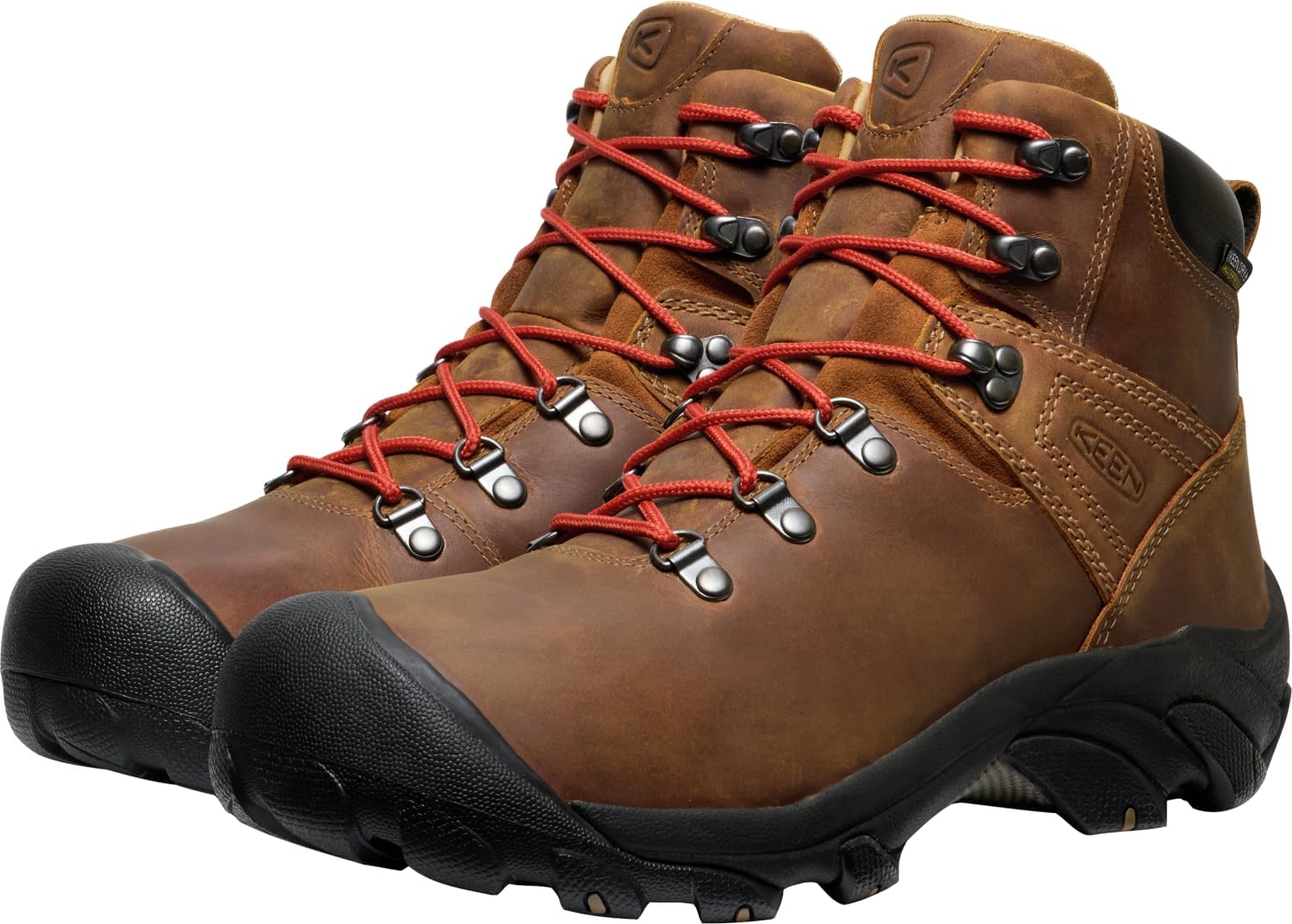
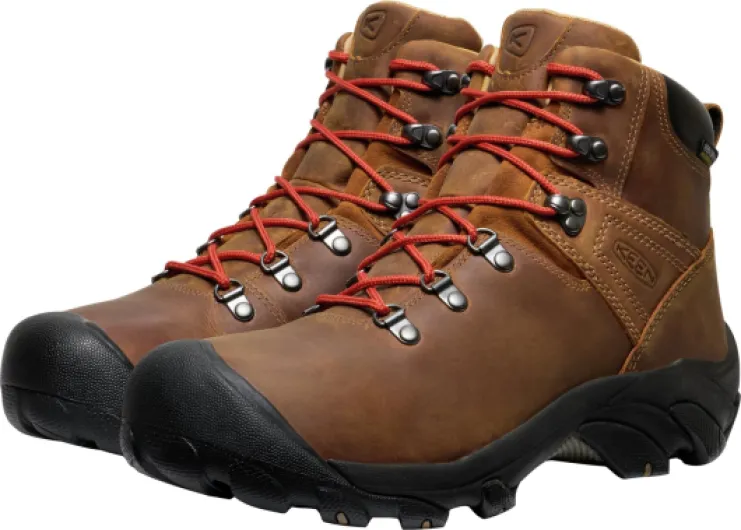
Design-wise, the Pyrenees sit firmly in the “old-school leather hiker” category. The Syrup colour is a straightforward brown that goes fine with jeans or hiking trousers, so you can wear them as everyday boots without looking like you just came off a glacier. The leather is smooth rather than heavily textured, and the stitching is fairly clean. There’s a small KEEN logo on the side and heel, plus another on the tongue, but it doesn’t dominate the look. If you like understated gear, it does the job.
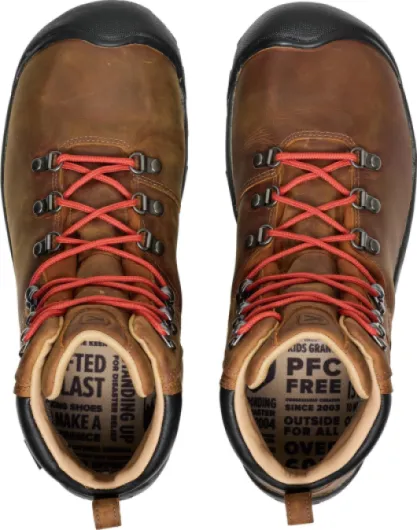
The most obvious design feature is the wide toe box. The front of the boot is rounded and fairly generous, which is good news if normal boots pinch your toes. It also means the boot looks a bit chunky from above. Personally I don’t care – I’d rather have comfortable toes than a sleek silhouette – but if you like slim, narrow boots, this shape may feel a bit clumsy. The last (the shape of the footbed) is clearly built for comfort and space rather than a narrow performance fit.
The lacing system is standard: fabric/metal eyelets at the bottom, then metal hooks at the top. They’re easy to tighten and loosen, and you can play with different lacing patterns if you have high insteps or hotspots. However, the tongue is quite padded and stiff at first, and a couple of users (and me) noticed some pressure at the front of the ankle during the first few walks. That goes away after some break-in, but it’s something you feel early on. The boot is mid-height, so you get decent ankle coverage without feeling like you’re wearing ski boots.
The sole design is where I’m a bit mixed. The tread is okay for light mud, gravel and forest paths, but it’s not super deep. On wet rock or very slippery mud, it’s decent but not outstanding. For everyday walking and moderate trails it’s fine, but if you do a lot of steep, technical terrain, you might find the grip and underfoot protection a bit lacking. Overall, the design is practical and comfortable-focused, but not built as a hardcore mountain boot.
Wide, comfy fit with a few early hotspots
Comfort is where these boots do pretty well, especially if you have wider feet. I’m slightly wide at the front and usually end up going half a size up in other brands just to get some toe space. With the Pyrenees in my normal size, my toes finally had room without my heel swimming around. The wide toe box is the main selling point for me. I can walk downhill without my toes ramming into the front of the boot, which is a big deal on longer hikes. Several other users mentioned the same thing: no toe crushing, and good for people with wider-than-average feet.
However, it’s not perfect out of the box. The first 2–3 outings, I had some pressure on the front of my ankle from the tongue, especially when I laced them tightly. This matches a couple of Amazon reviews that mentioned the tongue being uncomfortable for a while. In my case, after maybe 30–40 km, that pressure settled down as the tongue softened and shaped to my leg. One user said it took about 40 miles, which sounds about right. So expect a break-in period, especially around the tongue and top of the foot.
Underfoot, the cushioning is okay. Not super plush, but not harsh either. On mixed terrain like gravel tracks and forest paths, I didn’t feel beaten up at the end of a 10–12 km walk. On very rocky ground, you can feel some sharper stones if you’re heavier or carrying a big pack, which is where a more supportive insole helps. The ankle support is moderate: enough to stop your ankle from rolling easily on uneven ground, but flexible enough for normal everyday walking. They’re lighter than they look (about 20 oz per boot), so you don’t get that heavy, dragging feeling.
In terms of heat and moisture, the KEEN.Dry membrane and the lining do a decent job of keeping things under control. My feet stayed dry in wet conditions, and while they got warm on longer walks, they never felt like a sauna. For an all-leather waterproof boot, breathability is “good enough” but not airy. Overall, I’d rate comfort as one of the stronger points: very good toe room, decent cushioning, but you do have to put up with a break-in phase.
Leather upper, rubber sole, and how it actually feels in hand
The upper is full leather, and that’s one of the main reasons I picked this model. It feels reasonably thick and sturdy, not like the thin faux-leather you get on cheap boots. KEEN says the leather comes from Leather Working Group certified tanneries, which basically means they care a bit about sourcing and process. You can see from the surface that it will take wax or dubbin well, and it does soften after a few wears. The lining is listed as leather too, but in practice it feels like a mix of leather and fabric in some areas, especially around the collar where they’ve padded it.
Inside, the insole is EVA – standard foam. It’s okay for casual use, but if you have fussy feet or do longer hikes, you might want to drop in your own insoles. I swapped mine for a more supportive aftermarket pair after a few longer walks and found that helped with underfoot fatigue. The boot uses KEEN.Dry, their waterproof/breathable membrane. It’s similar in idea to Gore-Tex: keeps water out, lets sweat out. In real use, my feet stayed dry through puddles, wet grass and steady rain, but like most membranes, your feet will still get a bit warm if you’re pushing hard.
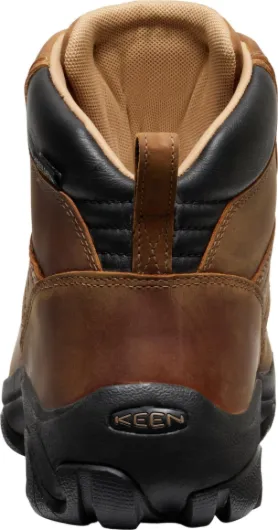
The sole is rubber with a medium-depth tread. It’s flexible enough to walk comfortably on pavements and hard paths, but not so soft that you feel every tiny stone. That said, some heavier users (one review mentioned being 16 stone) felt that the sole could use more protective cushioning against sharp stones. I’d agree that it’s more on the “comfortable all-rounder” side than the “rocky mountain specialist” side. The bonding between the tread and the rest of the sole is where there are some question marks: at least one detailed review reported the tread starting to peel away after under 100 miles, which suggests the glue or construction isn’t the toughest.
KEEN also pushes their Eco Anti-Odor treatment, which is a probiotic approach to reducing smell. I don’t know how much of that is marketing, but after regular use mine didn’t stink any worse than other boots, so at least it doesn’t hurt. Overall, the materials feel solid for the price, but I wouldn’t call them bombproof. The leather is the highlight; the sole and glue are the parts I’d watch over time.
Solid leather, but real concerns about the sole and glue
Durability is where these boots get a mixed review from me. On the positive side, the leather upper itself holds up well. With regular brushing and some wax/dubbin, it resists scuffs and softens nicely without feeling flimsy. I’ve scraped them against rocks, gone through mud, and flexed them a lot, and the leather hasn’t cracked or done anything weird. If you look after it – wipe them down, dry them away from direct heat, and condition the leather now and then – I can see the uppers lasting a good while.
The weak point seems to be the connection between the sole and the upper, and the tread layer itself. One long, detailed Amazon review describes the tread splitting from the sole and peeling away in under 100 miles of fairly normal Scottish hillwalking (medium difficulty grassy or gravel tracks in decent weather). That’s not a brutal test, and if the glue fails in that scenario, it’s a real concern. Once the tread starts to separate, water can creep in, and you basically end up walking in a puddle, which is exactly what that reviewer reported happening in the first autumn downpour.
Personally, I haven’t hit that failure point yet, but I’ve kept an eye on the join between the sole and the leather. There are a couple of areas where the bond looks slightly less tidy, and that matches the general theme of “good but not bulletproof” construction. If you only use these boots for regular weekend walks, dog walks, and moderate trails, they might last you fine. If you’re doing big mileage in wet, rough conditions, I’d be cautious. KEEN apparently changed their glue process on newer models, but I can’t verify if this specific version benefits from that fully.
One smaller but practical annoyance: the Syrup colour is a bit awkward to match with standard brown polishes. One reviewer had to switch to a clear Scarpa product after a few failed attempts to colour-match. Not a deal-breaker, but something to note if you care about keeping them looking neat. Overall, I’d say the leather durability is good, but the sole and glue are a potential weak link. For light to moderate use, probably fine; for heavy, long-term hiking, I’d want something more proven.
Waterproofing, grip, and real-world hiking performance
Performance-wise, I mainly care about three things: waterproofing, grip, and support over a few hours of walking. On the waterproof side, the Pyrenees have done their job for me so far. I treated them with dubbin before serious use, then walked through wet grass, mud, and ankle-deep puddles. My feet stayed dry, and the leather didn’t soak through quickly. Several Amazon reviews back this up: people mention dry feet in snow, mud, and big puddles. Where it gets tricky is long-term performance and how well the sole connection holds up, which I’ll cover more in the durability section.
Grip is decent but not aggressive. On wet pavement, forest tracks, and normal muddy paths, I had no real issues. The tread pattern is medium-depth and works fine for everyday and moderate hiking. On very slippery, clay-like mud or wet smooth rock, you can feel the limits – it’s not a technical mountain sole. One heavier user pointed out that the sole could be a bit more protective against sharp stones, and I tend to agree after trying them on some rockier sections. You feel a bit more of the ground than you would with a stiffer, more mountain-focused boot.
Support is in the middle ground. The mid-height shaft and lacing give reasonable ankle stability without locking you in too much. I never felt like my ankle was loose, but I also didn’t feel like I was in a rigid boot. For half-day to full-day hikes on mixed terrain, that balance works well. For heavy backpacking or very rough trails, you might want something stiffer and with a chunkier sole. Where these do shine is as an “everyday boot that can hike”: you can wear them for daily use, dog walks, and then head onto a trail without swapping footwear.
The one big performance red flag comes from the negative reviews about the sole glue failing and the tread starting to peel after under 100 miles. I haven’t had that happen personally yet, but it’s mentioned in detail by at least one user, and others hint at similar issues. If the tread starts to separate, not only do you lose waterproofing, but the whole boot becomes useless for serious hiking. So in pure performance, I’d say: good comfort and waterproofing for moderate use, but I wouldn’t fully trust them for very long-distance or harsh conditions until you’ve seen how your pair holds up over the first few hundred kilometres.
What you actually get when you open the box
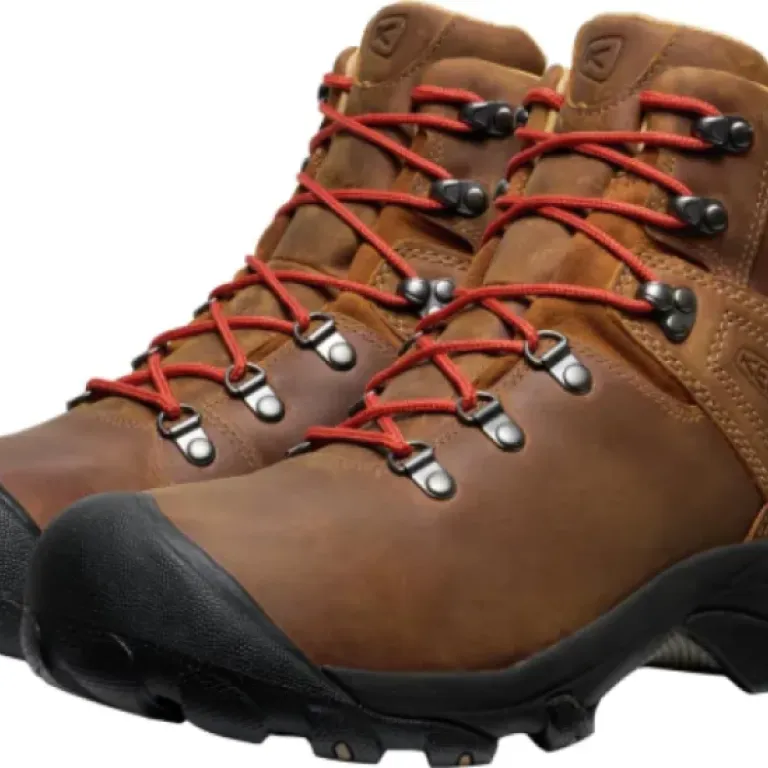
The KEEN Pyrenees arrive in a pretty standard shoebox, nothing fancy. Inside you get the two boots, paper stuffing, and in my case just one set of laces (some reviews mention two sets, but mine only had one, so don’t count on the extra pair). The boots themselves look like classic mid-height leather hikers: round toe, fairly simple stitching, and that dark brown “Syrup” colour that sits somewhere between chocolate and chestnut. There’s a discreet KEEN logo on the side and heel, but nothing that screams for attention.
Out of the box, the leather feels reasonably thick and a bit stiff, as you’d expect from a new leather boot. It doesn’t feel cheap or plasticky, and there are no obvious glue blobs or loose threads. The rubber sole is quite flat in profile with a moderate tread pattern. If you’re used to aggressive Vibram-style lugs, this one looks more like a general hiking/urban mix rather than a pure mountain sole. The insole is basic EVA – not terrible, but nothing special.
One thing you notice quickly is the shape. KEEN’s “Original Fit” is wider in the forefoot than most brands, and you can see the toe area is more rounded and a bit bulbous compared to, say, Salomon or Scarpa. If you have narrow feet, it might look and feel a bit roomy; if you have wide feet, it’s a relief. The shaft height is ankle-level, enough to cover the ankle bone and give some support without feeling like a full high-cut boot.
In terms of first impression, I’d call the presentation practical and straightforward. No fancy extras, no premium unboxing vibe, just a solid-looking leather boot ready to be broken in. If you like simple, traditional outdoor gear and don’t care about flashy designs, you’ll probably be fine with how these show up. If you’re expecting premium packaging or high-end finishing details, this isn’t that – it’s more workhorse than display piece.
Pros
- Wide toe box that actually suits broader feet and reduces toe crushing, especially on descents
- Comfortable once broken in, with reasonable cushioning for everyday use and moderate hikes
- Leather upper and KEEN.Dry membrane provide good waterproofing for wet grass, mud and rain
Cons
- Reports of sole/tread glue failing and peeling after relatively low mileage
- Tongue can be uncomfortable at first and needs a noticeable break-in period
- Tread pattern and underfoot protection are only moderate for very rocky or technical terrain
Conclusion
Editor's rating
The KEEN Men’s Pyrenees Mid Waterproof boots are basically wide-fit leather hikers that double as everyday boots. The main strong point is comfort for broader feet: the toe box is roomy, downhill walking doesn’t crush your toes, and once the tongue softens up, they feel good for multi-hour walks. Waterproofing is solid for typical use – wet grass, mud, puddles – especially if you help the leather with a bit of dubbin or wax. They also look simple enough to wear into town without feeling like you’re in full mountain gear.
On the downside, they’re not perfect. There’s a noticeable break-in period around the tongue and front of the ankle. The sole grip is fine for general hiking, but not super aggressive for technical terrain. The bigger worry is long-term durability of the sole and glue: some users have had the tread start to peel away in under 100 miles, which kills both waterproofing and overall usefulness. If your pair is fine, you get decent value; if you hit that defect, it’s a headache, even if the return process is easy.
I’d recommend these boots to people with wide or problem feet who want a comfortable, leather, mid-height boot for mixed use: dog walks, weekend hikes, and general wet-weather wear. If you’re a heavy hiker, do long distances, or spend a lot of time on rocky, demanding terrain, I’d be more cautious and maybe look at sturdier models from brands like Scarpa, Meindl or a higher-end KEEN with improved sole bonding. In short: good comfort and fit, decent performance, but with some question marks on how long they’ll last if you really hammer them.