
Summary
Editor's rating
Good value if you need wide, waterproof leather boots – less so if you want light and sporty
Chunky, classic look with a wide toe and ankle height
Wide and stable, but needs break-in and isn’t super light
Thick leather upper and rubber sole: tough but not lightweight
Built to last if you look after the leather
Waterproofing and grip are decent, but it’s not a fast hiker
What you actually get with the KEEN Pyrenees
Pros
- Very roomy toe box and overall wide fit, great for wider feet
- Durable oiled leather upper with solid waterproof performance in everyday hiking conditions
- Stable and protective with good ankle support and bump toe protection
Cons
- Heavier and stiffer than many synthetic alternatives, noticeable on longer hikes
- Requires a break-in period; not instantly comfortable for everyone
- Marketing around "barefoot" feel is misleading – it’s more traditional than minimalist

Specifications
View full product page →| Brand | KEEN |
Sturdy hiking boots that feel more old-school than the photos suggest
I’ve been using the KEEN Women's Pyrenees Hiking Boot in size 4 UK (colour Syrup) mainly for weekend walks, a couple of muddy hikes, and day-to-day wear in bad weather. On paper, it’s sold as a waterproof leather hiking boot with a kind of "barefoot" ground feel. In reality, it’s more of a classic chunky leather boot with a roomy fit than a true minimalist shoe. If you’re expecting a super light, sock-like feel, that’s not what you get here.
My feet: I’ve got fairly wide forefeet, slightly high instep, and I usually struggle with narrow hiking boots that squeeze my toes. That’s actually where KEEN boots usually shine, and this model is no different. The first thing I noticed is the generous toe box. My toes had space to move around, even with thick hiking socks. No pinching on the sides, which is rare for me in this size range.
I used these boots in typical mixed weather: wet grass, light rain, a bit of rocky path, plus regular city pavements. Over a few weeks, I wore them roughly 3–4 times a week, often for 1–3 hour walks. So not an extreme mountain test, but enough to see how they behave in real life. I also compared them mentally to my usual lighter synthetic hikers (Salomon) and an older pair of leather boots (Merrell).
Overall first impression: solid, protective, and clearly built to last, but definitely not the light, flexible “barefoot-style” experience the description hints at. If you want a tough leather boot with a wide fit, it’s promising. If you’re chasing ultra-flexible minimalist shoes, you’ll probably be disappointed. The rest of the review goes into the details: design, materials, comfort, performance, durability, and whether it’s worth the money.
Good value if you need wide, waterproof leather boots – less so if you want light and sporty
Price-wise, the KEEN Pyrenees sits in the mid to upper range for hiking boots, depending on the deal you find. For that money, you’re basically paying for: full leather construction, waterproofing, and the wider KEEN fit. If those three things matter to you, it’s a fairly good package. If you don’t specifically need leather or a wide toe box, there are lighter and cheaper options from other brands that might suit you better.
Compared to my synthetic Salomon hikers, the KEENs feel more durable and more protective, especially in bad weather, but also heavier and less breathable. The Salomons were cheaper but didn’t last as long before the mesh started to tear. So, from a long-term cost-per-year perspective, the KEENs could end up being better value if you keep them for several seasons. The Amazon rating of 4.2/5 with over 1,600 reviews also suggests most people feel they get their money’s worth, with some outliers who clearly didn’t.
Where the value feels slightly off is the mismatch between the marketing language about "barefoot" feel and what you actually get. This is not a true minimalist boot. It’s a solid, traditional-feeling leather boot with a bit more ground feedback than some, but that’s it. If you buy it expecting a super flexible, ultra-light shoe, you might feel you overpaid for something that doesn’t match that promise. If you buy it as a sturdy, waterproof leather hiking boot with a roomy fit, it makes more sense.
So in terms of value: I’d say good, but not outstanding. It’s worth it if your priorities are durability, waterproofing, and toe space. If you mainly care about weight and all-day speed, your money might be better spent on a lighter synthetic model, even if it doesn’t last quite as long.
Chunky, classic look with a wide toe and ankle height
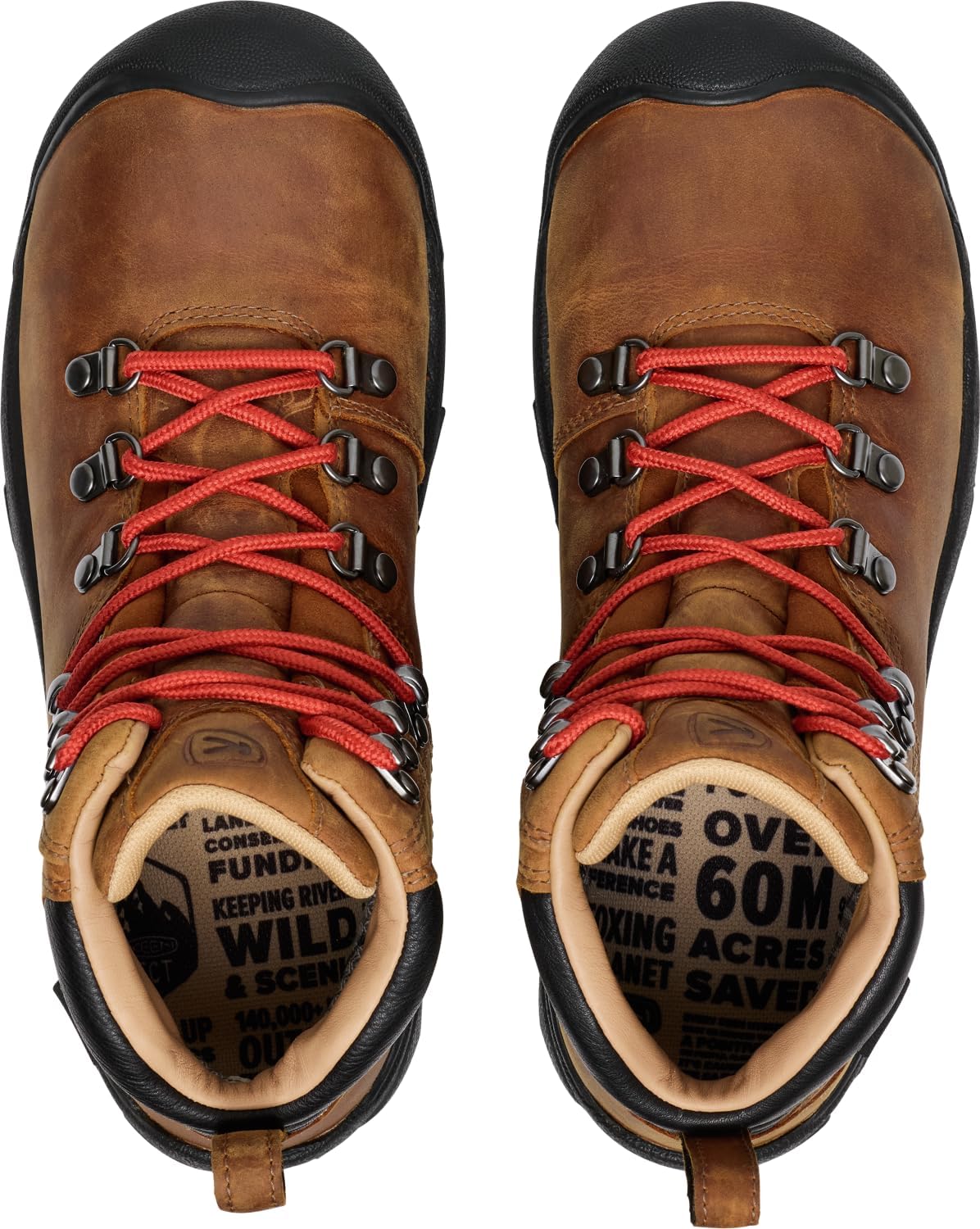
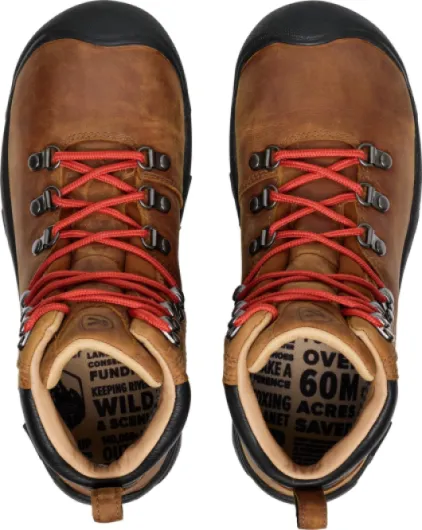
Design-wise, the KEEN Pyrenees is very much a classic hiking boot. Ankle-high shaft, lace-up closure, round bump toe, and a fairly thick rubber outsole. Nothing flashy, no bright colours or big logos. The brown Syrup leather and solid stitching give it a traditional vibe. If you like the old-school leather boot look, you’ll probably be happy. If you want something sleek and low-profile, this might look a bit bulky on a small 4 UK foot.
The bump toe is typical KEEN: the front sticks out a bit and gives you extra protection. It’s practical on rocky or rooty paths when you inevitably kick something. It does, however, make the boot look a bit clunky compared to more streamlined hiking shoes. On my feet, they looked slightly bigger than my usual size because of that rounded toe and wide shape, but the trade-off is real toe comfort.
The lacing system is straightforward: metal eyelets and hooks at the top. You can get a fairly precise fit around the ankle, which helps a lot on uneven ground. The tongue is padded and gusseted, so water and debris don’t easily get in from the top. I had no issues with the tongue sliding to the side, which happens on some cheaper boots. Visually, it’s not fancy, but everything looks like it’s made to survive scrapes and mud.
One thing to note: despite the marketing talk about "low profile" outsole and "barefoot" feel, the overall design doesn’t scream minimalist at all. The sole is still thick enough to look and feel like a traditional hiking boot. You do feel the ground a bit more than in ultra-cushioned boots, but it’s nowhere near a true barefoot shoe. So if you’re buying mainly because you think it’s a minimalist boot, that’s slightly misleading. As a straightforward, wide leather hiking boot though, the design is functional and sensible.
Wide and stable, but needs break-in and isn’t super light
Comfort is where KEEN usually does well, especially for wider feet, and that’s true here with some caveats. The toe box is generous, and that’s honestly the best part of the fit. My toes could spread naturally, even with thicker socks, and I didn’t get the usual side pressure I feel in narrower boots. On flat walks of 1–2 hours, I had no numbness or hot spots in the forefoot, which is rare for me.
However, the boot out of the box is on the stiffer side, both in the leather upper and the sole flex. The first two longer walks (around 8–10 km each) gave me some mild rubbing around the back of the heel and top of the ankle. Not full blisters, but enough to notice. After 3–4 outings, it started to relax and mold a bit more to my foot. So I’d say: don’t buy these the day before a trip and expect instant comfort. Give them a week or two of shorter walks to break in.
The cushioning from the EVA insole is decent but not very plush. You feel protected from stones and uneven ground, but you still get a bit of ground feedback. For me, that balance was fine: not squishy, not brutally hard. If you’re used to heavily cushioned trail runners, this will feel firmer. If you come from old-school leather boots, this will feel a bit more forgiving. Around the ankle, the padding is comfortable once broken in and provides a feeling of security on uneven paths.
Weight is the main downside for comfort. After a couple of hours, you notice that you’re lifting a leather boot, not a light sneaker. For casual walking and moderate hikes, I was okay with it. For very long days or fast hiking, I’d personally grab something lighter. So overall comfort: good for wide feet and general hiking, but expect a break-in period and don’t expect the airy feel of modern synthetic shoes.
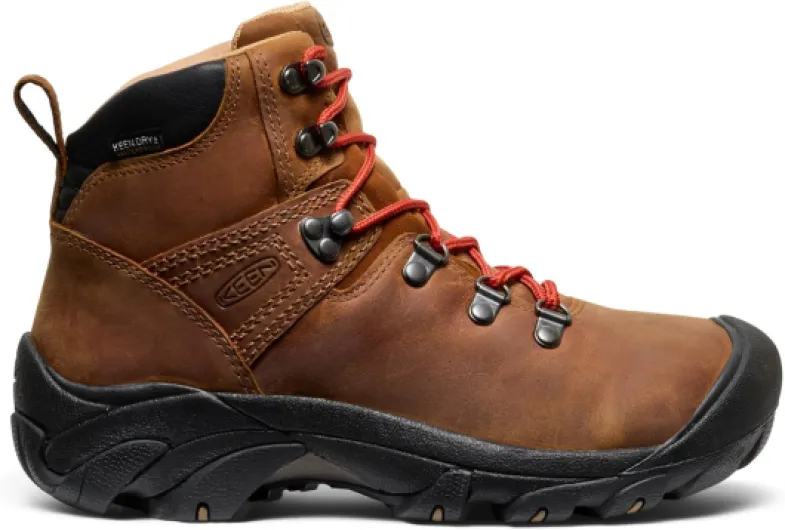
Thick leather upper and rubber sole: tough but not lightweight
The upper is oiled premium leather, and you can feel it straight away. It’s relatively thick and a bit stiff out of the box, which is good for durability and water resistance but means you’ll need some break-in time. After a few walks, the leather started to soften and crease nicely, but it’s not that soft, slipper-like leather you find on casual boots. This is clearly built to handle rough use, scrapes, and a lot of mud.
The outsole is rubber, with a lower profile than some heavy mountain boots, but it’s still a proper hiking sole. The tread pattern gives you decent grip on dirt and gravel. On wet rock and smooth pavements, it’s okay but not magic; I still had to watch my step in very slick spots. Inside, there’s an EVA insole, which is pretty standard. It gives some cushioning, but I wouldn’t call it plush. If you need extra arch support, you’ll probably end up swapping it for your own insoles after a while.
One positive point: KEEN sources the leather from Leather Working Group certified tanneries, so at least there’s some effort on the environmental side. The lining is described as natural rubber, and the whole boot feels fairly robust. Stitching is clean, seams look reinforced in the main flex areas, and there were no obvious glue marks or defects on my pair. It feels like something you can keep for several seasons if you look after the leather properly.
On the downside, all that leather and rubber makes the boot noticeably heavier than synthetic hikers in the same size. The spec sheet is a bit confusing with weight (2 pounds vs 2.02 kg listed), but in hand and on foot, it’s clearly not a featherweight boot. For short hikes and daily wear, it’s fine. For long-distance fast hiking or if you’re weight-sensitive, you might find them a bit tiring over time. So materials are a strong point for durability, a weaker point for weight and initial stiffness.
Built to last if you look after the leather
Durability is one of the reasons you buy a full leather hiking boot, and the Pyrenees looks ready for several seasons. After a few weeks of use in mud, wet grass, and some light scraping on rocks, the leather shows normal creasing but nothing worrying. No loose stitching, no peeling, no separation between the sole and upper. It feels like a boot that can take abuse if you treat it reasonably well.
The sole wear so far is minimal. The rubber lugs still look almost new, which is expected after a short period, but I’ve had cheaper boots where you can already see flattening on the heel. Here, it still looks sharp. The metal eyelets and hooks for the laces feel secure; no bending or weird noises. I didn’t have any issues with the insole compressing too quickly either, though I suspect heavy users might eventually swap them out for something more supportive.
Because it’s leather, maintenance matters. KEEN’s care tips say to brush off dirt with a soft brush and use a leather cleaner for tougher stains. I did a quick wipe-down and light brushing after muddy walks and that was enough to keep them looking decent. If you want them to stay waterproof and not crack over time, you’ll probably want to apply a leather conditioner or waterproofing treatment every now and then. If you’re lazy with maintenance, they’ll still hold up, but they’ll age faster and look more battered.
Overall, I’d put durability as a strong point. Compared to synthetic boots I’ve owned that started falling apart after a year, this feels more like a multi-year boot if you don’t abuse it too hard and you stick to the basic cleaning and care. So if you’re okay with doing a bit of leather care, you’re likely to get good mileage out of these.
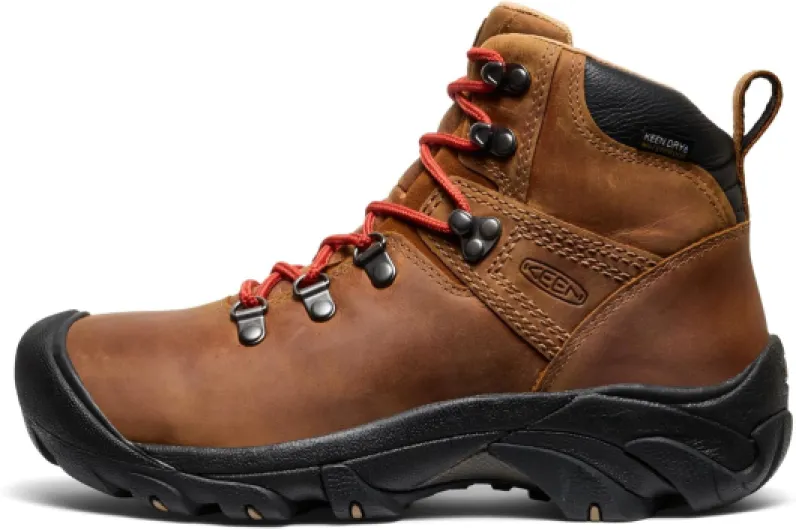
Waterproofing and grip are decent, but it’s not a fast hiker
In terms of performance, I tested the KEEN Pyrenees mainly in wet grass, light rain, puddles, and muddy footpaths. The waterproof claim holds up pretty well in this kind of use. Walking through wet fields and shallow puddles, my feet stayed dry. The gusseted tongue helps keep water out unless you go above the ankle. I didn’t do full submersion in streams, but for typical bad-weather walking, the waterproofing is convincing so far.
The grip from the rubber sole is solid on dirt, gravel, and forest paths. I didn’t feel like I was sliding around on normal terrain. On very smooth, wet rock or tiled pavements, they’re okay but not miracle workers; I had one or two small slips where I had to adjust my step. The tread isn’t as aggressive as some heavy-duty mountain boots, but for day hikes and mixed urban/trail use, it’s enough. I wouldn’t pick these as my first choice for steep, technical alpine routes, but that’s not really what they’re built for anyway.
Stability is one of the strong points. The wide base and ankle support give you a planted feel, especially with a backpack. On uneven ground, I felt my ankles were well supported without being locked in a ski-boot kind of way. The low profile sole gives you a bit more ground feel than very thick boots, but it’s still far from a true barefoot shoe. You get protection first, feedback second.
Where performance drops a bit is speed and fatigue. The weight and stiffness make them less suited for long, fast hikes or trail runs. After a 15 km walk, I definitely felt more leg tiredness compared to my lighter synthetic hikers. So performance verdict: they do the job very well for moderate hiking, wet weather, and general outdoor use. They’re not the best choice if your priority is speed and minimal weight.
What you actually get with the KEEN Pyrenees
Out of the box, you get the boots, standard laces already threaded, and that’s about it. No spare laces, no fancy extras. The packaging is basic: a simple KEEN-branded box with paper inside. It does the job, but there’s nothing noteworthy. For a boot at this price point, I don’t really care about the unboxing; I care more about build quality and fit, and on that front, they look reassuring from day one.
The Syrup colour is basically a medium brown leather, not super dark, not tan. It’s pretty neutral and goes fine with jeans, trekking trousers, or leggings. It looks like a classic hiking boot rather than a fashion boot, which I actually like. If you’re after something you can wear both on trails and into the office, it might be a bit too “outdoorsy”, but for day-to-day winter walks and countryside trips, it looks right.
Label-wise, you see all the usual info: leather upper, rubber sole, made in Cambodia, waterproof claim, and the KEEN "Original Fit" mention. That last bit is important: these are built on KEEN’s wider last, so if you usually swim in narrow boots or feel squeezed in the toes, this model is clearly aimed at you. If you have very narrow feet, you might find them a bit loose, especially in the forefoot.
In terms of positioning, they sit somewhere between a traditional leather hiking boot and a slightly more casual everyday boot. They’re not as technical-looking as some heavy-duty mountaineering boots, but they’re more serious than fashion leather boots you’d find on the high street. The 4.2/5 Amazon rating with over 1,600 reviews lines up with my feeling: pretty solid overall, with some flaws that matter depending on what you expect.
Pros
- Very roomy toe box and overall wide fit, great for wider feet
- Durable oiled leather upper with solid waterproof performance in everyday hiking conditions
- Stable and protective with good ankle support and bump toe protection
Cons
- Heavier and stiffer than many synthetic alternatives, noticeable on longer hikes
- Requires a break-in period; not instantly comfortable for everyone
- Marketing around "barefoot" feel is misleading – it’s more traditional than minimalist
Conclusion
Editor's rating
The KEEN Women's Pyrenees Hiking Boot in Syrup is a solid, wide-fit leather boot that does the basics well: it keeps your feet dry, protects your toes, and feels stable on mixed terrain. The generous toe box is the standout feature, especially if you usually struggle with narrow hiking boots. The build quality and materials suggest it should last several seasons if you clean and condition the leather from time to time.
On the flip side, it’s not a light or very flexible boot. The first few walks require a break-in period, and the weight becomes noticeable on longer hikes. The marketing talk about a "barefoot" feel is a bit optimistic; it’s more traditional in feel than the description suggests. If you want fast, nimble trail shoes, this isn’t it. If you want a reliable, waterproof leather boot for day hikes, dog walks in bad weather, and general outdoor use, it fits that role pretty well.
I’d recommend this boot for people with wider feet or anyone who values toe space, wants leather durability, and doesn’t mind a bit of weight. I’d say skip it if you have very narrow feet, hate breaking in boots, or mainly do long-distance fast hiking where every gram counts. Overall, it’s a good, dependable option, just not a lightweight miracle.