
Summary
Editor's rating
Value for money: not cheap, but makes sense for regular hikers
Design: old-school look, functional layout
Comfort: decent once broken in, not slippers out of the box
Materials: leather, EVA sole and GORE-TEX lining
Durability and build: built to last if you look after the leather
Performance on real trails: grip, support and waterproofing
What you actually get with the Hillmaster II GTX
Pros
- Very good waterproofing thanks to leather + GORE-TEX combo
- Solid ankle support and stable feel on rough, uneven ground
- Tough leather and Vibram sole that look built to last with basic care
Cons
- Heavier than many modern synthetic hiking boots
- Needs a noticeable break-in period before maximum comfort
- Can run warm in hot weather, better suited to autumn/winter use

Specifications
View full product page →| Brand | Berghaus |
Proper leather boots for grim weather hikes
I’ve been using the Berghaus Hillmaster II GTX in Coffee Brown (size 12 UK) for a few weeks now, mostly on muddy woodland trails, a couple of long days in the Peaks, and some very wet dog walks. I’m not a gear nerd, I just wanted a pair of boots that keep my feet dry, don’t wreck my ankles, and can handle British rain without falling apart after one season. These looked like a classic choice, so I gave them a go.
Right away, these feel like old-school hiking boots: full leather upper, ankle height, and a fairly chunky sole. They’re not super light trainers pretending to be hiking shoes. You notice the weight when you first pick them up, but on the foot it’s not as dramatic as I expected. I’ve owned cheaper synthetic boots before, and they usually start leaking or splitting around the flex point after a year. With these, I was expecting something sturdier and more reliable.
The main thing I wanted to check was: do they actually stay waterproof and comfortable over a full day out? Marketing talk about GORE-TEX is one thing, slogging through wet fields and rocky bridleways is another. So I wore them in proper rain, across wet grass, through shallow streams and thick mud. No babying them, just normal use like most people would do on weekend hikes and camping trips.
Overall, they do the job well, but they’re not perfect. They’re solid, reassuring on rough ground, and my feet stayed dry. On the other hand, they need a bit of breaking in, they’re not the lightest, and the price is on the higher side. If you’re after tough leather boots for autumn/winter rather than fast-and-light summer shoes, they make sense. If you want something super light straight out of the box, you might find them a bit much.
Value for money: not cheap, but makes sense for regular hikers
In terms of price, the Hillmaster II GTX sits in that mid-to-upper range for hiking boots. You’re paying for full leather, a GORE-TEX membrane, and a Vibram sole from a known brand. If you only hike once or twice a year on dry, gentle paths, this is probably overkill and not the best use of your money. A cheaper fabric boot would do the job. But if you’re out regularly in wet conditions and want something you can keep for several years, the price starts to make more sense.
Compared to cheaper synthetic hiking boots I’ve owned (Decathlon and a couple of random Amazon brands), these feel more solid and more reliable in bad weather. Those cheaper boots often start leaking after a season, the sole wears fast, or the fake leather cracks. Here, the build feels stronger and the waterproofing is clearly better. That said, compared to some other leather boots from brands like Scarpa or Meindl, the Hillmaster sits slightly below them in polish but often at a lower price, which is fair enough.
The comfort and performance you get per pound is pretty decent: good waterproofing, solid grip, proper ankle support, and materials that should last if cared for. The main trade-offs are weight and the break-in period. If you’re okay with boots that are a bit heavier and need some time to mould to your feet, you’re getting decent value. If you want light, instantly comfortable boots, you might feel like you’re paying more for features you don’t fully use.
So from a value point of view, I’d say they’re worth it for someone who hikes in wet, rough conditions at least a couple of times a month, especially in autumn and winter. For casual, summer-only walkers, I’d probably go for something cheaper and lighter. They’re not a bargain, but they’re also not overpriced for what they offer in terms of durability and all-weather use.
Design: old-school look, functional layout
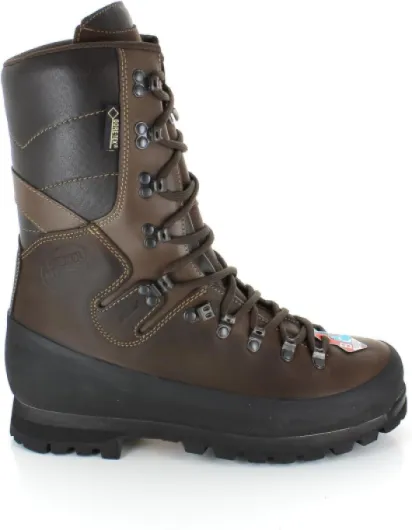
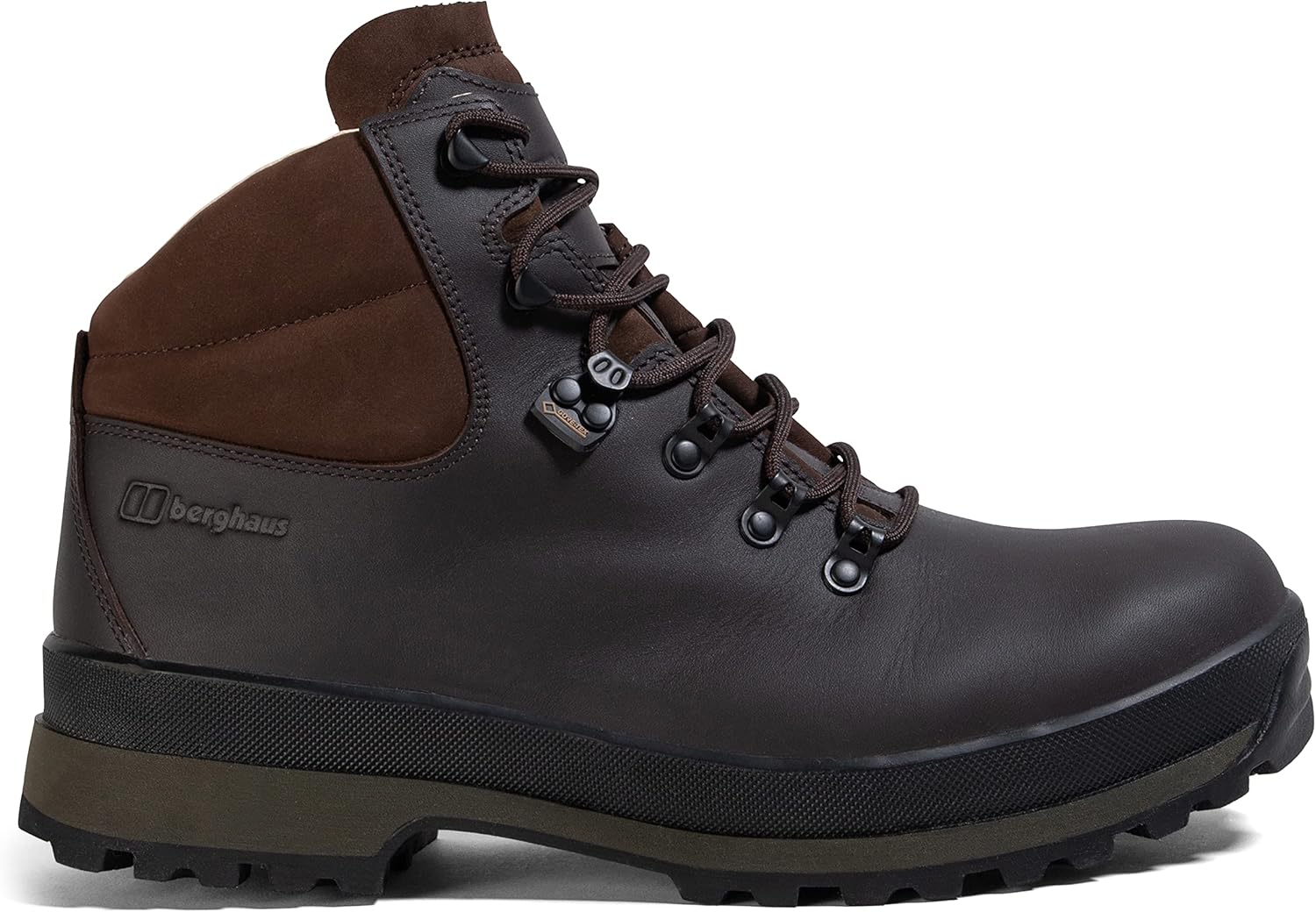
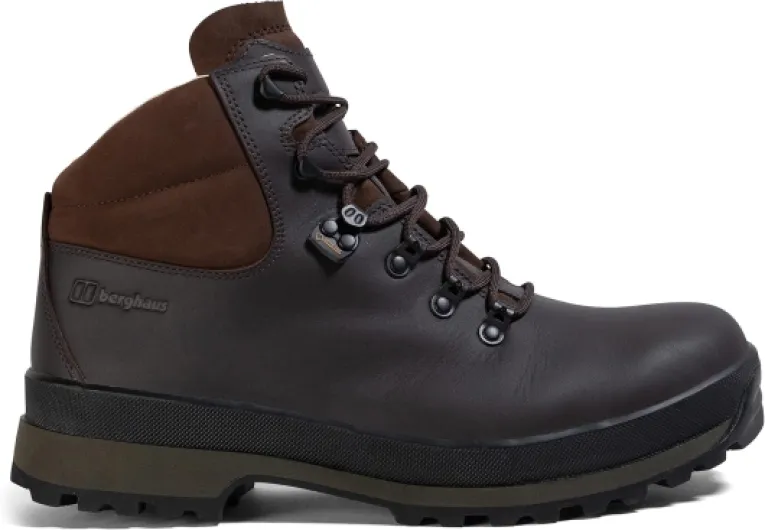
The design is pretty straightforward: solid leather upper, mid-height ankle, and a classic lace-up system. No bright colours, no weird panels. The Coffee Brown shade is neutral and hides mud fairly well, which I appreciate because I’m not the type to clean my boots after every walk. After a few wet and muddy outings, a quick brush and they look acceptable again. If you want something that looks techy or sporty, this isn’t it. These are more in the traditional British hiking boot style.
The lacing system uses regular eyelets at the bottom and hooks at the top. It’s easy enough to tighten around the ankle and loosen near the toes, which helps a lot when you’re trying to avoid pressure points. I like that I can crank down the top hooks for more ankle support on rocky descents, then loosen them a bit for flat walking. The tongue is gusseted, so water and grit don’t sneak in easily, and the memory foam under the tongue helps avoid lace bite. Visually, it’s all very plain but practical.
One thing I noticed is that the boot shape is slightly on the narrower side at the midfoot, with a more generous toe box. For my feet, that worked fine, but if you have very wide feet, you might feel some squeeze at first. The heel cup is fairly deep and holds the heel well, which reduces slipping and blisters on steeper ground. The overall profile of the boot isn’t bulky, so you don’t feel like you’re wearing ski boots, but they’re definitely chunkier than low-cut hiking shoes.
In terms of details, there’s minimal branding: a Berghaus logo on the side and heel, and that’s about it. No metal toe cap sticking out or anything like that; the cap is more of a reinforced leather front. Functionally, the design is focused on support and protection rather than style. Personally, I like that. It looks like a tool, not a fashion item. If you’re after something that you can wear in the city with jeans and look trendy, these will just look like hiking boots, which may or may not be what you want.
Comfort: decent once broken in, not slippers out of the box
Comfort-wise, don’t expect them to feel like trainers on day one. The first two or three walks (around 5–8 km each) I could feel the stiffness in the leather and sole, especially at the front where the boot bends. It wasn’t painful, but I was aware I was wearing new leather boots. After about 30–40 km of mixed use, they started to soften up nicely, and now they feel much better. If you buy them for a big trip, I’d definitely break them in with a few shorter hikes first.
The memory foam around the collar and tongue is actually noticeable. It hugs the ankle quite well and stops the boot from digging in. I had no rubbing around the ankle bones, which is usually where I get issues with stiffer boots. The heel hold is solid, so I didn’t get heel lift or blisters on longer descents, which is a big plus. Toe room is good for me; I could wiggle my toes even with thick socks, and I didn’t smash my toes into the front going downhill.
Cushioning underfoot is decent but not super plush. You feel protected from rocks and roots thanks to the PU midsole and EVA base, but it’s a firmer feel than some modern hiking shoes. Personally, I like that for stability, but if you want a very soft, bouncy feel, you might find these a bit hard. After about 20 km days, my feet were tired but not wrecked, which for a leather boot is perfectly acceptable in my book. The stock insole is okay, but on longer days I did notice that my arches would appreciate a bit more support, so I’d probably upgrade that if I were doing multi-day trips.
As for temperature, they’re clearly more suited to autumn/winter and wet spring. On a cooler, windy day, they felt great: warm enough without being sweaty. On a mild, sunny day with some climbs, my feet did get a bit warm. Not horrible, but if your feet run hot, you’ll want good moisture-wicking socks. Overall, comfort is pretty solid once they’re broken in, but if you want something you can wear straight away on a 20 km hike without any adaptation, these might feel a bit stiff at the start.
Materials: leather, EVA sole and GORE-TEX lining
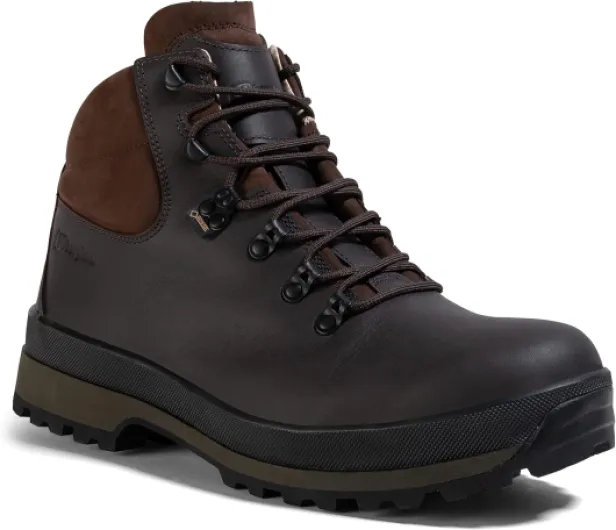
The main material here is full-grain leather on the outside, which is the key reason I picked these over a synthetic boot. The leather feels thick and reasonably supple out of the box, though it did need a few walks to soften properly around the flex points. Compared to cheaper faux leather or fabric boots I’ve had, this feels more robust and less likely to tear if it catches on rocks or branches. The leather also makes it easier to clean and reproof over time with wax or cream.
Inside, you’ve got a GORE-TEX performance comfort membrane meant to keep water out while letting sweat escape. In real use, it does keep water out: I stood in wet grass and shallow puddles for a good while and nothing came through. As for breathability, it’s okay but not magic. On cooler days, no problem. On a warmer, humid day, my feet did get a bit warm and slightly sweaty, but still less than in cheaper fully waterproof boots without a proper membrane. So it’s not like wearing trainers, but for a winter/autumn boot, it’s acceptable.
The midsole is PU and the outsole is Vibram rubber with an EVA base. The Vibram sole gives decent grip (I’ll get to that in the performance section), and the EVA/PU combo seems to handle shocks well enough on rocky paths. The insole is manmade, nothing fancy. It’s fine, but if you have picky feet or need arch support, I’d swap it for a better aftermarket insole. The memory foam in the collar and tongue is a nice touch; it does mould a bit to your ankle shape after a few outings and helps with comfort.
Overall, the materials feel like they’re built for durability rather than low weight. Leather, proper rubber, and a branded membrane are all good signs if you want boots that last. The flip side is that they’re heavier and warmer than mesh-based hiking shoes. If you mostly walk in cold and wet conditions, that trade-off makes sense. If you’re planning hot summer hikes, these might feel a bit overbuilt and sweaty.
Durability and build: built to last if you look after the leather
I haven’t owned them for years obviously, but from a few weeks of hard use they give a good impression in terms of durability. The leather hasn’t shown any cracking or deep creasing yet, just normal flex lines at the front. I’ve scraped them on rocks and tree roots a few times, and it’s only left surface marks that buff out pretty easily. The stitching around the sole and upper looks tight, with no loose threads or gaps so far.
The sole seems tough as well. The Vibram rubber hasn’t worn noticeably after several hikes on mixed terrain (tarmac approaches, gravel, rocky paths, and muddy fields). On cheaper boots, I often see the lugs rounding off quickly or small chunks tearing away after a few rocky walks; nothing like that here yet. The join between the sole and upper looks clean and secure, and I haven’t seen any signs of separation when bending the boot by hand.
Because it’s leather, a big part of durability will come down to how you care for them. After my first really muddy hike, I let the mud dry, brushed it off, and applied a bit of leather conditioner and waterproofing wax. The leather soaked it up nicely and looked better afterwards. If you’re the type to leave wet boots by a radiator and never treat them, they’ll probably crack over time like any other leather boot. If you give them basic care every few months, I can see them lasting several seasons easily.
Compared to synthetic boots I’ve owned in the same price range, these feel more robust and repairable. Synthetic fabric tends to rip and there’s not much you can do about it. With leather, you can clean, condition, and even get them resoled in some cases if the upper is still in good shape. So while I can’t speak for long-term years of abuse yet, all the signs so far point to a boot that’s been put together to handle regular hiking rather than just occasional Sunday strolls.
Performance on real trails: grip, support and waterproofing
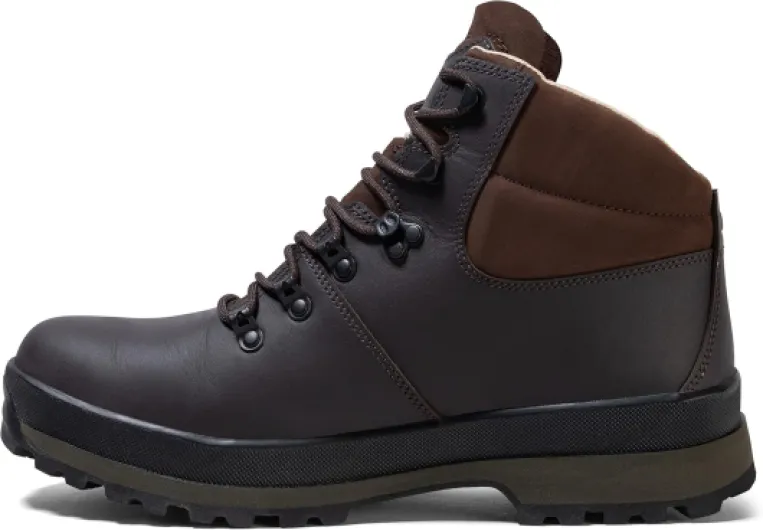
On the trail, the Vibram sole is the main star. Grip on wet rock and muddy paths is good. I tried them on slick, wet stones by a stream and on sloppy, clay-style mud, and while nothing grips perfectly in deep mud, these held better than my older cheap boots. The tread pattern clears mud reasonably well; you still get some caking, but it doesn’t turn into a complete ice skate. On gravel tracks and forest paths, they feel very stable and planted.
The ankle support is solid without being over the top. On uneven ground, roots, and rocky steps, my ankles felt secure. I twisted my foot a couple of times on hidden rocks, and the boot stopped it from going too far. It’s not a rigid mountaineering boot, but for UK hills and general hiking, the amount of support feels spot on. The flat heel also helps with stability on descents; you don’t feel like you’re teetering on a raised heel block.
Waterproofing is where these really earn their keep. I walked through wet grass that went above the toe box, splashed through shallow streams up to just below the laces, and stood around in puddles during a long dog walk in constant drizzle. Feet stayed completely dry. No seepage around the flex point or seams so far. Breathability is okay for a boot built like this, but like I said earlier, on warmer days you notice the heat buildup. For proper cold and wet conditions, they’re very reassuring.
One downside in performance is the weight over long distances. If you’re doing back-to-back 20+ km days and you’re used to lightweight trail shoes, you’ll feel the extra heft. I also wouldn’t pick these for fast summer hikes or travel where you want something you can stuff in a bag. But for typical weekend hikes, boggy fields, and winter walking, they perform well. They feel like boots you can rely on rather than something you worry about tearing or leaking halfway through a rainy day.
What you actually get with the Hillmaster II GTX
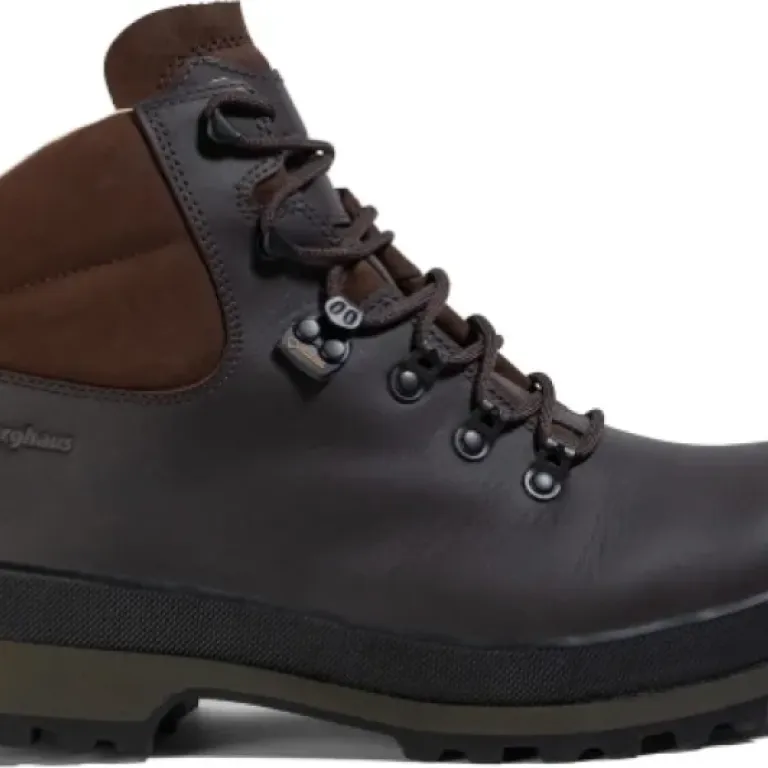
The Hillmaster II GTX is basically Berghaus’ take on a traditional leather hiking boot. High-ish ankle, lace-up closure, leather outer, GORE-TEX membrane inside. Mine are the Coffee Brown colour, which is pretty standard: dark brown leather, nothing flashy, looks like what you’d expect on a hillwalking boot in the UK. Size-wise, I went for my usual 12 UK and the fit is fairly true to size, with enough room for thicker hiking socks without crushing my toes.
On paper, the boot has a few key features: a Vibram outsole for grip, a PU midsole to absorb shocks, and memory foam around the collar and tongue. It’s sold as waterproof and breathable thanks to the GORE-TEX lining. The shaft is ankle height, so it covers and supports the ankle but doesn’t go super high like some heavy-duty mountaineering boots. The heel is flat, no big heel lift, which feels stable on uneven ground but might surprise you if you’re used to more running-shoe-style boots.
Weight-wise, my pair is roughly 1 kg for the pair, which you do feel compared to modern lightweight boots. That said, they don’t feel like bricks either. Once you’re moving, the weight disappears a bit, but if you’re used to trail runners, this will feel like a step up in heft. The construction looks decent: stitching is clean, no glue blobs, and the leather feels thick enough to take a beating. They come laced up in the box, no extras, no fancy accessories, just boots and paper stuffing.
So in practice, you’re paying for a classic leather hiking boot with a known brand, a GORE-TEX membrane, and a Vibram sole. Nothing revolutionary, but it’s the kind of boot you buy to keep for several years if you look after the leather. It’s not a fashion boot, it’s clearly designed to be used in mud, rain and rough paths, which is pretty much what I wanted.
Pros
- Very good waterproofing thanks to leather + GORE-TEX combo
- Solid ankle support and stable feel on rough, uneven ground
- Tough leather and Vibram sole that look built to last with basic care
Cons
- Heavier than many modern synthetic hiking boots
- Needs a noticeable break-in period before maximum comfort
- Can run warm in hot weather, better suited to autumn/winter use
Conclusion
Editor's rating
The Berghaus Hillmaster II GTX is a solid, no-nonsense leather hiking boot that makes a lot of sense if you spend a fair bit of time on wet, muddy trails. The main strengths are clear: proper waterproofing that actually works, good ankle support, and a tough leather upper partnered with a Vibram sole. Once broken in, comfort is good, especially around the ankle thanks to the memory foam collar and tongue. They feel like boots you can trust when the weather is grim and the paths are a mess.
They’re not perfect though. They’re on the heavier side compared to modern synthetic boots, and they do need a bit of breaking in before they feel truly comfortable over long distances. Breathability is fine for cooler seasons but not ideal for hot summer hikes. The price is also not low, so if you’re only an occasional fair-weather walker, you’re paying for durability and waterproofing you might not fully use.
I’d recommend these to hikers who are out regularly in autumn and winter, who prefer classic leather boots over flimsy synthetics, and who don’t mind doing a bit of leather care now and then. If you want something light, trainer-like, and ready out of the box for hot weather, look elsewhere. But if you want a sturdy, dependable boot for typical British hills and wet countryside, the Hillmaster II GTX is a pretty solid choice.