
Summary
Editor's rating
Value: fair price for what you get, but not a bargain
Design: classic hiker look, a bit bulky but practical
Comfort: good straight away, but warm and a bit heavy
Materials and build: solid, not premium, but feels reliable
Durability: feels robust, but not a tank
Performance on the trail: reliable grip and waterproofing, average agility
What you actually get with the Moab 3 Mid GTX
Pros
- Comfortable straight out of the box with decent support and cushioning
- Reliable waterproofing thanks to the Gore‑Tex membrane and bellows tongue
- Vibram TC5+ outsole offers solid grip on most trail surfaces
Cons
- Runs warm and can feel sweaty in hotter weather
- A bit heavy and bulky compared to lighter trail shoes
- Looks very much like a traditional hiking boot, not great for everyday casual wear

Specifications
View full product page →| Brand | Merrell |
A boot you buy when you just want something that works
I’ve been hiking in Merrells on and off for years, and the Moab line is one of those you see on every trail. I grabbed these Moab 3 Mid GTX in brown, size 9.5 UK, because I wanted a mid-height boot that was waterproof but not insanely stiff like some proper alpine boots. I’ve used them for a few weeks on weekend hikes (10–18 km), some muddy forest paths, and a couple of long dog walks in the rain.
Right out of the box, they felt familiar. Merrell clearly sticks to the same recipe: fairly wide forefoot, cushioned midsole, and that classic chunky Vibram outsole. I didn’t do any special break-in; I literally laced them up and went for a 12 km walk the first day to see if the “out-of-the-box comfort” claim was just marketing talk or actually true.
In practice, these boots behave like a solid, no-drama hiking option. They’re not super light like trail runners, but they’re also not bricks. The Gore‑Tex membrane does its job in wet grass and puddles, and the ankle height gives a bit of support without feeling like you’re in a ski boot. They sit somewhere between a casual walking shoe and a serious trekking boot.
If you’re expecting some kind of revolution, this isn’t it. It’s more like: you put them on, they work, you forget about them. There are a few downsides though: they run a bit warm, they’re not the lightest, and at this price there are trail shoes that feel more agile. But if you just want a straightforward waterproof hiking boot that you don’t have to baby, this one gets the job done.
Value: fair price for what you get, but not a bargain
In terms of value, these sit in that mid-range hiking boot category. You’re paying for the Merrell name, the Vibram sole, and the Gore‑Tex membrane. You can definitely find cheaper boots that look similar, but they often cut corners on the outsole or the waterproofing. You can also find more expensive boots that are lighter or more durable, but then you’re moving into a different budget. So this Moab 3 Mid GTX lands in the middle: not cheap, not premium.
What you actually get for the money is: solid comfort out of the box, proper waterproofing, a reputable outsole, and a design that works for most casual to intermediate hikers. If you hike a couple of times a month and do some walking holidays, that’s good value. You’re likely to get a few seasons out of them before needing a replacement. If you only hike once or twice a year, it might feel like overkill and you could probably go for a simpler, cheaper model without Gore‑Tex.
Compared to lighter trail runners or non‑GTX shoes in the same price range, you’re trading some agility and breathability for waterproofing and ankle support. Whether that’s worth it depends on your use. For wet climates and mixed terrain, I’d say yes, it makes sense. For dry, hot regions and fast hiking, I’d lean towards something lighter and more breathable instead, maybe even from Merrell’s own lineup.
Overall, I’d call the value pretty solid but not mind-blowing. You’re paying a fair price for a known quantity: a boot with a long track record, decent durability, and no major flaws. If you catch them on sale, then the value jumps up a notch and they become a very sensible buy for general hiking use.
Design: classic hiker look, a bit bulky but practical
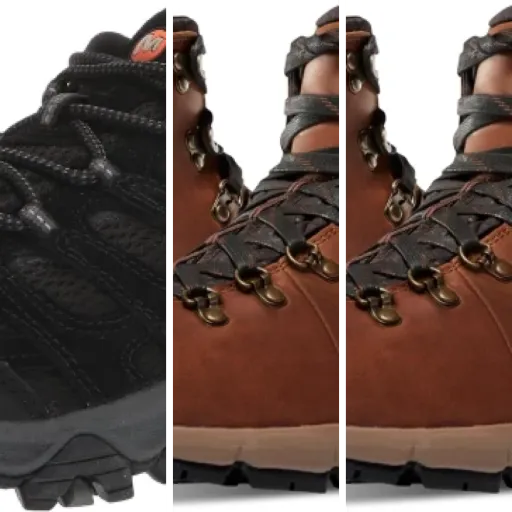
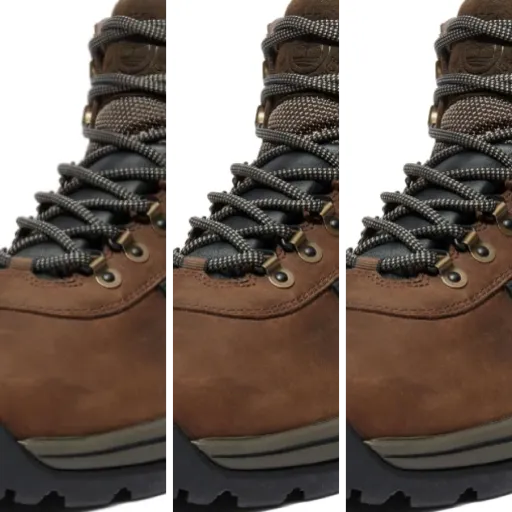
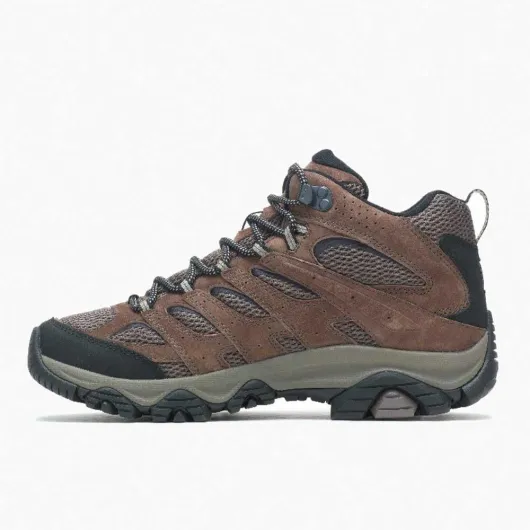
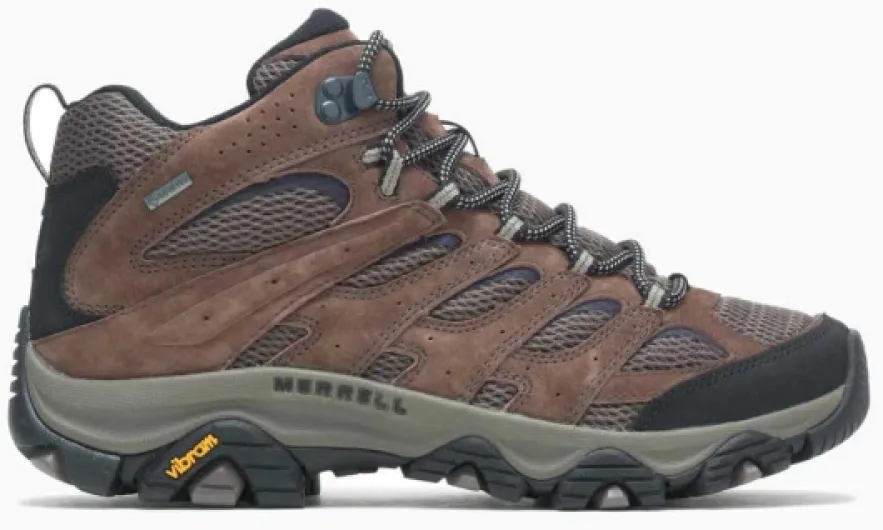
Design-wise, the Moab 3 Mid GTX sticks to a pretty classic hiking boot style. The brown colour with mesh inserts is neutral and doesn’t scream “technical mountaineering gear”, but it’s not really something I’d wear with jeans to go to a bar either. It sits clearly in the “functional outdoor shoe” category. The upper mixes leather panels with mesh zones, and you can see where they’ve tried to balance durability with breathability.
The profile is on the chunky side. The sole is thick, with pronounced lugs and a slightly raised heel. If you’re used to minimalist shoes, this will feel like a lot of boot. If you’ve worn mid‑cut hikers before, it’ll feel normal. The toe cap is reinforced and pretty obvious visually, which I actually like because I tend to kick rocks and roots when I’m tired. The heel counter is also solid, so your heel stays locked in place, especially if you tighten the top hooks properly.
From a usability point of view, the design is practical. The bellows tongue is attached high enough that water and debris stay out unless you fully dunk your foot. The lacing goes up with a mix of eyelets and metal hooks at the top, which makes it quick to tighten or loosen the ankle area depending on if you’re going uphill or downhill. I would have liked one extra hook or a locking eyelet around the midfoot to fine‑tune the fit, but it’s not a deal breaker.
The only downside for me is the general bulk and look. They’re not ugly, but they’re not exactly sleek either. On narrow trails and rocky sections it’s fine, but in town they feel a bit overkill. If you like the traditional hiking boot style and don’t care about a slim profile, you’ll be happy. If you were hoping for something that passes as a casual everyday shoe, these are a bit too “gear-looking” for that.
Comfort: good straight away, but warm and a bit heavy
Comfort is where the Moab series usually does well, and this pair is in line with that. I wore them straight out of the box for a 12 km mixed trail (forest paths, some rocky bits, some tarmac) and didn’t get any blisters. The fit in 9.5 UK is true to size for me, with enough room in the toe box so my toes don’t slam the front on descents. If you have very narrow feet, you might find them a bit roomy; mine are average width and they felt fine.
The new insole in the Moab 3 is definitely more supportive than older versions I’ve tried. There’s a mild arch support and some extra padding under the heel. After a couple of hours, my feet felt tired but not sore, which is pretty normal for that distance if you’re not used to heavy boots. The midsole cushioning is on the soft side for a hiking boot, which is nice on hard ground and long walks. You do lose a bit of ground feel, but for most people that’s a plus, not a minus.
The downside is the heat buildup. With the Gore‑Tex membrane and the padded tongue and collar, these boots run warm. On a cool spring day, that’s actually comfortable. On a warm sunny day, my socks were noticeably damp from sweat even though no water got in from outside. So yes, waterproof works, but breathability is only okay, not great. If you mostly hike in hot climates, I’d think twice and maybe go for the non‑GTX version.
Weight-wise, after a couple of kilometers you notice that you’re in proper boots, not trail runners. They’re not crazy heavy, but if you’re used to light shoes, your legs will feel the difference. For me, the trade‑off is acceptable: I get ankle support and protection, and in return I carry a bit more weight and heat. Overall, I’d say comfort is a strong point, as long as you accept they’re on the warmer and bulkier side.
Materials and build: solid, not premium, but feels reliable
The upper uses pigskin leather combined with synthetic mesh, plus a polyester lining. You can feel that it’s built more for practicality than for looks. The leather panels cover the high-wear areas around the toe, sides, and heel, while the mesh is placed where your foot needs a bit more flexibility and airflow. After a few hikes, the leather started to crease a bit, which is normal, and I didn’t notice any cracking or weird peeling.
The inner lining is a 100% recycled mesh, which is a nice touch environmentally, but what matters more to me is how it feels. Inside, it’s smooth, no rough seams rubbing against my ankle or heel. The Gore‑Tex membrane is sandwiched inside, so you don’t see it, but you definitely notice it when you step in wet grass and your socks stay dry. That said, like all Gore‑Tex boots, there’s a trade‑off: it keeps water out, but it also keeps some heat in. On warmer days, my feet were definitely warmer than in non‑GTX shoes.
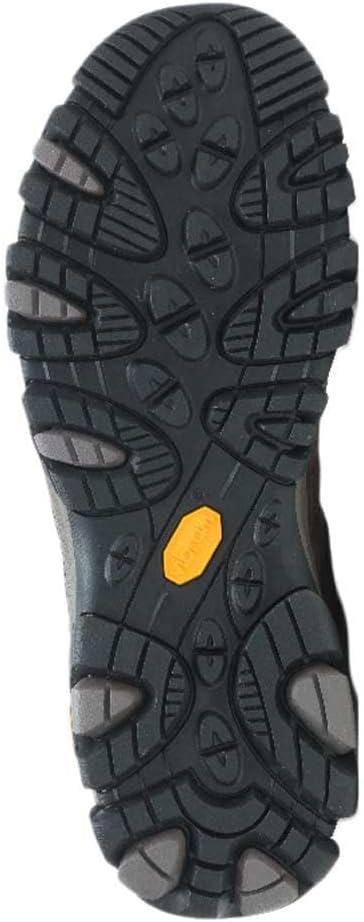
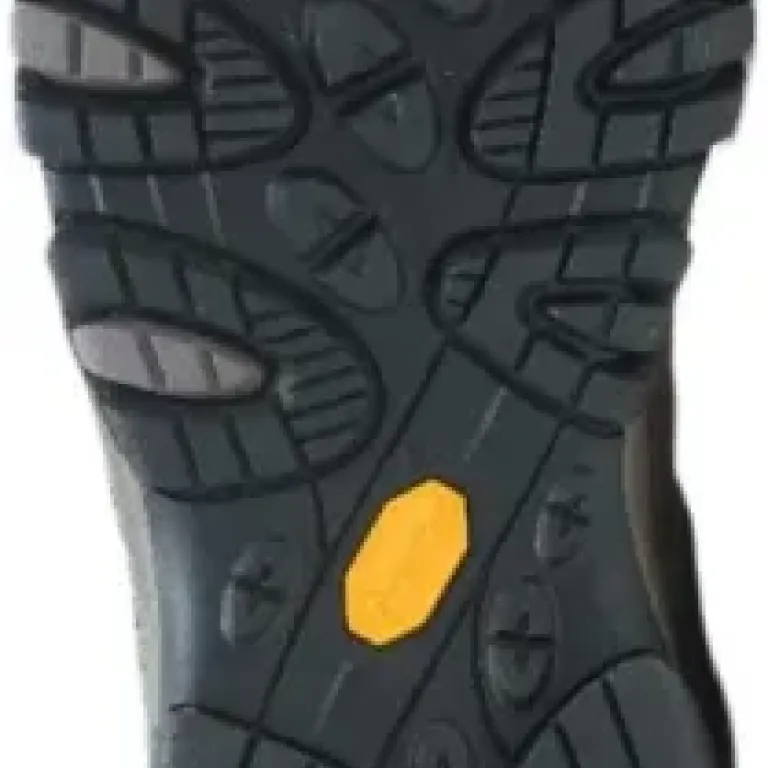
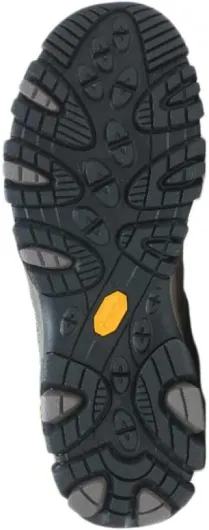
The sole is Vibram TC5+ rubber with deep, multi‑directional lugs. It feels grippy on dirt, gravel, and wet rocks. The midsole uses EVA, which is pretty standard, and there’s a removable insole that has a bit more support than older Moab versions. I swapped it out once with my own insoles just to compare, and the stock one is decent for a factory insole. Not orthopedic-level, but not a flimsy piece of foam either.
Overall, the materials feel sturdy enough for regular hiking but not like some high-end leather trekking boots that can last a decade of abuse. For weekend hikes, walking holidays, and general outdoor use, it’s fine. If you’re planning heavy backpacking with a big load, I’d want something a bit more robust. For the price range though, the material mix and build quality feel fair, with no obvious cheap shortcuts on my pair.
Durability: feels robust, but not a tank
I haven’t owned this exact pair for years obviously, but I’ve put enough kilometers on them to get an idea, and I’ve used previous Moabs in the past. After several hikes and a bunch of daily walks, there’s very little visible wear. The outsole lugs have barely rounded off, and the stitching is still tight with no loose threads. The leather has some normal creasing, but no cracks or delamination. The mesh areas don’t show any fraying yet, even around the flex points at the forefoot.
The parts that usually fail first on cheaper boots are the sole bonding and the inner lining at the heel. On this pair, the glue line between the upper and the sole still looks clean, no gaps or peeling. Inside, the heel lining shows only minor smoothing from rubbing, but no actual holes forming. That’s a good sign, because once the lining wears through, blisters follow pretty quickly. The laces, even though they’re recycled material, feel as strong as regular ones; no fuzzing or partial snapping so far.
Based on my past experience with Merrell Moabs, they usually last a couple of hiking seasons of regular weekend use before the cushioning starts to pack out and the outsole wears down enough that grip drops. You’re not buying a boot that will last 10 years of hardcore trekking, but you’re also not dealing with something that falls apart after one trip. I’d put them in the medium durability category: good for regular hikers, maybe not ideal for heavy-duty long-distance thru-hiking.
If you’re careful with them – cleaning mud off, letting them dry properly away from direct heat, maybe treating the leather occasionally – they should hold up fine. If you abuse them, soak them, and leave them in the trunk of your car all summer, they’ll obviously age faster. For the price point and the materials used, the durability seems fair and in line with what I expected.
Performance on the trail: reliable grip and waterproofing, average agility
I tested these on muddy forest tracks, wet grass, compact dirt, rocky paths, and a bit of wet tarmac. The Vibram TC5+ outsole does its job well. On dirt and loose gravel, the lugs bite in properly, and I never felt like I was sliding around. On wet rocks and roots, they’re not magic – you still need to watch your step – but the grip is better than cheaper rubber soles I’ve had on budget boots. In light mud, they clear reasonably well; in deep sticky mud, nothing really helps, so they clog up like any other boot.
Waterproofing has been solid so far. I walked through wet grass for about an hour, stepped in shallow puddles, and got splashed a few times. My socks stayed dry every time. I didn’t fully submerge them above the tongue height, but up to that point, the Gore‑Tex membrane and the bellows tongue kept everything out. For typical rainy hikes and wet trails, that’s exactly what you need. Just keep in mind that once water gets in from the top, like if you cross a stream too deep, they’ll take a while to dry because of the membrane.
Stability is decent. The midsole has enough stiffness that you don’t feel every rock, and the ankle height helps if you’re prone to rolling your ankle. I wouldn’t call them super supportive for heavy backpacking, but for day hikes with a light to medium pack, they feel secure. On steep descents, heel hold was good once I locked the top hooks a bit tighter; I didn’t get much forward sliding inside the boot.
The trade-off is agility. On technical terrain, you can move confidently, but you won’t be as nimble as in a lighter shoe or trail runner. Quick side steps, scrambling, or fast downhill running aren’t their strong point. So in terms of performance, I’d say they are very solid for classic hiking and walking, less suited if your style is more fast-and-light or trail running oriented.
What you actually get with the Moab 3 Mid GTX
The pair I have is the brown version, size 9.5 UK, made in Vietnam. On paper, you’re looking at a mid‑top hiking boot with a pigskin leather and mesh upper, Gore‑Tex waterproof membrane, Vibram TC5+ rubber outsole, EVA insole, and recycled laces and lining. The weight listed is about 1 kg for the pair, which matches how they feel in hand: not featherweight, not tank‑heavy, just middle of the road.
Out of the box, there’s nothing fancy in terms of packaging. Just the standard Merrell shoebox, paper stuffing, and that’s it. No extra insoles, no spare laces. For the price, that’s fine, but don’t expect any bonus goodies. The boots themselves come pretty much ready to go: laces threaded, tongue straight, no weird glue marks on mine. Stitching looked clean, and the leather panels were well aligned. I checked the soles closely because that’s usually where cheaper boots cut corners, but the Vibram outsole looked solid and evenly glued.
On the foot, the first impression is: this is a classic hiking boot, not a lifestyle sneaker pretending to be one. The heel is a bit higher, the sole is relatively stiff, and you feel like you can walk on rocks without thinking too much. The shaft height hits just above the ankle bone, which is enough to give some support without locking your ankle completely. The lacing system is standard hooks and eyelets; nothing fancy like BOA or speed laces, but it’s easy enough to adjust.
Overall, the presentation matches the product’s reputation: a practical boot meant for hiking, not for showing off on Instagram. If you want something flashy or super modern, this won’t excite you. If you just want a well-known model with a long track record and decent user reviews, it ticks that box.
Pros
- Comfortable straight out of the box with decent support and cushioning
- Reliable waterproofing thanks to the Gore‑Tex membrane and bellows tongue
- Vibram TC5+ outsole offers solid grip on most trail surfaces
Cons
- Runs warm and can feel sweaty in hotter weather
- A bit heavy and bulky compared to lighter trail shoes
- Looks very much like a traditional hiking boot, not great for everyday casual wear
Conclusion
Editor's rating
The Merrell Moab 3 Mid GTX in brown is a straightforward, reliable hiking boot that does what it says on the tin. It’s comfortable right away, offers proper waterproofing, and has a grippy Vibram outsole that handles most trail conditions without drama. The fit is true to size with a bit of extra room in the toe box, the ankle support is decent, and the build feels solid enough for regular weekend hikes and walking trips.
On the flip side, it’s not a light or airy shoe. The Gore‑Tex membrane and the padded construction make it run warm, and you definitely feel the weight compared to trail runners or low‑cut hiking shoes. It’s also not the most stylish or versatile boot for city use; it looks like what it is: a classic hiking boot. If you mostly hike in hot, dry conditions or you want something very agile, this isn’t the best match.
If you’re a casual to intermediate hiker who wants one pair of boots that can handle rainy walks, muddy forest paths, and moderate mountain trails, the Moab 3 Mid GTX is a safe, practical choice. If you’re into fast-and-light hiking, ultra distances, or heavy backpacking with big loads, you might want to look at lighter trail shoes or more robust trekking boots. Overall, it’s a good all-rounder that gets the job done without any big surprises, good or bad.