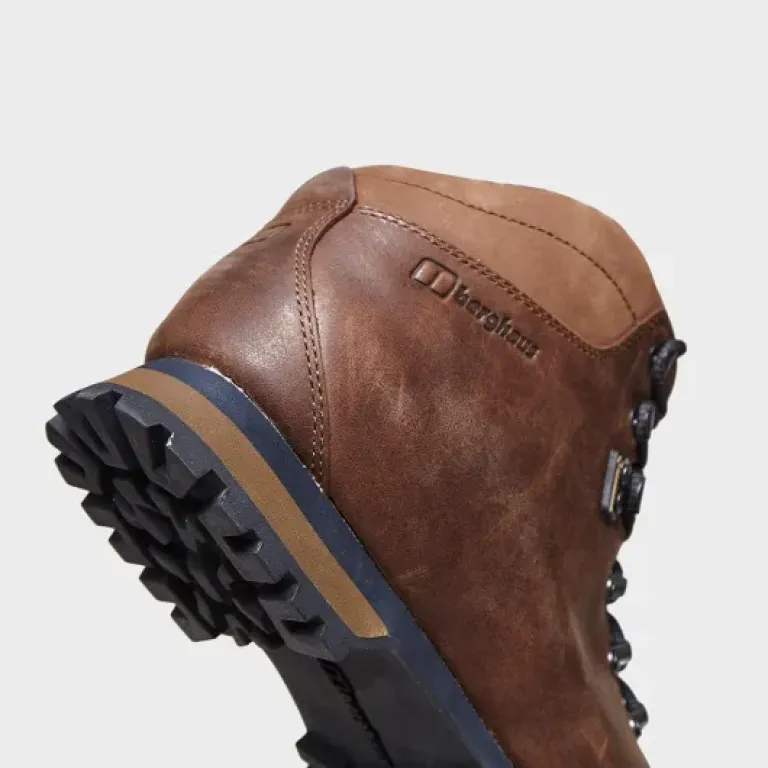

Summary
Editor's rating
Value for money: fair price if you actually hike
Design: simple leather boot with a few modern touches
Comfort: good once dialled in, but not for every foot shape
Materials: leather where it counts, a few cost-cutting choices
Durability: built to last if you actually look after them
Performance on the trail: where they shine and where they don’t
What you actually get with the Hillwalker II
Pros
- Reliable waterproofing with Gore‑Tex and leather when cleaned and waxed regularly
- Comfortable for most feet after a short break‑in, with good ankle support and cushioning
- Proven durability on trails, with many users getting several years and hundreds of miles
Cons
- Fit is on the normal-to-narrow side, not ideal for wide feet or toe joint issues
- Outsole wears faster on asphalt and concrete, not great as a daily urban boot
- Stock insole is basic; heavier or frequent walkers will likely need an upgrade

Specifications
View full product page →| Brand | Berghaus |
Solid all‑round hiking boots for real-world UK conditions
I’ve been using the Berghaus Men’s Hillwalker II Gore‑Tex boots (in Chocolate, UK 11.5) as my main walking boots for a while now. Most of my use is typical British stuff: wet canal paths, muddy woodland, stony tracks in the Peaks, plus a bit of urban walking to and from the trails. So this isn’t a mountaineering review; it’s more about how they handle day‑to‑day hiking and weekend walks in mixed weather.
The first thing I noticed when I pulled them on was that they feel like proper hiking boots, but not like bricks on your feet. They’re not ultra-light, but for a leather boot with a decent sole they’re reasonable. I could wear them straight out of the box for a short dog walk without feeling like I needed a long break‑in period, which isn’t always the case with leather boots.
In terms of expectations, I mainly wanted three things: reliable waterproofing, enough comfort for 10–15 km walks, and a sole that doesn’t vanish after one winter. Based on my use and what other buyers report (some talking about 800+ miles and multiple years), these boots broadly hit those points, with a few caveats depending on where and how you walk.
If you’re looking for a tough but fairly simple leather hiking boot for UK weather, these sit in a sensible middle ground. They’re not cheap, but they’re not top‑end either. They get a lot right, but they’re not perfect, especially if you need a wide fit or plan to wear them a lot on hard urban surfaces.
Value for money: fair price if you actually hike
Price-wise, the Hillwalker II sits in that middle bracket: not bargain‑bin cheap, but not high‑end premium either. For that money, you’re getting real leather, a Gore‑Tex membrane, a decent outsole, and a boot that – based on a lot of user feedback – can handle several years of regular use if you look after it. One reviewer flat out said they’ve had more than their money’s worth after 800+ miles, which is a good sign for value.
Compared to cheaper synthetic boots, you’re paying extra for longer life, better weather protection, and a more solid feel. If you only walk a couple of times a year, these are probably overkill and won’t feel like good value. You’d be better off with a cheaper boot that you don’t mind replacing sooner. But if you’re doing weekly walks, or daily dog walks on muddy paths, the cost spreads out pretty well over time. That guy doing 6–7 miles daily for 3.5 years clearly got his money’s worth.
There are some trade‑offs, though. The tongue being partly synthetic and the fit being more normal/narrow show where Berghaus have kept things under control cost‑wise. Also, if you mostly walk on roads and pavements, the faster outsole wear makes the value look worse, because you’ll hit the end of the sole life earlier. They’re really priced for people who mainly use them on trails, not as daily city shoes.
For me, I’d rate the value as good but not mind‑blowing. They’re solid, do what they say, and feel like they’ll last. There are cheaper options if you’re casual, and there are more expensive boots if you want full‑grain leather and a more premium finish. These sit nicely in the middle: pay a bit more than budget, get better comfort and lifespan in return.
Design: simple leather boot with a few modern touches
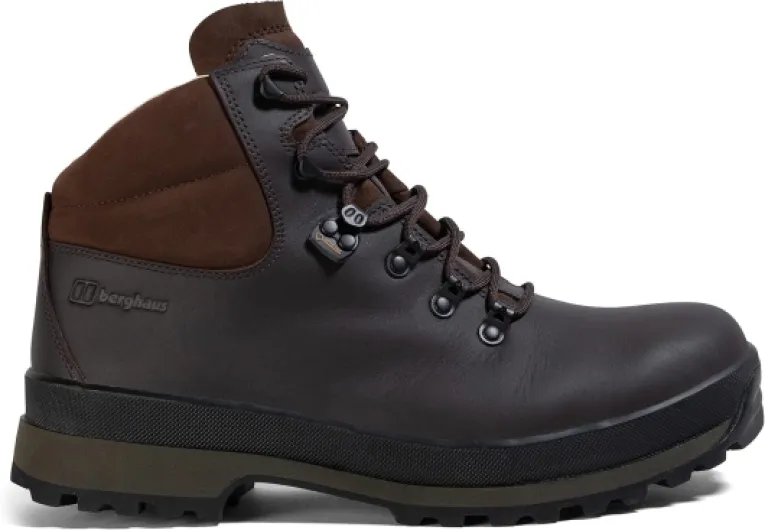
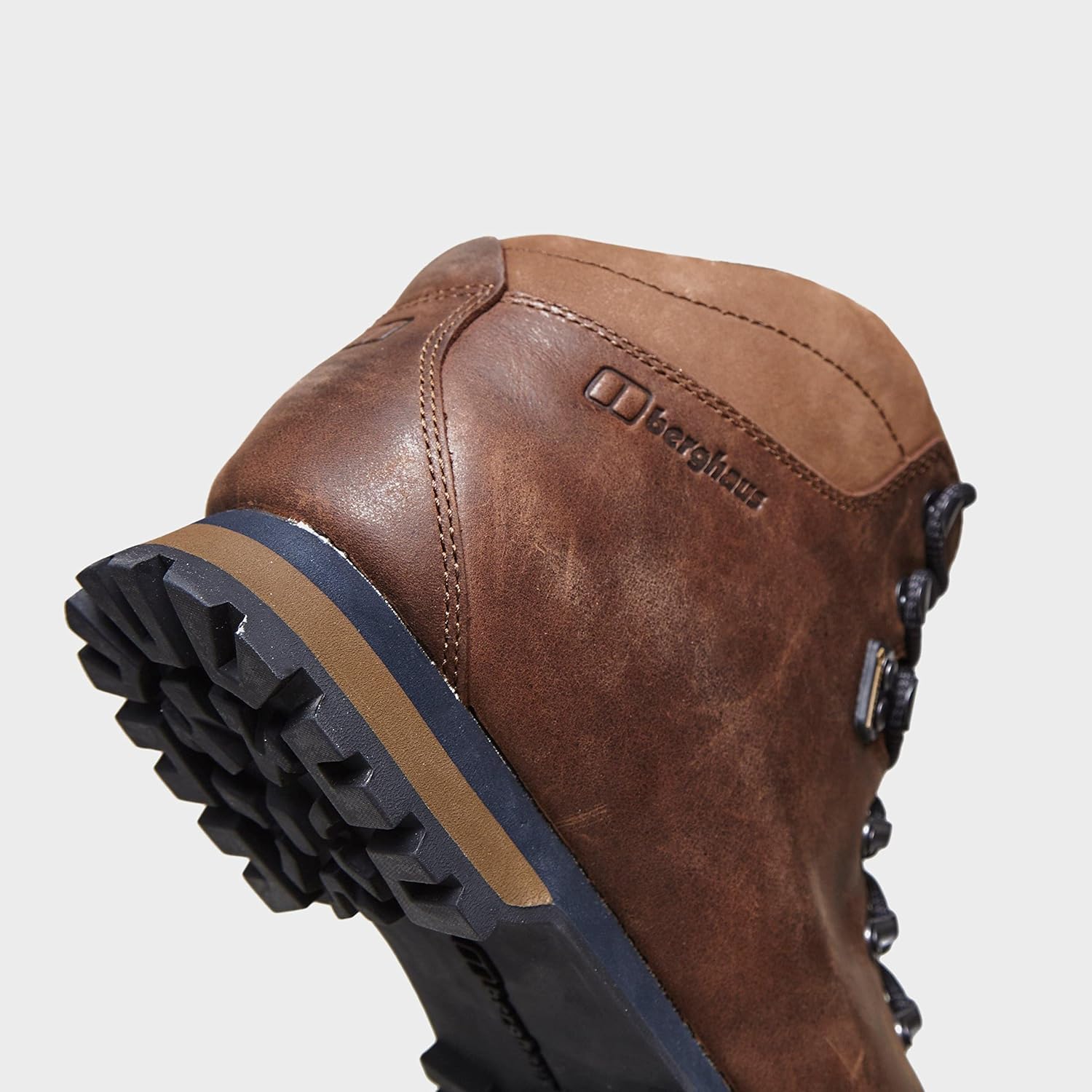
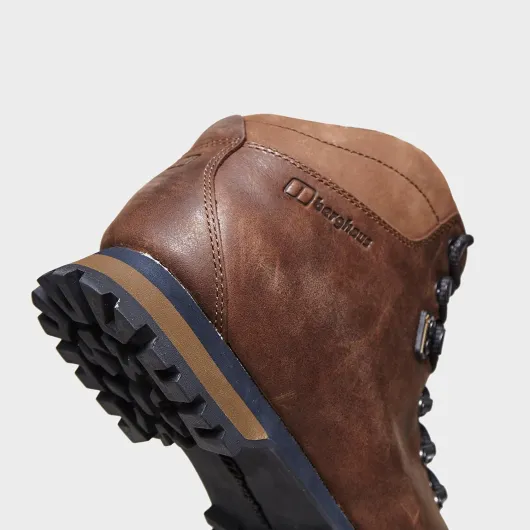
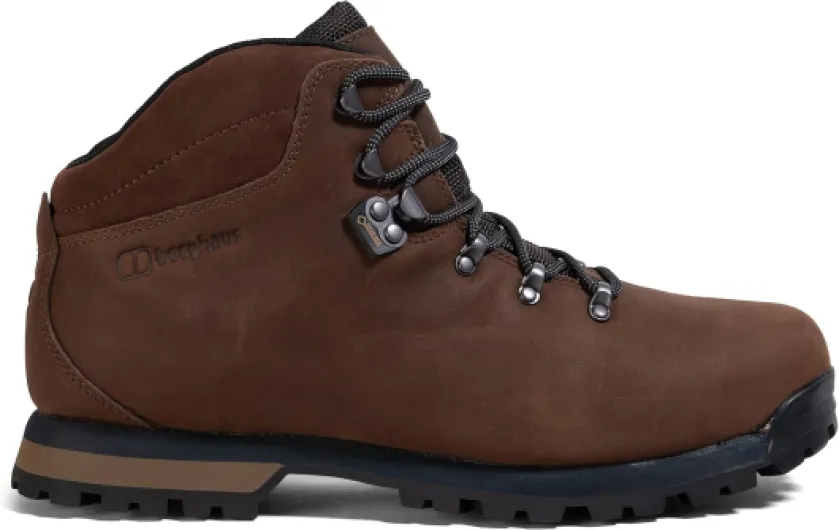
Design-wise, these are pretty straightforward boots. The Chocolate colour is a dark brown that hides mud and scuffs well, which I actually prefer over lighter tan boots that look wrecked after two walks. The suede/leather has that slightly worn, antique finish from day one, so the first scratch doesn’t feel like a disaster. They’re ankle‑high with a fairly standard hiking boot silhouette – nothing that screams technical or fashion, just outdoorsy and practical.
The lacing system uses a mix of standard eyelets and hooks toward the top. The hooks hold the laces well, and I haven’t had any issues with them bending or feeling flimsy. The tongue is gusseted to keep water and grit out, but unlike some older Brasher models, it’s not full leather; it’s partly synthetic. One reviewer mentioned this as a downgrade from the old Brasher design, and I get that. It doesn’t affect comfort in my case, but if you’re a purist who wants full leather everything, you’ll probably notice.
One design detail I did appreciate is the cutaway around the back of the heel. It gives a bit more room for your foot to flex when you’re walking uphill or downhill, while the sides still provide decent ankle support. Someone in the reviews called this out as a plus for them because they tend to roll their ankles, and I’d agree – the boot gives support without feeling like a ski boot. For me, it’s a nice balance between stability and freedom of movement.
Overall, the design is functional rather than stylish. If you want something that looks sleek or modern, these will feel a bit old‑school. If you just want boots that look like boots and don’t shout for attention, they’re fine. I’d call the design practical and low-key, with a couple of compromises (like the synthetic tongue) that keep the price and weight down but might annoy fans of the older all‑leather Brashers.
Comfort: good once dialled in, but not for every foot shape
Comfort was my main concern because heavy, stiff boots wreck my feet. Out of the box, the Hillwalker II felt surprisingly comfortable for a leather boot. There’s memory foam around the heel and tongue, and the ankle padding is generous without being bulky. I could do a 5 km walk straight away without hot spots. They still needed a couple of longer walks to fully soften up, but we’re talking days, not weeks. That lines up with buyers who say they broke in after 1–2 walks.
Fit-wise, they are more on the normal-to-narrow side. I don’t have wide feet, so they work for me, but one reviewer with a bump on his big toe joint had to return them because there just wasn’t enough width or flex in the toe box, even going up a size. If you know you need wide-fit boots, or you have foot issues around the big toe joint, I’d be cautious. The toe area is fairly firm, and while it protects well, it doesn’t give much if your foot is pressing against it.
Underfoot, the stock insole and EVA midsole are okay, but not luxurious. For normal-weight walkers doing 5–10 km, it’s fine. If you’re heavier (one review mentioned 19 stone) or doing daily 6–7 mile walks, you’ll likely want to drop in a better insole. I swapped mine after a few weeks for a more cushioned one, and that made a noticeable difference on longer days. A few reviewers mention using Scholl odour‑eater insoles for both cushioning and smell control, which makes sense if you walk a lot.
One thing to be clear about: these boots are much better on trails than on pavements. On mixed terrain – dirt, grass, rocks – the comfort is good, and you feel supported. On long urban walks, the firmer sole and limited flex can lead to rubbing and potential blisters, as one reviewer pointed out. I had a bit of heel rubbing during a long city day; it went away with thicker socks and a better insole, but I wouldn’t choose these as everyday street shoes. For what they’re designed for – hiking and hillwalking – the comfort is pretty solid once you’ve got the right size and insole.
Materials: leather where it counts, a few cost-cutting choices
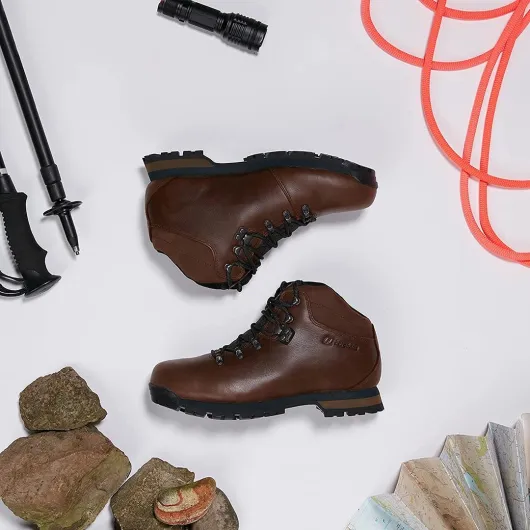
The upper is mainly oiled suede/leather, which feels decent in the hand. It’s not super stiff like some heavier full‑grain boots, but it’s not floppy either. With regular waxing or conditioning, it holds up well against rain and mud. After several wet walks and a basic clean‑and‑wax routine every couple of months, mine still shed water properly and haven’t cracked. The leather isn’t luxury‑grade, but it’s solid for a mid‑range boot.
Inside, you’ve got a Gore‑Tex membrane and a “cold lining” with foam padding. That basically means they’re geared more towards cooler weather rather than hot summer hiking. In use, they’re warm enough for winter walks with thick socks, but my feet didn’t feel like they were boiling on mild days either. Breathability is always limited with leather + Gore‑Tex, but I’d say these are acceptable. My socks are warm and slightly damp after a long walk, not soaked in sweat.
The midsole is EVA, which is standard these days. It gives reasonable cushioning and shock absorption, especially compared to old-school all‑rubber soles. You can feel the difference when you’re coming down a rocky path; you don’t get that harsh jarring through your knees and ankles. Long‑term, EVA does compress over time, but given people report 3–4 years of daily use, it seems to hold up well enough. The insole is man‑made and honestly pretty basic – it works, but if you’re heavy or walk a lot, an aftermarket insole makes a noticeable difference in comfort.
The outsole is rubber with Berghaus’s OPTI‑STUD pattern. The rubber feels reasonably grippy in the wet, and the lug pattern is spaced so mud doesn’t pack in too badly. On trails and wet rocks, it does the job. On tarmac and concrete, you can feel that the compound is more trail‑oriented: it grips, but it also wears faster. One reviewer mentioned the sole wearing quickly on urban surfaces, and I’ve seen a bit of that myself. In short, the materials are decent and fit for purpose, but clearly optimised for off‑road use, not pounding city pavements every day.
Durability: built to last if you actually look after them
Durability is one of the stronger points of these boots, based on both my experience and other users. I haven’t put thousands of miles on mine yet, but there are several reviews from people who have. One person reports over 800 miles in a year and says the tread is still in good shape, no splits in the soles or leather, and the boots still clean up almost like new. Another user who weighs 19 stone and walks 6–7 miles daily got around 3.5 years out of a pair before replacing them, and reckons they could have squeezed another 18 months with lighter use.
From what I can see, the leather holds up well as long as you clean off mud and re‑wax them every few months. Neglect them and they’ll dry, crack, and leak earlier, but that’s normal. The stitching around the upper and sole on mine still looks tight with no loose threads. The sole is firmly bonded – I haven’t seen any signs of it starting to peel away, which is something cheaper boots often suffer from after a year of use.
The outsole durability is a bit mixed depending on where you walk. On proper trails, grass, and fields, they wear slowly and should last a good few seasons. On hard pavements and concrete, they wear faster. One buyer specifically complained about how quickly the outsole goes down on urban surfaces, and I’ve noticed more visible wear after a few longer city days compared to the same time on trails. So if most of your walking is on tarmac, you might chew through the soles earlier than you’d like.
Overall, I’d say they’re durable for what they’re designed for: regular hiking, hillwalking, and mixed countryside use. They’re not indestructible, and they’re not bombproof mountaineering boots, but for mid‑range hiking footwear, the lifespan seems good. If you’re the type who cleans and waxes your boots now and then, you’ll probably be happy with how long they last. If you abuse them and never maintain them, they’ll still hold up better than cheap boots, but don’t expect miracles.
Performance on the trail: where they shine and where they don’t
On actual hikes, the Hillwalker II does exactly what you’d expect from a mid-weight leather boot. Grip on mixed terrain is good: the OPTI‑STUD outsole bites into wet grass and mud well enough, and on damp rocks they feel secure as long as you’re not doing anything silly. I’ve had them on wet limestone and greasy wooden steps and never felt like I was skating around. The lug pattern sheds mud reasonably well – you don’t end up carrying half the field home on your soles.
Waterproofing has been solid so far. I’ve walked through wet fields, shallow puddles, and steady rain for a couple of hours and my feet stayed dry. Other buyers back this up, including someone who’s done 800+ miles with regular beeswax treatments and still reports dry feet and intact leather. The Gore‑Tex membrane and leather combo seems to hold up, as long as you clean them and reproof them every few months. If you’re lazy with maintenance, you’ll probably shorten their life, but that’s true for most leather boots.
On longer walks, the shock absorption is good enough that my knees don’t complain much on descents. The EVA midsole takes the sting out of rocks and rough ground. They don’t feel bouncy like trail runners, but for a leather boot they’re quite forgiving. Ankle support is decent too – that heel cutaway plus firm sides gives you enough hold without feeling like you’re locked in a cast. One reviewer who tends to roll their ankle specifically liked this balance, and I’d agree. You feel supported, not trapped.
Where performance drops is on hard, flat urban surfaces. One reviewer said the soles wear at “light speed” on asphalt and concrete and that they’re not really made for city use, and I think that’s fair. They also don’t flex as naturally on flat pavement, so you can get rubbing on the soles of your feet and potential blisters if you treat them like everyday city shoes. For me, they’re excellent from the moment I hit the trail, but I notice the difference if I do long distances on roads. So for hiking and hillwalking: very capable. For all‑day city use: they work, but it’s not what they’re built for.
What you actually get with the Hillwalker II
On paper, the Hillwalker II is a mid-weight leather hiking boot with a Gore‑Tex membrane, an EVA midsole, and Berghaus’s OPTI‑STUD rubber outsole. Mine are the Chocolate colour in size 11.5 UK, ankle‑high, plain toe, flat heel. They’re clearly aimed at hillwalking and general hiking, not hardcore mountaineering or fast-and-light trail running. Think autumn/winter walking, wet grass, muddy paths, rocky trails.
Out of the box, they look fairly straightforward: oiled suede/leather upper with a slightly distressed look, padded ankle, padded tongue, and a fairly chunky sole. The listed weight is about 1202 g per pair for a size 9, so my 11.5s are a bit heavier, but still manageable. They come with standard laces, nothing fancy, and a basic insole that Berghaus calls OrthoLite. The insole is fine to start with, but if you’re heavy or walk a lot, you’ll probably end up swapping it for something like a Scholl or Superfeet after a while – several reviewers do this.
The boot is marketed as waterproof and breathable thanks to Gore‑Tex, and that lines up with my experience. I’ve had them in steady rain, wet grass, and shallow mud for a couple of hours at a time and my socks stayed dry. A few long‑term users say they keep their waterproofing for years as long as you clean and wax them every few months, which matches what I’ve seen so far. I’ve been using a wax treatment every 2–3 months, like one reviewer who mentioned beeswax, and the leather still beads water nicely.
So in practice, what you’re getting is a no‑nonsense leather hiking boot aimed at people who actually walk, not just wear them to the pub. They’re not flashy, they don’t have fancy colours or aggressive branding, but they tick the main boxes: leather upper, Gore‑Tex lining, cushioned midsole, and a grippy outsole that’s meant for mud and rock rather than city pavements.
Pros
- Reliable waterproofing with Gore‑Tex and leather when cleaned and waxed regularly
- Comfortable for most feet after a short break‑in, with good ankle support and cushioning
- Proven durability on trails, with many users getting several years and hundreds of miles
Cons
- Fit is on the normal-to-narrow side, not ideal for wide feet or toe joint issues
- Outsole wears faster on asphalt and concrete, not great as a daily urban boot
- Stock insole is basic; heavier or frequent walkers will likely need an upgrade
Conclusion
Editor's rating
The Berghaus Men’s Hillwalker II Gore‑Tex boots are solid, no‑nonsense hiking boots that do the basics well: they keep your feet dry, give decent grip on real trails, and can last several seasons if you maintain them. They’re not flashy, and they’re not the softest things you’ll ever wear, but they feel reliable on muddy fields, wet hills, and rocky paths. Comfort is good once broken in, especially with a better insole, and the ankle support hits a nice balance between stability and freedom of movement.
They’re best suited for people who actually hike or walk regularly in mixed countryside – dog walkers, weekend hillwalkers, and anyone dealing with typical British weather. If you’re doing 5–10 km walks a few times a week, these make sense. If you mainly walk on pavements or need a wide fit, they’re less ideal. The outsole wears faster on hard urban surfaces, and the toe box isn’t generous for wide feet or foot issues like bunions or big toe bumps.
Overall, I’d say they’re good value mid‑range boots: not perfect, but dependable. If you want a straightforward leather Gore‑Tex boot that can handle wet trails and won’t fall apart after one season, they’re worth considering. If you need wide fit, super‑soft flex, or a pure city boot, you should look elsewhere.