
Summary
Editor's rating
Value for money: worth it if you actually use them properly
Design: technical look, not exactly discreet
Comfort: great support, but not for everyone
Materials and build: solid, with a few trade-offs
Durability: built to take abuse
Performance on the trail: where they shine and where they don’t
What you actually get with these Salewa boots
Pros
- Very good heel hold and ankle support, especially on steep terrain
- Durable materials with strong rand and slow sole wear
- Reliable waterproofing with Gore-Tex and good overall protection
Cons
- Stiff and a bit heavy, tiring for casual or flat walks
- Grip is only average on smooth wet rock
- Fit runs on the snug/technical side, not ideal for very wide feet

Specifications
View full product page →| Brand | Salewa |
Serious boots for serious walks
I’ve been using the Salewa Mountain Trainer Mid Gore-Tex in Asphalt Fluo Orange as my main boot for the last few months, mostly in wet UK conditions – Lake District, Peak District and a couple of long muddy dog walks on local trails. I’m usually in Meindl or Scarpa, so I wasn’t exactly a Salewa fanboy going in. I bought these because prices on my usual brands went a bit mad and these had solid reviews and a more technical look.
Out of the box, my first thought was: these are not casual boots. They feel stiff in the hand, the sole doesn’t bend much, and the ankle support is proper “mountain boot” style, not trainer-like. I went half a size up from my normal (UK 8.5 instead of 8) and I’m glad I did – in thick hiking socks my toes have just enough room on descents. If you like soft, trainer-style hiking shoes, you’ll probably hate the first impression of these.
My first test was a 3-hour mixed walk: wet fields, rocky paths, a bit of tarmac. No break-in, straight out of the box. I was expecting hot spots and heel rub, but honestly, the heel hold is very good. The lacing system lets you lock the ankle separately and I didn’t get any heel lift, which is usually my main problem with new boots. No blisters on that first outing, just a bit of general foot fatigue from the stiffness.
After several longer days, my conclusion is pretty clear: these boots are built for people who actually go up and down proper hills or mountains, not just flat park paths. They’re supportive, grippy, and properly waterproof, but they’re also on the stiff and slightly heavy side. If you mostly walk the dog on flat ground, they’ll feel like overkill. If you’re doing long, rough hikes with a backpack, they start to make sense.
Value for money: worth it if you actually use them properly
Price-wise, the Salewa Mountain Trainer Mid GTX sits in the mid-to-high range for hiking boots. They’re usually cheaper than some top-end Meindl or Scarpa leather models, but more expensive than entry-level hiking shoes or basic Decathlon-style boots. So they’re not a budget choice, but they’re also not at the crazy premium end. For what you get – Gore-Tex, Vibram sole, solid construction – the price feels fair, as long as you’re actually going to use them on proper terrain.
In terms of value, it really depends what you do. If you mostly walk the dog on flat paths or go for short Sunday strolls, these are overkill and you’re paying for support and durability you won’t really use. In that case, a lighter, cheaper hiking shoe will feel nicer and cost less. On the other hand, if you regularly do long hikes, mountain days, or carry a backpack over rough ground, these start to look like good value. You’re buying a boot that feels like it will last several seasons and protect your feet properly.
Compared to my previous Meindls, I’d say the Salewas are slightly less plush but more technical. They grip better on steep mixed terrain, hold the heel more securely, and feel a bit more precise. The comfort out of the box is a touch harsher, but once broken in, they’re just as usable. Given that they’re usually cheaper than Meindl in current prices, I don’t feel short-changed. I’d happily buy them again at a similar price, knowing what I know now.
So overall, I’d rate the value as good, but only if you match the boot to your use. For serious hikers and people doing proper hills, they’re a solid investment. For casual users, you’re paying for features you don’t need and carrying extra weight for no real benefit.
Design: technical look, not exactly discreet
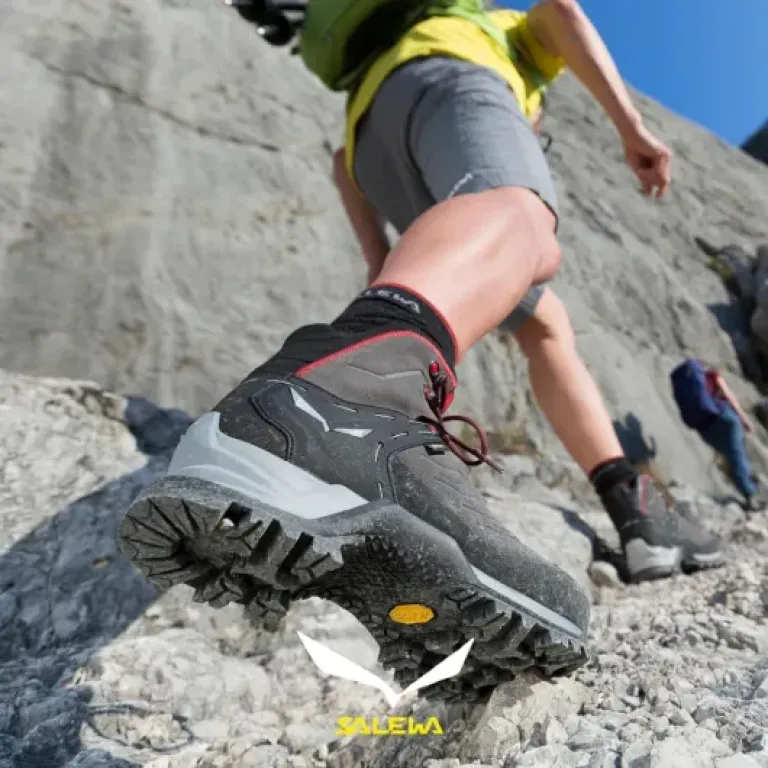
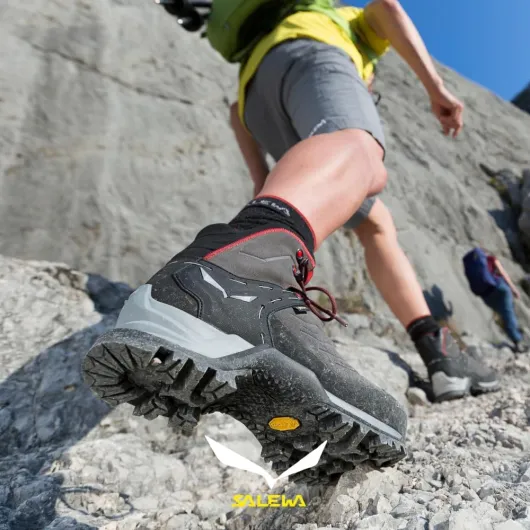
Design-wise, these boots are clearly aimed at people who spend time in the hills, not at folks who want something to wear to the pub. The Asphalt Fluo Orange version is basically dark grey with bright orange details on the laces, midsole and logo. On the trail I like it – they look purposeful and easy to spot in mud – but I wouldn’t call them subtle. If you want something that passes as a casual boot, this colourway isn’t it.
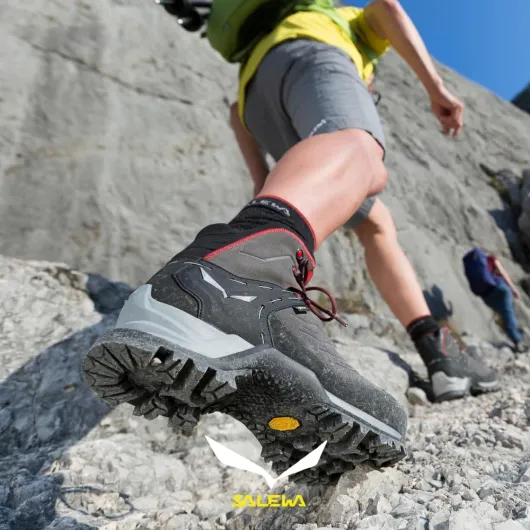
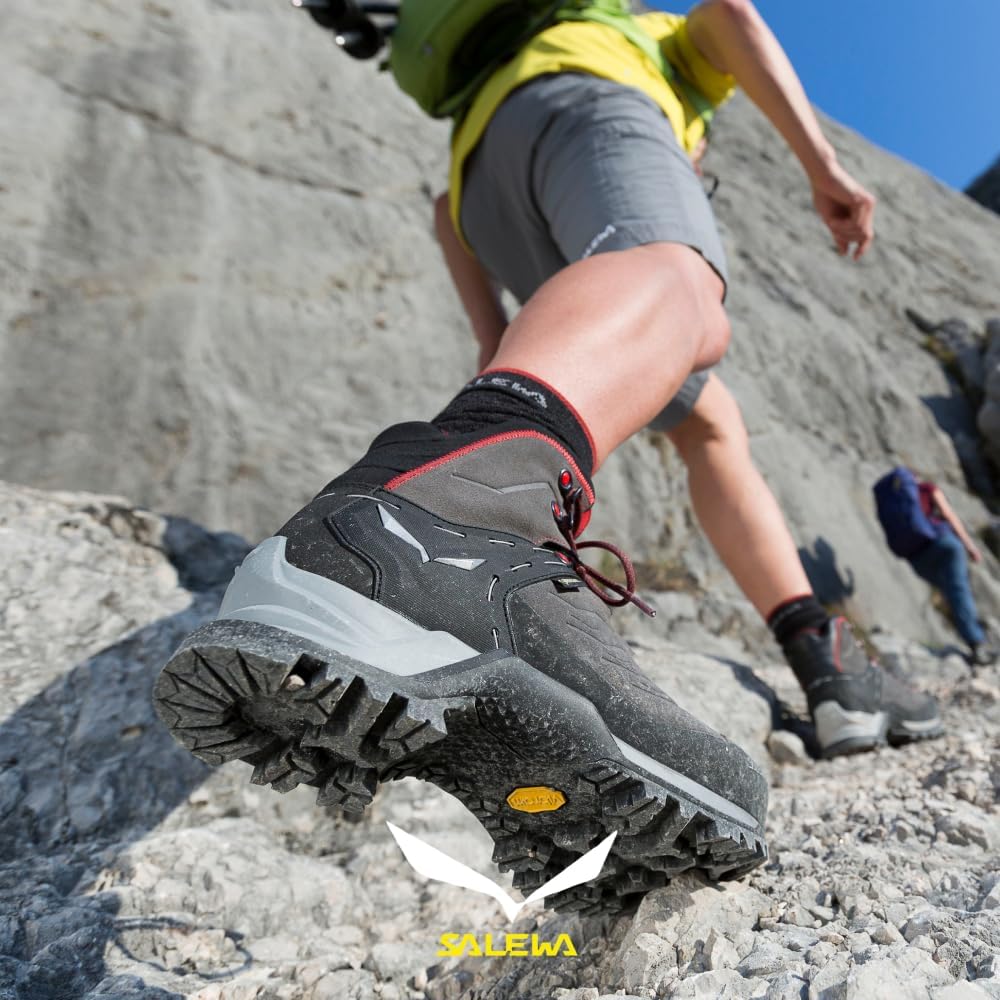
The overall shape is quite low-volume and technical, with a wrapped rubber rand around the front and sides for extra protection. That rand is actually useful: I’ve kicked more than a few rocks and tree roots and the leather and rubber have held up with only cosmetic scuffs. The toe area is well protected and feels safe when scrambling or edging on rock. The sole has deep, aggressive lugs, and there’s a noticeable heel brake, which helps on steep descents.
One design detail I like is the lacing going nearly to the toes, similar to approach shoes. It lets you fine-tune the fit in the forefoot. I can tighten them for rocky, technical days and loosen slightly for easier walks. The downside: the lacing system can be a bit fiddly when you’re in a rush. It’s easy to catch the lace in the wrong hook and have to redo it. Not a big deal, but it’s not as quick as simpler boots.
In daily use, the design is very function-first. The ankle cuff is nicely padded and cut lower at the back (the Flex Collar), which makes downhill walking less restrictive. The trade-off is that it doesn’t feel as cosy or plush as some more padded, softer boots. If you like a boot that looks like a rugged trainer, these will feel more like a mountain tool than a fashion item – which, for proper hiking, is exactly how they behave.
Comfort: great support, but not for everyone
Comfort is where these boots are a bit divisive. If you’re used to soft hiking shoes, the first few walks in the Salewa Mountain Trainer Mid GTX will feel stiff and quite structured. The Bilight midsole is firm, with a pronounced drop from heel to toe. On my first 2–3 outings, my feet definitely felt more tired than in my softer Meindls, especially on longer, flatter walks. It feels almost like walking on a plank compared to a trainer – not painful, but you’re aware of the boot doing a lot of controlling.
The upside is that the support on uneven, rocky terrain is excellent. With a backpack on, my ankles felt stable, and my feet didn’t bend awkwardly on sharp rocks or steps. The ankle collar is high enough to give support but cut away at the back, so you get a bit more freedom when descending. I really noticed this on long downhill sections in the Lakes: my ankles weren’t fighting the boot as much as in some stiffer, more traditional leather boots I’ve owned.
In terms of fit, the heel hold is one of the best things about this boot. Using the lacing properly (locking the lower part, then adjusting the top hooks separately), I had almost no heel lift, even on steep uphill climbs. This meant I didn’t get the usual new-boot blisters on my heels. I did get a slight hot spot on my little toe on a 20 km day, but that went away after the boots softened up a bit and I adjusted the forefoot lacing.
Ventilation is about what you’d expect from a leather Gore-Tex boot: fine in cool to mild weather, a bit warm in summer. With medium socks, they’re comfortable in spring and autumn; with thick wool socks they’re good in winter conditions, including snow. If your idea of comfort is soft and bouncy, these will feel too harsh. If you value support, precise fit and no heel slip over softness, they’re actually very comfortable once you’ve done a few hikes in them.
Materials and build: solid, with a few trade-offs
The upper is a mix of robust suede leather and abrasion-resistant textile, with a full Gore-Tex lining. In practice, this means the boot feels tough in the hand and on the foot. After months of mud, wet grass, rocky paths and general abuse, the leather has a few scuffs but nothing serious. The rubber rand around the toe and sides has taken most of the hits and has not peeled or separated, which is usually where cheaper boots start to fail.
The sole is a Vibram WTC unit with a fairly aggressive tread pattern. The rubber compound feels on the harder, more durable side, not the soft, sticky kind you get on pure approach shoes. On dry rock, loose gravel and muddy paths, grip has been pretty solid. On wet smooth rock, they’re average – not terrible, not brilliant. I’ve had a few slips on sea-sprayed coastal rocks where the sole just didn’t bite as much as I’d like, which lines up with some of the Amazon reviews. For general hiking, they’re fine, but if you expect magic grip on wet polished stone, you’ll be disappointed.
Inside, the Gore-Tex Performance Comfort lining does what it should: keeps water out and lets some moisture escape. I’ve stood in wet bogs, crossed streams where the water reached the rand, and walked in heavy rain for hours. No water came in through the boot itself; the only time my feet got damp was when I let water run down my trousers and into the top of the boot. Breathability is decent for a fully waterproof boot, but on warm days your feet will still get hot – it’s leather plus membrane, not a mesh trail runner.
Overall, the materials feel built to last rather than to be ultra-light. You pay for that with some extra weight and stiffness, but in return you get good protection, proper waterproofing and a durable feel. If you’re careful with cleaning and drying them (no radiators, just air dry, occasional leather care), I don’t see these falling apart quickly. They feel like boots you can keep for several seasons of regular use.
Durability: built to take abuse
Durability is one of the strong points of the Salewa Mountain Trainer Mid GTX. After months of regular use – including rocky trails, muddy fields, a few accidental scrapes against stone walls, and general neglect (I’m not the most careful with cleaning) – there’s very little actual damage. The suede has some scuff marks, but no deep cuts or delamination. The rubber rand is intact and still glued tight everywhere, which is usually where cheaper boots start splitting.
The sole wear has been slow and even. The lugs are still pronounced, with only minor rounding on the heel and forefoot where I land most. I wouldn’t say they look new, but they definitely don’t look like they’re halfway through their life either. For the kind of terrain I’ve used them on, I’d expect several seasons of use before the tread becomes a problem. Obviously, if you hammer them daily on tarmac, you’ll burn through the lugs faster, but that’s true of any hiking boot.
Internally, the lining and padding are holding up well. No loose threads, no peeling in the heel area, and the insole is still usable (though I swapped it for a more supportive one after a while, just personal preference). The Gore-Tex membrane is still waterproof – no seepage or damp patches even after long, wet days. As long as you don’t dry them directly on a radiator and you occasionally brush off the mud, they feel like they’ll last.
If I compare them to other boots I’ve owned in the same price range, I’d put their durability as above average. They’re not bombproof mountaineering boots, but for a lightweight-ish trekking boot, they’re pretty solid. The trade-off is that you carry a bit more weight and stiffness than ultra-light models, but in return you’re not buying new boots every year because the upper has torn or the sole has worn flat.
Performance on the trail: where they shine and where they don’t
On proper terrain – think rocky paths, steep climbs and descents, wet grass, mud – these boots perform really well. The stiff sole and solid ankle support give a lot of confidence when you’re carrying a pack or picking your way down a rough slope. I’ve used them on long days in the Lakes and on some coastal paths with steep, loose sections, and they’ve felt planted and predictable. No weird rolling, no feeling like my feet were folding around stones.
In terms of grip, the Vibram WTC sole bites nicely into dirt, gravel and softer ground. In mud, the lugs clear fairly well and don’t instantly clog up. On wet grass and typical UK slop, they’ve been reliable. Where they’re less impressive is on smooth, wet rock – for example, coastal slabs or polished stepping stones. They’re not dangerous, but I’ve had to be careful and place my feet more deliberately. If most of your walking is in that kind of environment, I’d want something with a softer, stickier compound.
Waterproofing performance has been solid. Several walks in heavy rain, plus plenty of puddle and shallow stream crossings, and my feet stayed dry. The Gore-Tex lining and high rand do their job. Just remember that water can still come in from the top if your trousers channel it down into the boot. As for warmth, they’re good for autumn/winter – my feet stayed warm in snow with decent socks – but they’re overkill for hot summer city use.
On the downside, for flat or easy walks, the stiffness and weight start to feel unnecessary. On 5–6 km dog walks on tarmac and park paths, they feel like too much boot. The firm midsole can also leave the soles of your feet feeling a bit tender if you’re not used to this type of boot, especially early on. So performance is very terrain-dependent: excellent in the hills and on technical ground, a bit overbuilt and tiring for casual, flat use.
What you actually get with these Salewa boots
On paper, the Salewa Mountain Trainer Mid GTX is a mid-cut trekking boot with a suede/leather upper, Gore-Tex waterproof lining, and a Vibram WTC outsole. Each shoe is around 700 g, so you’re not in lightweight trail runner territory – this sits more in the classic trekking boot category. Mine are the Asphalt Fluo Orange colour, which basically means dark grey with bright orange accents. They look like proper mountain boots, not lifestyle shoes.
The boot has a 3F system, which is Salewa’s way of tying the lacing, heel and sole together to hold your foot in place. In practice, it means the laces go quite far towards the toe, almost like an approach shoe, and there are metal hooks up top for the ankle section. The ankle area has what they call a Flex Collar – basically a slightly cut-away back that lets your ankle move more when you’re stepping downhill. It sounds like marketing, but downhill with a heavy pack, I could feel my ankle wasn’t fighting the boot as much as with some more rigid cuffs.
Fit-wise, these run a bit on the narrow/technical side in the forefoot and snug around the heel. I have average-width feet and a slightly narrow heel, and they worked well. If you’ve got very wide feet or hate feeling “locked in”, you might struggle. Length-wise, I’d say go at least half a size up from your normal shoe size if you’re planning on wearing thick socks or doing long descents. I usually wear an 8, went for an 8.5, and I wouldn’t want them smaller.
Overall, the presentation matches the spec: this is a serious trekking/hiking boot with a design aimed at people who want stability and control on rough ground. Nothing about it feels casual – from the lacing to the sole stiffness, it’s clearly made for technical terrain more than for city pavements.
Pros
- Very good heel hold and ankle support, especially on steep terrain
- Durable materials with strong rand and slow sole wear
- Reliable waterproofing with Gore-Tex and good overall protection
Cons
- Stiff and a bit heavy, tiring for casual or flat walks
- Grip is only average on smooth wet rock
- Fit runs on the snug/technical side, not ideal for very wide feet
Conclusion
Editor's rating
The Salewa Mountain Trainer Mid Gore-Tex is a stiff, supportive trekking boot that makes sense if you spend real time in the hills. The build quality is solid, the waterproofing works, and the heel hold and ankle support are genuinely good. On rough, rocky, or steep terrain, they feel stable and controlled, especially with a backpack. Durability also seems strong: the leather, rand and sole are holding up well after months of use.
On the flip side, they’re not light and they’re not soft. The sole is firm, almost board-like at first, and on easy, flat walks they can feel like overkill. Grip is very good on most surfaces, but only average on smooth wet rock. If you mainly want something for casual walks, commuting, or short park loops, there are cheaper, lighter and more comfortable options. These are boots for people who actually hike, not just people who like the look of hiking boots.
If you’re doing regular mountain days, long hikes in mixed terrain, or winter walks with a pack, and you prefer a precise, locked-in fit, these are worth serious consideration. If you’re more of a Sunday stroller or city walker, I’d skip them and go for something lighter and more flexible.