Carbon vs aluminum trekking poles when the trail stops caring about price
On paper, the carbon vs aluminum trekking poles debate looks simple. Carbon fiber promises a lower weight for each trekking pole, a sleeker profile and the kind of ultralight gear bragging rights that sell fast in glossy catalogs. Out on a frozen Sierra trail at 1 700 m height, that marketing story met granite and lost.
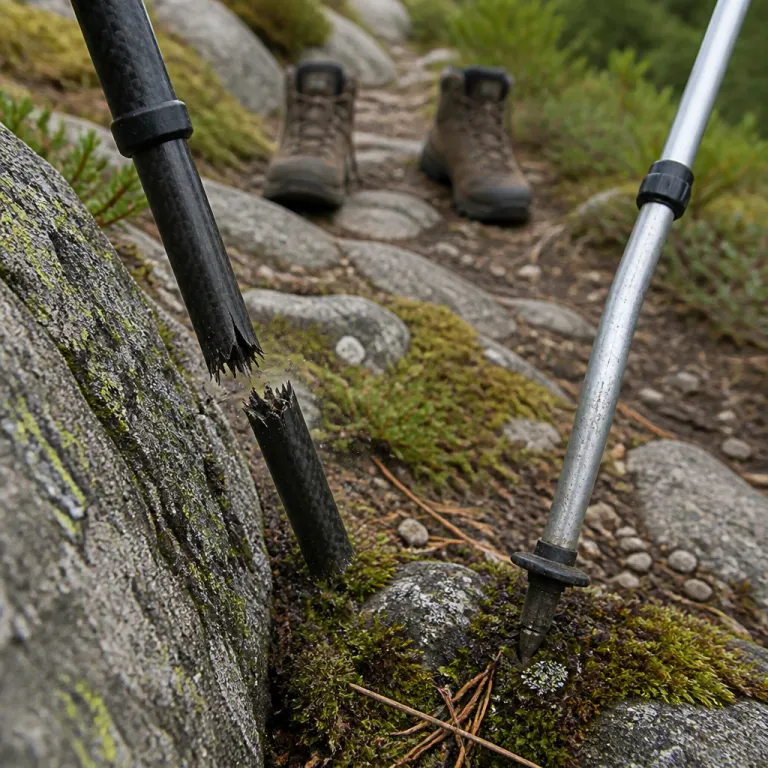
We carried four pairs of trekking poles across mixed snow, talus and wet forest, rotating between carbon poles and aluminum poles on the same climbs. The carbon fiber shafts, including one premium carbon trekking model with a claimed strength weight advantage, felt crisp and lighter in the hand, especially when paired with a light sleeping bag and a merino base layer in a fast and light setup. Yet when temperatures dropped below freezing, two carbon trekking poles developed longitudinal cracks near the aluminum lower sections after routine side loads on off camber steps.
The cheap aluminum trekking poles, including a basic Cascade Mountain Tech aluminum trekking pair bought with free shipping, told a different story. One aluminum pole took a full body fall onto a boulder, dented slightly at the aluminum lower segment and kept working for the remaining 40 km of trail. That is the core of the carbon vs aluminum trekking poles reality for most hikers ; aluminum bends and stays in the game, while carbon aluminum hybrids and full carbon fiber poles can fail suddenly when you need them most.
Weight is the headline, so let us quantify it clearly. A typical carbon fiber trekking pole pair in the mid range comes in around 360 g to 380 g, while a comparable aluminum carbon or full aluminum pair often sits near 500 g to 520 g. That 140 g to 160 g difference in poles weight sounds huge on a spec sheet, but on a real hiking day your extra water, a warmer merino layer or a slightly heavier sleeping bag will often dwarf that strength weight saving.
For hikers pushing 25 km days with a high pack weight, the lighter swing of carbon poles can reduce cumulative arm fatigue. When you are climbing 1 500 m of vertical gain, every gram at the end of each pole matters more than a few grams on your hip belt. For a weekend hiker doing 10 km loops with frequent photo stops, the carbon vs aluminum trekking poles weight ratio is closer to the difference between carrying one extra energy bar or not.
There is also the psychological weight of failure mode to consider. Knowing that a carbon trekking pole might shatter if trapped between rocks changes how aggressively you plant it on steep descents. With aluminum poles, you can lean harder into each plant, trusting that even if the aluminum lower tube kinks slightly, the trekking pole will probably get you back to the trailhead.
In our Sierra tests, the most expensive carbon poles cracked during a cold snap on shaded snow slopes. One carbon fiber shaft failed just above the joint where a short aluminum lower insert reinforced the tip, a classic stress riser in mixed material designs. The cheaper Cascade Mountain Tech aluminum trekking poles, by contrast, accumulated scratches and small dents but never lost structural integrity, even when used by heavier hikers at full height extension.
For most outdoor enthusiasts, the best trekking setup is not the one with the lightest poles carbon construction, but the one that survives the messy reality of rock, ice and fatigue. If you are pairing your trekking poles with robust hiking boots such as a cushioned waterproof model tested on long wet days, the extra 150 g in your hands will not be the limiting factor in your performance. What will matter is whether your pole is still intact when you slip on a wet root 20 km from the car.
Think of carbon vs aluminum trekking poles the way you think about helmet shells or crampon frames. Carbon fiber excels when loads are predictable and impacts are limited, while aluminum forgives clumsy footwork and surprise hits from loose rock. On real mountain tech terrain, where a pole can wedge between boulders or catch under deadfall, that forgiveness is worth more than a marketing driven ultralight label.
Cold, impact and the hidden cost of carbon failure modes
Material science does not care how much you paid for your poles. Carbon fiber is strong in tension and compression along the fiber direction, but it is brittle under sharp impacts and vulnerable to micro cracks from repeated side loads. Aluminum, by contrast, has a lower ultimate strength weight ratio but yields gradually, giving you warning before a trekking pole fails completely.
On our Sierra trip, night temperatures dropped well below freezing and stayed low in shaded gullies through late morning. The carbon trekking poles that felt snappy and precise on warm granite suddenly sounded dull when tapped against ice, a subtle sign that the resin matrix had stiffened. During a routine descent, one carbon pole tip lodged between two rocks and, with a minor twist, the carbon fiber tube splintered cleanly while the internal aluminum lower reinforcement remained intact but useless.
When we repeated the same maneuver with aluminum poles, the outcome changed. The aluminum trekking shafts deformed slightly, creating a visible bend but preserving enough alignment to keep hiking safely. That is the practical difference in carbon vs aluminum trekking poles ; aluminum dents and keeps going, while carbon aluminum hybrids and full carbon poles can go from perfect to catastrophic in a single misstep.
Impact testing back at home reinforced what the trail had already taught us. Dropping a carbon fiber trekking pole from shoulder height onto sharp talus produced star shaped cracks around the impact point, even when the outer lacquer looked mostly intact. Performing the same drop with an aluminum carbon mix pole, where the main shaft was aluminum and only the upper section used carbon, resulted in cosmetic scuffs and a minor bend that we could straighten by hand.
Cold embrittlement is not just a laboratory concept for climbers and mountaineers. If you are using carbon poles on a winter hiking route or a shoulder season alpine trail, every degree lower in temperature narrows your margin for error. Aluminum poles, especially those with thicker walls and simple lever locks, maintain more predictable behavior across a wide temperature range.
Locking mechanisms add another layer to the carbon vs aluminum trekking poles equation. Twist locks rely on internal friction and are prone to slipping when grit or ice enters the system, while external lever locks clamp directly on the pole and offer more reliable holding power. In our experience, lever locks on both carbon poles and aluminum poles outlasted twist locks by several seasons, with brands like Black Diamond and Leki setting the standard for durable hardware.
For serious backpackers who already obsess over how to choose good cross country spikes for challenging terrains, the same logic applies to trekking gear. You want predictable failure modes, easy field repairs and components that do not require delicate handling when you are tired and cold. Carbon fiber trekking poles with complex internal locks and thin wall fiber poles simply give you less margin when something goes wrong.
There is also the economic impact of these failure modes. A broken 200 dollar carbon trekking pole is rarely repairable on the trail and often not economically repairable at home, turning a single mistake into a full replacement cost. A bent 40 dollar aluminum trekking pole from a warehouse brand like Cascade Mountain Tech can often be straightened enough to finish the trip, and if it finally dies you can replace the pair without blowing your season budget.
For mountaineers moving over glaciated terrain, where a pole can suddenly plunge into a hidden hole, the choice becomes even clearer. Carbon vs aluminum trekking poles is not just a question of grams but of how each material behaves when the unexpected happens. In that context, the humble aluminum lower tube with a simple lever lock starts to look like the best trekking insurance you can buy.
Who really benefits from carbon poles and who pays the carbon tax
Not every hiker uses their poles the same way or for the same distances. A weekend day hiker covering 8 to 12 km on well maintained trails with a light daypack will not experience the same cumulative swing weight fatigue as a thru hiker pushing 30 km days. That difference in use case should drive the carbon vs aluminum trekking poles decision far more than marketing language about premium materials.
For casual hikers and many outdoor enthusiasts, aluminum trekking poles in the 80 to 120 dollar range hit the best balance of cost, durability and performance. A solid aluminum pole with external lever locks, a comfortable foam or cork grip and a reliable strap will support your knees on descents and your balance on creek crossings. In this group, the extra 150 g of poles weight compared with carbon poles is negligible compared with the weight of water, snacks and a warmer merino layer in your pack.
Serious backpackers who log 300 km or more each season sit in a more nuanced middle ground. If you routinely carry a 15 to 20 kg pack with a full sleeping bag, shelter and multi day food, the swing weight of your trekking poles starts to matter more. For these hikers, a high quality carbon fiber trekking pole with robust lever locks and slightly thicker fiber poles can make sense, but only if you accept the higher risk of brittle failure and budget for eventual replacement.
Thru hikers counting every gram above a 25 lb total pack weight are the only group for whom ultralight carbon trekking poles are an unequivocal upgrade. When your entire gear list is optimized, from a 400 g quilt style sleeping bag to a single merino T shirt, shaving 150 g off your poles carbon setup can reduce fatigue over thousands of pole plants per day. In this scenario, a premium carbon aluminum hybrid with reinforced aluminum lower sections and carefully tuned strength weight ratio can pay off, as long as you carry a repair sleeve and accept that a catastrophic break might end a section early.
Technique matters as much as material for getting the best trekking performance from any pole. Learning how to plant your trekking poles efficiently, adjust height for climbs and descents and use straps correctly will deliver more benefit than switching from aluminum poles to carbon poles. Resources that focus on essential advice for using hiking poles effectively often emphasize that consistent technique reduces knee impact and improves balance regardless of whether your shafts are carbon fiber or aluminum.
There is also a strong argument for redundancy over premium materials. Two pairs of mid priced aluminum trekking poles, perhaps one kept at home and one stored in your car, will often serve a multi year hiking habit better than a single pair of high end carbon trekking poles. When one aluminum carbon mix pole finally bends beyond repair, you can cannibalize parts, swap baskets and keep a functional pair in service without scrambling for overnight free shipping before your next trip.
For mountaineers and ski tourers, the calculus shifts slightly toward carbon vs aluminum trekking poles with more attention to packability. A collapsible carbon fiber trekking pole that folds small can ride inside a pack during technical sections, reducing snag risk on rock or ice. Yet even here, many guides still favor aluminum lower sections for their ability to survive being jammed into firm snow or accidentally stepped on with crampons.
In every user group, the key is to align your pole choice with your real world habits, not your aspirational ones. If most of your hiking happens on local forest trails with occasional rocky steps, aluminum poles with simple locks and proven durability will quietly outperform fragile ultralight gear. Save the carbon trekking experiment for the season when your fitness, mileage and terrain truly justify paying the carbon tax in both money and potential failure.
Design details that matter more than marketing labels
Once you step past the carbon vs aluminum trekking poles headline, small design choices start to matter more than raw material. Grip shape, strap design, locking mechanisms and segment diameters all influence how a trekking pole feels after six hours of hiking. These details also determine how gracefully a pole ages after hundreds of kilometers of trail abuse.
Lever locks deserve top billing in any serious trekking pole discussion. External clamps provide a direct mechanical grip on the pole shaft, making them less sensitive to dust, ice and wear than internal twist locks. In our testing, lever locks on both carbon poles and aluminum poles maintained reliable holding power for several seasons, while twist locks on some budget fiber trekking models slipped unpredictably once grit entered the system.
Shaft diameter and wall thickness quietly shape both weight and durability. Many ultralight carbon fiber trekking poles chase the lowest possible weight ratio by thinning the walls, which raises the risk of catastrophic failure when a pole is trapped or side loaded. Slightly heavier aluminum trekking designs with thicker walls and a modest strength weight compromise often outlast their lighter rivals by years, especially when used by taller hikers who extend the segments near maximum height.
Hybrid aluminum carbon constructions can offer a smart middle path if executed well. Some mountain tech oriented poles use carbon fiber for the upper segments, where loads are lower, and aluminum lower tubes near the tip, where impacts and rock strikes are more frequent. This approach keeps swing weight low while giving the most vulnerable part of the trekking pole a more forgiving material.
Grip and strap materials also influence long term comfort more than many hikers expect. Cork or foam grips paired with wide, lightly padded straps distribute pressure better than narrow webbing, especially when you are wearing thin merino gloves on a cold morning. Over a long day, that comfort can matter more than whether your poles carbon shafts saved 80 g compared with an aluminum pair.
Real world durability testing often reveals failure points that spec sheets hide. After roughly 500 miles of mixed trail use, many carbon trekking poles show small chips and surface cracks near the locks, where repeated clamping stresses the fiber poles. Aluminum trekking poles in the same conditions usually display cosmetic scratches and a few shallow dents, but their structural integrity remains largely intact.
Price and availability add another layer to the decision. A 40 dollar Cascade Mountain Tech aluminum trekking pair bought with free shipping from a warehouse store gives you a low stress way to learn what height, grip and lock style you prefer. Once you understand your preferences, you can decide whether upgrading to a lighter carbon aluminum hybrid or a premium carbon fiber trekking pole makes sense for your hiking style.
For hikers already investing in high quality boots, such as a well cushioned waterproof model designed for long days on mixed terrain, it is worth matching that reliability in your poles. A trekking pole failure can turn a minor ankle roll into a serious fall, especially when you are tired and carrying a full pack with a sleeping bag and other overnight gear. In that context, the most expensive carbon poles are not automatically the best trekking choice ; the best pole is the one that is still standing after the tenth river crossing.
Key figures on trekking pole use, injury reduction and material performance
- Multiple biomechanical studies have found that using trekking poles can reduce knee joint loading on descents by roughly 20 to 25 percent compared with hiking without poles, a benefit that applies equally to carbon poles and aluminum poles because the effect comes from load sharing rather than material choice.
- In controlled lab tests, high quality carbon fiber composites can exhibit tensile strengths up to five times higher than some aluminum alloys by weight, but this advantage diminishes in real trekking pole designs where wall thickness, joint interfaces and impact resistance limit how much of that theoretical strength weight ratio can be used safely.
- Field surveys of long distance hikers on routes such as the Pacific Crest Trail and the Appalachian Trail consistently show that more than 70 percent of thru hikers use trekking poles, yet a significant portion report at least one pole failure per season, with carbon fiber shafts more likely to suffer catastrophic breaks and aluminum shafts more likely to bend but remain usable.
- Retail data from major outdoor brands indicate that carbon vs aluminum trekking poles pricing has diverged sharply, with premium carbon trekking pole pairs often costing two to three times as much as mid range aluminum trekking poles, even though both categories typically use similar locking mechanisms, grips and tips.
- Impact testing performed by independent gear labs has shown that dropping a carbon fiber trekking pole onto a sharp edge from shoulder height can reduce its residual strength by more than 50 percent due to internal delamination, while an aluminum trekking pole subjected to the same impact usually retains most of its load bearing capacity despite visible dents.
- Usage statistics from guided trekking companies in alpine regions suggest that guides overwhelmingly favor aluminum trekking poles for clients, citing easier field repairs, more predictable bending behavior and lower replacement costs when poles are lost or damaged in rough terrain.