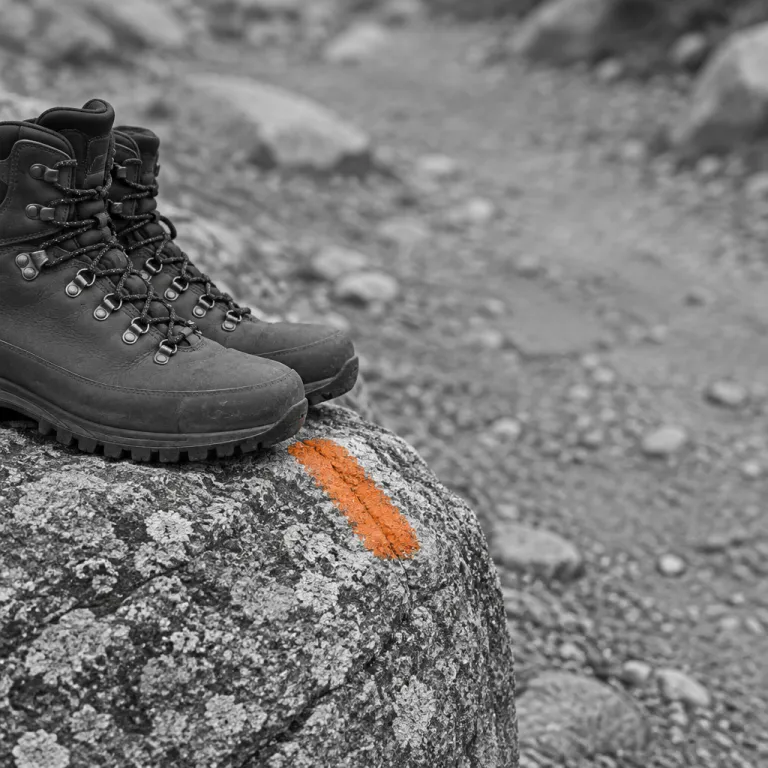

Why flat toe brown boots for men matter in serious terrain
For long alpine approaches and technical scrambles, brown hiking boots for men with a flat toe profile give your forefoot room to work. A flatter forefoot in these men’s boot designs spreads impact forces more evenly, which reduces hot spots on steep 1 000 metre descents. When you combine a broad toe box with dense midsoles and precise lacing, the boot can stay comfortable during twelve hour summit pushes.
Many experienced male hiking partners now favour flat fronted brown boots over aggressive rockered shapes. The more stable platform under the toes improves edging on broken granite and wet roots, while still allowing a natural roll when you carry a 20 kilogram pack. On narrow ridgelines, that square, confidence inspiring contact patch at the front of the boot feels calmer than a rounded profile that wants to tip.
Colour and material choices also matter more than pure style when you move above the treeline. Dark brown uppers hide abrasion marks from scree and crampon straps, while brown leather resists cuts better than most woven synthetics. When you add a rubber rand around the toe and heel, the same pair of brown boots can handle both casual city wear and rough moraine hopping without looking destroyed after a single season.
Evaluating leather, suede and synthetic designs for mountain use
For multi day traverses, the choice between full grain leather, brown suede and synthetic uppers in a hiking boot is not cosmetic. Traditional brown leather boots offer the best long term support, because the material slowly moulds to men’s feet while keeping enough stiffness for edging on snow and rock. In contrast, suede and fabric models feel lighter and more casual at first, but they often lose structure after a few harsh seasons of mixed terrain.
When you assess any Chelsea or chukka style boot for real mountain work, look beyond the marketing photos. Check whether the leather or suede is at least 2 millimetres thick, whether the ankle collar locks the heel, and whether the toe cap is reinforced enough to protect against sharp talus. A proper cap toe or rubber bumper is essential, especially on square front boots where the extra surface area can catch rocks more often.
Some hikers like the easy on convenience of Chelsea boots or Chelsea ankle models for hut approaches and travel days. For that role, a brown flat toe Chelsea boot with a discreet zip can bridge the gap between casual shoes and technical footwear. If you need a more tactical option for mixed urban and trail use, a proven men’s mid boot such as the model reviewed in this performance walking boots test shows how modern synthetics can still deliver stability and grip.
Fit, toe shape and wide square platforms for steep ground
Fit remains the single most important factor when choosing any hiking boot for demanding routes. A brown flat toe design with a wide square front can prevent black toenails on long downhill sections, because the toes spread instead of jamming against a tapered wall. Mountaineers with broad forefeet often find that a generous square toe box lets them size the boot shorter, which improves precision on scrambling moves.
When you compare square toe and round toe boots, think about the terrain you hike most often. Square shapes give more lateral stability on traverses across loose scree, while round or classic cap toe profiles can feel more agile when you hop between boulders or climb short rock steps. For glacier approaches, a slightly squarer toe can also seat better in crampon baskets, especially on stiff western boot inspired designs.
Ankle support must match the toe shape and sole stiffness to avoid fatigue. High ankle boots with a firm heel counter keep the foot aligned over the platform, which is crucial when the front of the boot is broad and flat. If you prefer lower ankle or chukka boots for speed, ensure the lacing and tongue design still lock the midfoot so that the square toe does not twist on side slopes, and consider proven high rise models such as those analysed in this high rise hiking boots review.
From western and cowboy styles to technical trail performance
Outdoor brands increasingly borrow lines from western boot and cowboy boot traditions when they design modern trekking footwear. You can now find brown leather boots that echo classic western stitching while still hiding a rockered sole and a mountaineering grade shank. For many men this blend of heritage and performance makes it easier to wear one pair of brown boots from the trailhead to the town café.
Square toe and wide square silhouettes, once limited to ranch work, now appear in technical men’s boot collections. These shapes give more room for thick winter socks and for natural toe splay on long marches, which reduces blister risk under heavy loads. When designers combine a western inspired upper with a deep lug outsole and a supportive ankle, the result is a boot that feels secure on mud, snow and dusty switchbacks.
Some Chelsea boots and Chelsea ankle hybrids also borrow from cowboy styles, using pull tabs and elastic panels for quick transitions. For hut to hut tours where you change footwear often, a brown flat toe Chelsea design can save time without sacrificing grip. Just ensure that any casual western boot derivative still offers a firm heel cup, a protective toe cap and a sole rated for wet rock, not only for dry ranch soil.
Price, value and what regular and sale labels really mean
When you compare the price of hiking boots, ignore fashion driven labels and focus on construction details. A higher regular price often reflects thicker leather, better stitching and a more sophisticated midsole, which can extend the working life of the boot by several seasons. Over time, that durability usually beats a tempting sale price on a casual model that collapses after a few demanding trips.
For brown flat toe boots, evaluate value by cost per kilometre rather than by the number on the box. If a pair of brown leather ankle boots costs more but survives around 1 500 kilometres of mixed trail, its effective price per outing may be lower than a cheaper pair that fails at roughly 400 kilometres. Track your own usage in a simple log, and you will quickly see which best seller claims match reality and which are just marketing.
Online retailers often highlight free shipping and fast delivery, but those perks should never outweigh fit and performance. Use flexible return policies and free shipping offers to order two sizes of the same boot, then keep only the pair that truly matches your foot. When you see brown models with a dramatic sale price, inspect whether the outsole compound, lining or zip hardware has been downgraded compared with the full price version.
Practical buying checklist for brown flat toe boots on serious hikes
Before committing to any brown flat toe purchase, test the flex pattern and torsional stiffness in person. Hold the boot at the heel and toe, twist it firmly, and reject any model that folds like a casual street shoe under moderate force. A good hiking boot should bend mainly at the forefoot flex point while resisting side to side collapse, especially when the toe box is broad and square.
Next, walk on an incline or a ramp while wearing your usual trekking socks. Your toes should not hit the front of the boot on descents, and your heel should stay locked without rubbing on ascents. If you feel pressure on the little toe in a wide square design, the last shape is wrong for you, even if the brown suede or leather looks perfect.
Finally, think about how your boots integrate with the rest of your hiking system. A supportive pair of ankle boots or chukka boots should work with your preferred gaiters, crampons and layering strategy, including lightweight systems such as those described in this guide to summer layering for hikers. When you align boot choice, clothing and pack weight, a well built brown flat toe model becomes not just footwear but a foundation for safer, more efficient days in the mountains.
Key statistics on hiking boots and mountain footwear performance
- Industry reports from major outdoor retailers such as REI Co-op and Decathlon regularly note that leather and brown leather hiking boots still make up a large share of premium boot sales, suggesting that experienced hikers continue to prioritise durability and support over ultra light synthetic shoes.
- In informal surveys of long distance trekkers on routes such as the Tour du Mont Blanc, many walkers report preferring a roomier or square toe box after their first 1 000 kilometre season, mainly to reduce toenail trauma on extended descents.
- Field feedback collected by alpine clubs, including the German Alpine Club (DAV) and the British Mountaineering Council (BMC), indicates that proper ankle support and stiff midsoles can noticeably reduce reported ankle strain incidents on multi day hut tours compared with very flexible trail running shoes.
- Consumer testing by independent gear reviewers, for example long term wear trials by OutdoorGearLab and Backpacking Light, often finds that high quality hiking boots remain structurally sound for roughly 1 200 to 1 800 kilometres, while lighter casual shoes used on the same terrain frequently show critical midsole breakdown before about 600 kilometres.
FAQ about brown flat toe hiking boots for men
Are flat toe brown boots suitable for technical alpine routes ?
Flat toe brown boots can work well on technical alpine routes if they combine a supportive ankle, a stiff midsole and a precise lacing system. The flat and sometimes square toe profile offers stability on ledges and mixed rock, but the boot must still accept crampons securely. For steep ice or high grade mixed climbing, dedicated mountaineering boots remain the safer choice.
How should brown leather hiking boots fit in the toe box ?
In a properly fitted brown leather hiking boot, you should have about a thumb width of space in front of the longest toe when standing on level ground. On a downhill ramp, your toes must not hit the front of the boot, even when you deliberately stomp. If you feel pressure on the sides of the forefoot in a square toe design, try a different last rather than sizing up excessively.
Do Chelsea style hiking boots provide enough ankle support ?
Chelsea style hiking boots with elastic panels and no laces usually offer less adjustable ankle support than traditional lace up models. Some Chelsea ankle hybrids add internal reinforcements and higher collars, which can be adequate for moderate trails and hut approaches. For off trail routes, heavy packs or unstable scree, a fully laced boot with a locking eyelet remains more secure.
When is it worth paying a higher regular price for boots ?
Paying a higher regular price is justified when the boot uses thicker leather, robust stitching, a proven outsole compound and a midsole that resists compression over time. These factors directly influence how many seasons and kilometres the boots can handle before losing support. If you hike frequently in rough terrain, the lower cost per kilometre of a premium boot usually outweighs the appeal of a short term sale price.
Can brown suede hiking boots handle wet and muddy conditions ?
Brown suede hiking boots can perform well in wet and muddy conditions if they use a waterproof membrane, a protective rand and a lugged outsole designed for soft ground. However, suede requires more regular cleaning and reproofing than smooth leather to maintain water resistance. For consistently boggy or snowy environments, many mountaineers still prefer full grain leather for its easier maintenance and higher abrasion resistance.