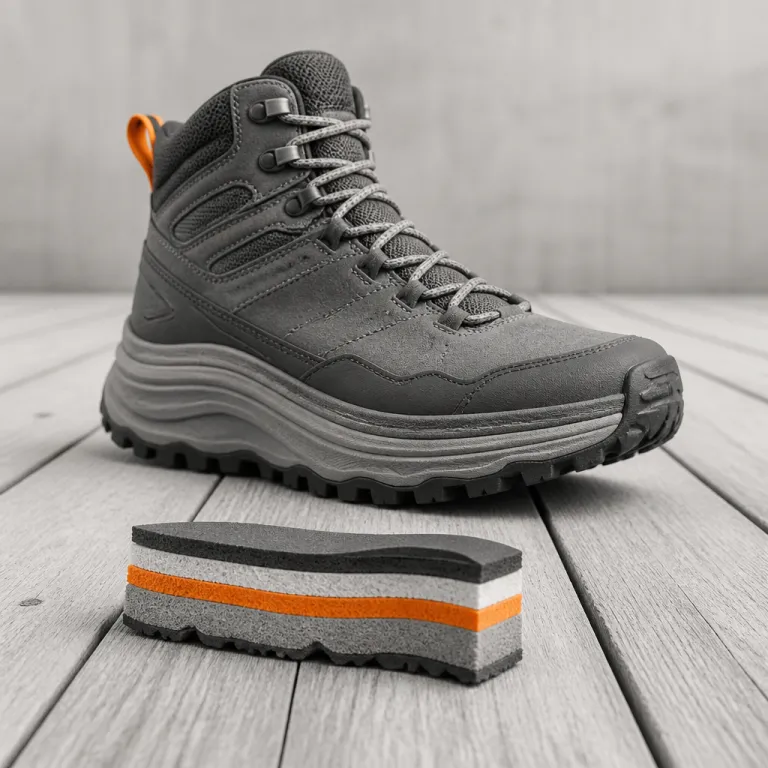
How max cushion hiking boots changed the way we move on trail
Max cushion hiking boots promised running shoes comfort for long hiking days. The latest hiking boot lines for men and women pushed that promise hard, stacking foam higher under every joint. On paper these boots look like the best shoes ever built for tired feet.
In practice the new max cushion hiking boots feel very different once the terrain turns rough. A tall mid sole with a thick gtx or Gore Tex wrapped upper can mute sharp rocks, yet it also blurs the feedback that lets you react quickly on broken trail. When you add a heavy pack and side wind, that soft boot platform starts to matter more than the marketing copy.
Across brands the pattern is clear in both hiking boots and hiking shoes. Hoka, Salomon, Lowa with the Renegade Evo, and Merrell with the Merrell Moab families all raised stack height and often weight in their recent hiking boot updates. The result is a category where comfort at the store feels great, while long term stability on steep terrain can feel less sure footed.
For men who mostly hike mid elevation forest loops, the trade off often feels acceptable. Women who split time between running shoes on weekdays and a hike mid style boot on weekends may even prefer the familiar foam feel. The problem appears when those same hikers take max cushion hiking boots onto talus, scree, or glacial moraines where every mis step has a cost.
Think about where you actually hike, not where the ad shows you hiking. If your longest days are on crushed gravel or well built trail, a tall mid waterproof boot with a plush mid sole can be a smart choice. If your trips include off trail traverses, snow covered passes, or long side hilling, that same boot can become a liability.
The thesis is simple and not negotiable on real terrain. More foam is not free in any hiking boot, because it always costs ground feel, lateral stability, and grams on your feet. The 2026 cycle chased stack height because it sells well at the wall, not because it always hikes well under a load.
Look at the Hoka Kaha line as a clear example of max cushion hiking boots in action. The Hoka Kaha mid waterproof models put a huge slab of foam underfoot, paired with a tall ankle collar that promises strong ankle support. On smooth trail that combination feels like cheating, yet on steep side slopes the same boot can feel tippy when you edge on small holds.
Salomon went a different route with the Salomon Ultra and Salomon Quest families of hiking boots. These hiking boot designs mix moderate stack height with firm foam and a chassis that resists twisting, which helps support the ankle without feeling like a cast. Even there the newest Salomon Ultra boots gained a few millimetres of stack and grams of weight, nudging them closer to the max cushion hiking boots trend.
Altra’s Lone Peak series shows how trail running design bled into hiking shoes and then into hiking boots. The Lone Peak hiking boot and related hike mid models keep the zero drop feel of trail running shoes, yet many recent versions added more foam and a softer ride. That makes them friendly for best hiking comfort on dirt roads, while slightly reducing the precise foot placement that older Lone Peak shoes offered on rock.
When you compare these boots to classic models like the Renegade Evo or the Moab Mid from Merrell, the shift becomes obvious. Those older hiking boots used firmer midsoles, lower stacks, and leather uppers that broke in slowly but then fit well for years. The new max cushion hiking boots feel amazing on day one, yet often pack out faster and lose some of their original support by the time you hit five hundred kilometres.
Price also plays into this arms race in a subtle way. Super thick midsoles, complex mid gtx constructions, and branded foam compounds all raise the retail price of both hiking boots and hiking shoes. You end up paying more for comfort that might not last as long as a simpler boot with less foam and better lasting support.
For hikers who mostly wear running shoes off trail, the transition into max cushion hiking boots feels natural. The underfoot feel of a tall Hoka Kaha or a plush Salomon Ultra boot mirrors the ride of their daily trainers. That familiarity can be helpful, but it can also hide the fact that a hiking boot must manage side loads and ankle support in ways that running shoes never face.
On the shop floor the best hiking boot often feels like the softest one. Your feet are fresh, the carpet is forgiving, and the sales lighting flatters every boot on the wall. Real judgement only arrives when you hit the first steep, loose descent with a full pack and realise how much your ankles must work to control that tall stack.
That is why serious hikers should treat max cushion hiking boots as a tool, not a default. For some men and women, especially those with joint issues or heavier builds, these boots can extend hiking years and reduce pain. For others, especially technical mountaineers and off trail wanderers, the same boots can feel like a downgrade dressed as an upgrade.
Where extra stack height helps, and where it quietly hurts you
Max cushion hiking boots shine brightest on long, repetitive surfaces. Think forest roads, crushed gravel bike paths, and well graded national park trail that rolls gently for hours. On that kind of terrain the tall boot mid sole spreads impact forces and keeps your feet fresher late in the day.
Older or heavier hikers, and anyone carrying more than fifteen kilograms, often feel this benefit most. A Hoka Kaha mid waterproof boot or a plush Salomon Ultra hiking boot can take the sting out of every heel strike, especially when you are dropping long descents. For these hikers the extra grams and reduced ground feel are often a fair trade for less joint pain and more confidence to keep hiking.
Pavement to trail commuters also gain from max cushion hiking boots and hiking shoes. If you walk several kilometres of city sidewalk before reaching dirt, a cushioned boot feels kinder than a firm leather model like the Renegade Evo. In that context the best hiking choice may be a hybrid that borrows from running shoes, with a soft mid sole and enough ankle support for light packs.
Day hikers who mostly stay on marked trail can safely prioritise comfort. For many of these men and women, the best hiking boots will be the ones that feel like their favourite running shoes, just taller and more protective. A mid gtx or other waterproof hiking boot with a roomy box and soft foam can turn casual outings into something they look forward to every weekend.
The story changes once the terrain tilts and breaks apart. On talus, scree, and off camber ledges, max cushion hiking boots raise your centre of mass and reduce the bite of your lugs into rock. Every extra millimetre of foam between your foot and the ground becomes a lever that can twist your ankle when a rock rolls or a root snaps.
This is the stability tax that the 2026 boot cycle rarely mentions. A taller stack in any hiking boot or hiking shoes design always increases the roll moment when your foot lands on an edge, even if the marketing promises perfect ankle support. You can feel it when you side hill for an hour and your peroneals start burning long before your lungs do.
Technical mountaineers and off trail navigators should be especially wary of the softest max cushion hiking boots. On steep snow, mixed rock, or loose moraine, you need a boot that transmits micro feedback from the terrain to your brain. A firmer, slightly lower hiking boot like the Salomon Quest or a traditional leather model often performs better here than any ultra plush option.
There is also a weight tax hiding inside all that foam. Cushioning is one of the heaviest ways to buy comfort in both hiking boots and hiking shoes, because dense mid sole compounds add grams quickly. A lighter boot with a dialled fit, supportive upper, and broken in leather can feel less tiring over a long day than a heavier max cushion model, even if the first few steps feel harsher.
Marketing language around these boots often leans on running shoes science. You will see phrases like supercritical foam, nitrogen infused mid sole, and high energy return plastered across hang tags. At a walking pace on hiking terrain, those claims mostly translate to softer landings and sometimes faster compression, not to free speed or magic propulsion.
Energy return matters far more for trail running than for steady hiking. When you are jogging in Lone Peak trail running shoes or a similar model, a springy foam can store and release energy with each stride. When you are walking uphill under a pack in a tall hike mid boot, your calves and glutes are doing the work while the foam mostly just deforms and rebounds slowly.
For tactical or stealth focused hikers, the trade offs become even sharper. A recent analysis of camouflage boots for demanding terrain highlighted how precise foot placement and quiet edging matter more than plush landings. In that world a slightly firmer, lower hiking boot often beats a max cushion design, because control and feedback trump pillow soft comfort.
None of this means max cushion hiking boots are a mistake for everyone. For many casual hikers on smooth trail, more cushion really is more comfortable, and that is perfectly valid. The key is to match your boot to your terrain, your pack weight, and your risk tolerance, not to the loudest marketing trend of the season.
When you stand in the shop, ask yourself where you actually feel scared or tired on trail. If your hardest moments come on long, flat exits when your knees ache, a cushioned mid waterproof boot might be your best ally. If your hardest moments come on exposed traverses where a slip has consequences, you should probably trade some plushness for a more stable hiking boot platform.
Remember that every design choice in hiking boots and hiking shoes is a compromise. Extra foam, taller mids, and thick gtx membranes all solve some problems while creating others. Your job as a serious hiker is to decide which problems you are willing to live with on the terrain you love most.
How to test fit, stability, and ground feel before you commit
Most hikers test max cushion hiking boots in the worst possible way. They walk a few soft steps on carpet, maybe bounce in place, and decide that the plushest boot must be the best. That quick test tells you almost nothing about how the hiking boot will behave on real terrain.
Start with fit, because no amount of foam can fix a bad last. Lace the hiking boots snugly, then kick your toes into a wall or the floor to check that your toes do not slam the front of the box. Walk down the steepest ramp in the shop, or improvise with a stack of boxes, and make sure your heel stays locked while your forefoot can still splay.
Test both men and women specific versions if they exist, because the shape often differs more than the marketing suggests. Women with wider forefeet sometimes fit well in men sized hiking boots, while some men with narrow heels do better in women labelled hiking shoes. Ignore the gender tag and focus on which boot hugs your mid foot and heel without crushing your toes.
Next, evaluate lateral stability and ankle support, which are the weak points of many max cushion hiking boots. Stand on the edge of a step or curb with half your foot hanging off, then gently roll your weight side to side. A stable hiking boot will let you feel the edge without suddenly tipping, while an overly soft model will feel wobbly as the foam collapses under your ankle.
Repeat the same test in a lower stack boot, maybe a classic Renegade Evo or a Moab Mid from Merrell, and compare. You will often notice that the firmer, lower hiking boots feel more predictable when you load the edge, even if they feel harsher under the heel. That difference becomes magnified on real trail when you are tired and less precise with each step.
Ground feel is harder to quantify but easy to sense with a simple drill. Scatter a few small objects under a thin mat or towel, then walk across in different hiking boots and hiking shoes with your eyes closed. The boot that lets you identify shapes without pain usually offers a good balance between protection and feedback.
Do not forget to test waterproof performance and breathability in a realistic way. A gtx or other Gore Tex lined hiking boot will always run warmer than a non waterproof hiking shoe, especially in summer. If you mostly hike in dry climates, a non waterproof hike mid boot might keep your feet drier overall by letting sweat escape more easily.
For winter or wet cold trips, a fully waterproof hiking boot earns its weight. When you are standing still on ice or snow, as you might while fishing or glassing wildlife, insulation and waterproofing matter more than nimble ground feel. Guides who choose the best boots for ice fishing in serious winter conditions often accept heavier, stiffer models because warmth and dryness become safety issues.
Price should enter the conversation only after fit and function pass your tests. A cheaper max cushion hiking boot that fits poorly or feels unstable is always more expensive in the long run than a pricier model that keeps you injury free. Remember that you are buying a critical piece of safety equipment, not just another pair of shoes men or women might wear casually.
When comparing models like the Hoka Kaha, Salomon Quest, Salomon Ultra, Merrell Moab, and Lone Peak hike mid boots, write down your impressions immediately. Note which hiking boots feel best on edges, which hiking shoes breathe well, and which boot gives you confidence when you close your eyes and rock side to side. Those notes will matter more than any spec sheet once you are back home and trying to choose.
If you can, simulate a real pack load during your test. Bring your own backpack with ten to fifteen kilograms and walk stairs or ramps in each hiking boot, because weight amplifies every design flaw. A boot that feels fine unweighted may reveal sloppy ankle support or heel lift once you add a real hiking load.
Finally, trust your body more than the hang tag. If a max cushion hiking boot feels even slightly unstable in the shop, that sensation will only grow on wet roots and loose rock. Your future self on a remote trail will thank you for choosing the boot that felt boringly stable over the one that felt like a mattress.
Reading between the marketing lines and choosing the right tool
The 2026 boot cycle did not happen in a vacuum. Industry testers reported that new trail footwear trended toward more heft and higher stack height, reversing the previous ultralight push that dominated many hiking boots and hiking shoes. Brands saw how well max cushion running shoes sold and simply ported that formula into the hiking boot wall.
Look closely at the language on product pages and hang tags. Supercritical foam usually means a mid sole that has been expanded with gas to create a lighter, bouncier structure, which can feel great under running shoes but less relevant at a walking pace. Nitrogen infused compounds and high energy return claims sound impressive, yet for steady hiking they mostly translate into softer landings and sometimes faster compression over time.
For serious backpackers and mountaineers, the more important specs hide in the fine print. Pay attention to stack height numbers, mid sole durometer, and outsole compound rather than just the presence of a gtx or Gore Tex label. A slightly lower, firmer hiking boot with a grippy rubber mix often outperforms a taller, softer boot on wet rock and steep dirt.
There is also a cultural swing at play between ultralight minimalism and comfort first design. A recent gear preview argued that the next wave of packs, tents, and boots will trend lighter again, with brands rethinking where weight actually adds value. That perspective aligns with analyses like why every boot, pack, and tent at Switchback was lighter than last year, which highlight how smart design can beat brute force cushioning.
For men and women who hike three hundred kilometres or more each season, durability matters as much as first day comfort. Thick foam in max cushion hiking boots can pack out unevenly, creating hot spots and reducing support long before the outsole wears down. Traditional hiking boots like the Renegade Evo or leather versions of the Salomon Quest may feel stiff at first, yet they often maintain their structure and ankle support for many seasons.
Trail running influence complicates the picture further. Models like the Lone Peak blur the line between trail running shoes and hike mid boots, offering zero drop geometry with increasing amounts of foam. For some hikers this hybrid feels like the best of both worlds, while for others it combines the instability of a tall stack with the reduced structure of a running shoe upper.
When you evaluate waterproof options, separate the membrane from the mid sole story. A gtx or other Gore Tex equipped hiking boot can be either low and stable or tall and plush, and those traits are independent. Choose waterproof hiking boots when your climate and routes justify them, not because the label appears next to a trendy max cushion design.
Camouflage and tactical style boots add yet another layer of marketing noise. Some of these boots borrow heavily from hiking boots, while others are closer to work boots with different uppers. In both cases the same physics apply, because extra foam and height still tax your stability whether the boot is painted green or brown.
For budget conscious hikers, price can push them toward or away from max cushion hiking boots. Sometimes the most aggressively cushioned models sit at the top of the price ladder, justified by exotic foam names and complex mid gtx constructions. Other times brands use softer, cheaper foams to mimic the feel of premium boots at a lower price, trading long term support for short term comfort.
One practical strategy is to own more than one tool. Use a lighter, lower hiking boot or hiking shoes pair for technical trips, and reserve a max cushion hiking boot for long, smooth approaches or recovery hikes. Men and women who rotate between a stable Salomon Quest, a cushioned Hoka Kaha, and a versatile Moab Mid often report fewer overuse injuries than those who force one boot into every role.
Remember that your feet change over time, especially if you increase mileage or switch between running shoes and hiking boots frequently. Re evaluate your fit and support needs every season, checking whether your favourite boot still matches your current terrain and goals. The best hiking choice this year might not be the same boot that served you well five years ago.
In the end the real test of any hiking boot is not the spec sheet or the marketing story. It is how confidently you move through complex terrain at the end of a long day, when you are tired and the light is fading. Comfort matters, but control decides whether you walk out or limp out.
Key statistics and figures for cushioning, weight, and stability
- Across major brands, average stack height in new hiking boots increased by roughly 3 to 5 millimetres over the last product cycle, while average weight per boot rose by about 40 to 80 grams, according to aggregated industry line sheets.
- Biomechanics research from sports science laboratories has shown that raising stack height and softening mid sole foam can reduce impact forces at the knee by several percentage points, but may increase ankle inversion moments on uneven surfaces, which aligns with field reports of higher roll risk on off camber terrain.
- Consumer wear tests on popular models such as Hoka Kaha, Salomon Ultra, Merrell Moab Mid, and Lone Peak hike mid variants often report noticeable mid sole compression and loss of support between 500 and 800 kilometres, compared with 800 to 1 200 kilometres for firmer, lower stack leather hiking boots like the Renegade Evo.
- Retail data from specialty outdoor shops indicate that max cushion hiking boots and hiking shoes now represent a significant share of sales in the light hiking category, with many stores dedicating more than half of their wall space to high stack models for both men and women.
- Surveys of experienced backpackers who log more than 300 kilometres per year consistently show a split preference, with a substantial minority favouring max cushion hiking boots for long, smooth trail days, while another large group prefers lower, firmer boots for technical routes where stability and ground feel are prioritised.