
Summary
Editor's rating
Value: worth it if the fit works for you and you find a decent price
Design: technical look, narrow fit, and some small quirks
Comfort: great out of the box, but clearly for normal-to-narrow feet
Materials: synthetic, light, and mostly focused on function
Durability: early signs are good, but not a tank
Trail performance: grip, support, and weather protection in real use
What you actually get with the Alp Mate Midcut
Pros
- Light and agile for a mid-cut hiking boot with almost no break-in
- Very good grip from the Pomoca MTN Trainer Lite outsole on wet and mixed terrain
- Secure heel hold and precise fit thanks to the 3F system and adaptive eyelets
Cons
- Narrow toe box that won’t suit wide feet or very thick socks
- Ankle padding is fairly thin, not ideal for cold winter use or very sensitive ankles
- Lacing hardware feels a bit delicate compared to heavier-duty boots

Specifications
View full product page →| Brand | Salewa |
A mid-cut hiking boot that feels more like a sturdy trainer
I’ve been using the Salewa Alp Mate Midcut (men’s, size 9 UK, Ombre Blue Pale Frog) as my main hiking boot for a few weeks now, mostly on mixed trails: muddy woodland, rocky paths, and a couple of long, wet days out. I came from heavier leather boots (Meindl-style) and some Salomon trail shoes, so I had a decent comparison in mind for weight, comfort, and grip. My goal was simple: something lighter than full leather, still with decent ankle support and weather protection, and not a sauna for my feet.
First impression when I picked them up: they feel more like a beefed-up approach shoe than a classic boot. The mid-cut height is there, but they’re not bulky, and the Pomoca sole looks pretty aggressive. On foot, they sit on the narrow side, especially around the toe box, so if you’ve got wide feet or like thick socks, you’ll want to pay attention to sizing. I went with my usual 9 UK, and they’re just about right with medium hiking socks; with thicker socks they start to feel cramped at the front.
On the trail, they felt ready right out of the box. There’s almost no break-in compared to traditional leather boots: I did a 12 km muddy loop the first weekend without hotspots or blisters. That said, the ankle padding is not very plush, so if you’ve got bony ankles or old injuries, you might notice the harder feel there. For me it was fine, but not as cushy as some softer, more padded hiking boots I’ve tried.
Overall, the introduction phase with these boots has been pretty straightforward: light, firm, and grippy with a slightly technical feel. They’re not perfect – especially if you expect a big padded winter boot – but as a three-season hiking option for people with normal-to-narrow feet, they seem pretty solid so far. The rest of the review goes into how they actually behave in real conditions: comfort, materials, performance, durability, and whether I think the price is justified.
Value: worth it if the fit works for you and you find a decent price
Price-wise, the Salewa Alp Mate Midcut tends to sit in the mid-range for hiking boots. It’s not bargain-bin cheap, but it’s also not in the high-end leather boot category. On Amazon it often floats around a level where, if you catch a discount of 20–30%, it becomes pretty good value. At full list price, it’s okay but not mind-blowing, especially given the mostly synthetic build and the fact that it’s not a heavy-duty winter boot.
What you actually get for the money: a light, grippy boot with decent waterproofing, good heel hold, and a fairly technical fit. If you’re someone who hikes regularly in three seasons, likes a precise fit, and doesn’t carry huge loads, the cost makes sense. You’re paying for the Pomoca outsole, the 3F system, and a design that’s more performance-focused than casual. Compared to cheaper boots from generic brands, the grip and fit are clearly better. Compared to something like Salomon or Scarpa in a similar price bracket, it’s more about whether the Salewa last matches your foot shape.
Where the value drops a bit is for people with wide feet or those looking for a warm, heavily padded boot. If you have to size up a lot or add custom insoles and thick socks to make it work, the price starts to feel less attractive. Also, if you mainly walk on easy park paths and dry conditions, you’re probably overbuying – a cheaper trail shoe might be enough. For rough, mixed terrain and changeable weather, though, the Alp Mate Midcut earns its place.
In short, I’d say the value is good but very dependent on fit and how you use it. If you can try it on first or at least buy from somewhere with easy returns, do that. If it fits you well and you catch a discount, it’s a solid deal. If it doesn’t fit your foot shape, no price will fix that, and you’re better off looking elsewhere.
Design: technical look, narrow fit, and some small quirks
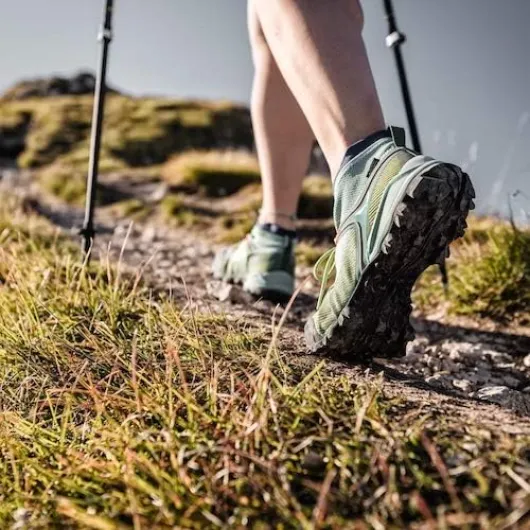
Design-wise, the Alp Mate Midcut leans heavily toward the technical side rather than the lifestyle side. The Ombre Blue/Pale Frog colour is fairly discreet: mostly dark blue with some green details. It’s not flashy, but it doesn’t look like a work boot either, so you can wear it around town without feeling weird. The overall shape is quite streamlined: narrow toe, relatively slim profile, and a mid-height cuff that sits just above the ankle bone on me.
The lacing system is one of the more interesting bits. You’ve got standard fabric eyelets down low, then metal hooks higher up. The so-called Adaptive Eyelets help the boot wrap around the midfoot when you pull the laces tight. In real use, I could fine-tune the fit: tighter at the heel and midfoot, looser at the top when I wanted more ankle flex for easier terrain. The downside is that some of the lace hardware looks a bit thin. I haven’t broken anything yet, but I can see why one reviewer mentioned it feels fragile. If you’re rough with your gear, that’s something to keep an eye on.
Inside, there’s not a ton of padding around the ankle. The collar and tongue have enough foam to avoid rubbing for me, but compared to more cushioned boots (like some Merrell or Keen models), this feels more minimal. That’s good if you like a precise, close fit. It’s less good if you have bony ankles or expect a plush, winter-friendly boot. The toe bumper is firm enough to take a knock against rocks, and the heel counter holds your heel in place nicely, so it does feel secure when you’re moving over uneven ground.
Overall, I’d describe the design as functional and slightly sporty. It’s not going to win any style awards, but it looks decent and clearly built for hiking, not fashion. If you prefer a wide, relaxed fit and loads of padding, this design might feel a bit too technical and narrow. If you like a locked-in, precise feel and don’t mind a firmer collar, the design choices actually make sense.
Comfort: great out of the box, but clearly for normal-to-narrow feet
Comfort is where the Alp Mate Midcut does pretty well, as long as your foot shape matches the boot. Out of the box, I went straight into a 12 km hike with a mix of forest tracks, mud, and some rocky bits. No hot spots, no heel lift, no blisters. The heel hold is solid thanks to the 3F system and the way the lacing pulls the upper around your foot. If you’ve had boots where your heel slides up and down on climbs, this is a nice change.
However, the toe box is on the narrow side. My feet are average width and I felt the sides of the boot a bit on longer descents, especially with slightly thicker socks. It wasn’t painful, but it’s not a very roomy feeling. If you have wide forefeet or like to splay your toes, I’d strongly suggest going up half a size or trying them in person before buying. A couple of Amazon reviewers also mentioned they sized up half a size and were happier. The length itself is slightly generous, but the width is where the restriction shows.
The cushioning underfoot is decent but not pillow-soft. After a full day out, my feet felt used but not battered. Compared to a heavy leather boot, these feel less tiring because of the lower weight. Compared to very cushy hiking shoes, they feel firmer and more precise. Around the ankle, as mentioned before, padding is on the thinner side. If you have “lumps and bumps” around the ankle or old injuries, you may find the collar a bit unforgiving. I didn’t get rubbing, but I can see why someone in the reviews said they wouldn’t pick these for cold winter use – there just isn’t that thick, insulated padding you get on a winter boot.
Ventilation is okay for a waterproof boot but nothing special. On cool days, no problem. On a warmer spring day doing steep climbs, my feet did get warm and a bit sweaty, but not worse than other membrane boots. I’d personally avoid them for hot summer hikes in full sun and go with something more breathable. For spring, autumn, and mild winter days with good socks, comfort is solid. Just don’t ignore the fit issue: if your feet are wide, this boot will probably annoy you after a few hours.
Materials: synthetic, light, and mostly focused on function
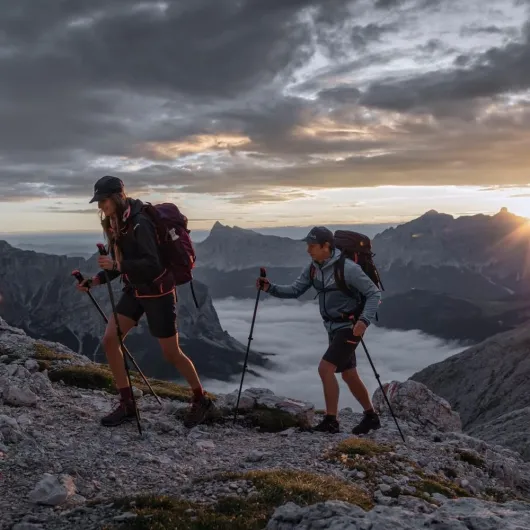
The materials on the Alp Mate Midcut are a mix of synthetic fabric, suede, and rubber, with an EVA midsole and a waterproof membrane. The outer is mainly synthetic with suede reinforcements in high-wear areas. This keeps the weight down and makes the boot dry reasonably fast if it gets soaked. Compared to full leather boots I’ve had, these feel less premium in the hand, but they’re also less of a chore to maintain – a quick brush and a spray is usually enough.
The lining is built around a waterproof membrane. It’s not marketed as Gore-Tex on this exact men’s model, but the idea is the same: keep water out, let sweat out. In practice, the membrane does its job for normal hiking: wet grass, shallow puddles, light rain. I stomped through wet fields and muddy tracks for a good couple of hours and my feet stayed dry. As always with membranes, if you’re out all day in constant heavy rain or you stand in water above the rand, it will eventually get overwhelmed or water will creep in from the top.
The midsole is EVA, which is standard for this type of boot. It gives decent cushioning without being bouncy or mushy. On rocky ground, I never felt sharp stones poking through, which tells me the combination of EVA and the Pomoca outsole is doing its job. The outsole rubber itself feels quite grippy and reasonably tough – after several hikes on rock and gravel, the lugs show only light wear. It’s too early to say how they’ll look after two years, but they don’t feel like soft, fast-wearing rubber.
One thing to note: the insole is basic. It’s fine if you’re doing short hikes, but if you have picky feet or do long days, you’ll probably want to swap it for something with more support. The rest of the materials feel honest for the price range: not luxurious, but practical. If you’re expecting thick leather and metal hardware everywhere, this isn’t it. If you want light, mostly synthetic materials that dry fast and don’t need much care, the Alp Mate fits that brief pretty well.
Durability: early signs are good, but not a tank
I haven’t had these boots for years yet, so I’m leaning on both my own early use and what long-term Amazon buyers are saying. After several weeks and a bunch of muddy and rocky hikes, the outsole lugs show only light rounding, no chunks missing. The upper has a few scuffs on the suede and synthetic areas, but nothing that looks worrying. The stitching is still tight, and the bond between upper and sole shows no sign of separation so far. I’ve cleaned them with lukewarm water and a soft brush, then let them air dry – nothing fancy.
One Amazon reviewer mentioned their previous pair of Salewa boots lasted about four years of frequent use before the waterproofing gave up and the soles wore through. That sounds realistic for this type of light-to-midweight hiking boot. These are not heavy-duty, full-grain leather backpacking boots that you resole and keep for a decade. They’re more of a practical, several-seasons boot if you hike regularly. Treat them decently – clean off mud, avoid drying them on radiators, re-proof the upper from time to time – and you’ll probably get good mileage.
The bits that concern me slightly are the lace hooks and eyelets. They’re functional and help with the precise fit, but some of the hardware feels a bit thin. If you’re constantly yanking the laces hard or dragging the boots through scree, I could see those being a potential weak point. So far, mine are intact, but I wouldn’t be surprised if that’s where problems show up after a few years. Laces themselves feel okay and haven’t frayed.
Overall, I’d rate durability as good for the weight and price bracket, but not bombproof. If you want a boot to wear every single day for work, heavy backpacking, and winter abuse, you’re probably better off with a sturdier leather model. If your use is mainly weekend hikes, a few trips a year, and some casual wear, these should hold up well enough as long as you don’t completely neglect them.
Trail performance: grip, support, and weather protection in real use
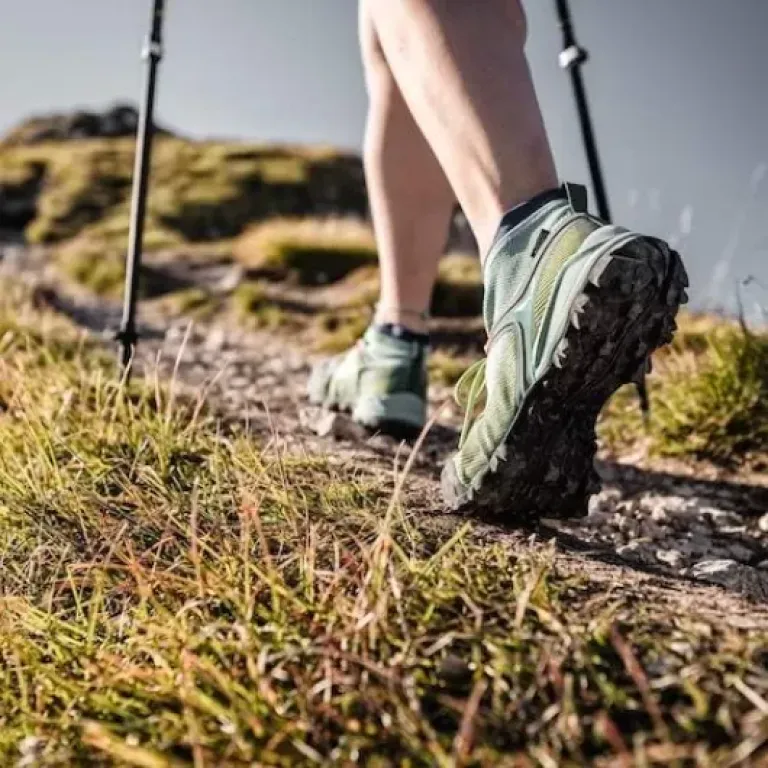
On the trail, the Alp Mate Midcut feels like a light, precise hiking boot that doesn’t get in the way. The Pomoca MTN Trainer Lite outsole is one of the main strong points. The lugs bite well into mud and soft ground, and on wet rock they’re better than many budget boots I’ve used. I did a wet, rooty woodland trail after rain and never had that sketchy feeling where your foot slides unexpectedly. On steep descents with loose gravel, the heel brake did its job and I felt in control.
Support-wise, the mid-cut height and reasonably stiff heel give enough stability for day hikes and light backpacking. I carried an 8–10 kg pack on a couple of routes with rocky sections and side-hilling, and my ankles felt supported. This isn’t a rigid mountaineering boot though – there’s some flex in the forefoot, so you can walk normally on flat ground without feeling like you’re in ski boots. For scrambly terrain, that flex is actually helpful because you can place your feet more naturally.
As for water resistance, the membrane holds up fine in typical UK-type conditions: wet grass, puddles, light to moderate rain. I deliberately walked through wet fields and shallow streams and stayed dry. Like the Amazon review mentioned about a similar Salewa pair, I wouldn’t expect the waterproofing to last forever, but that’s true for almost any membrane boot. With normal cleaning and the occasional re-proofing spray, you should get a few good seasons out of them. Breathability is okay but not outstanding – on warm, humid days your socks will still get damp from sweat.
One limitation is winter performance. Because the padding is fairly light and the boot isn’t very insulated, your feet will get cold if you’re standing around in low temperatures for long. I’d use these in winter only if I’m moving most of the time and wearing good wool socks. For serious winter hiking with snow and sub-zero temperatures, I’d go for something warmer. But for three-season use and mixed, often wet terrain, the overall performance is pretty solid for the weight.
What you actually get with the Alp Mate Midcut
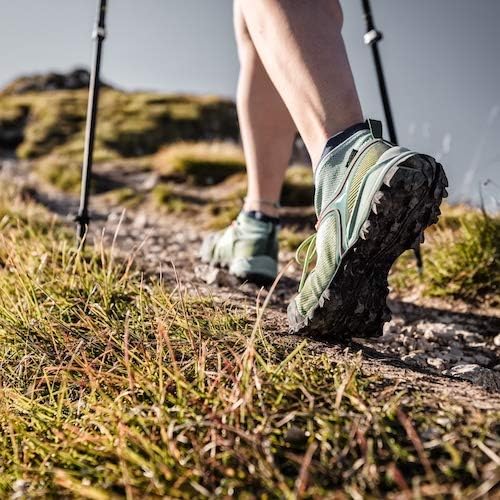
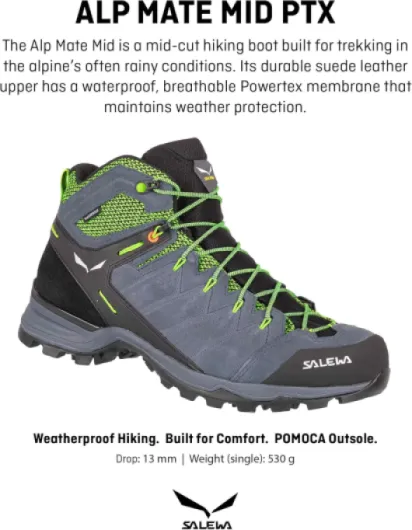
The Salewa Alp Mate Midcut is sold as a mid-top hiking boot aimed at alpine-style hiking and mixed terrain. On paper, it’s a synthetic boot with a suede upper, waterproof membrane, EVA midsole and a Pomoca MTN Trainer Lite outsole. Single shoe weight is listed around 530 g, which matches how they feel in the hand: lighter than classic leather boots, heavier than a pure trail runner. The model I’ve been using is the men’s 9 UK in the Ombre Blue/Pale Frog colourway – basically dark blue with greenish accents.
In practice, the boot sits in that in-between zone: more supportive than a trail shoe, less tank-like than a heavy backpacking boot. There’s the Salewa 3F system that links heel, instep and sole to lock your foot in, plus adaptive eyelets that help the lacing wrap around the midfoot. You also get a waterproof membrane (not Gore-Tex in this exact model, but same idea) and a fairly stiff heel counter. The insole is basic but not terrible, with a bit of arch support; I swapped it for my usual aftermarket insoles after a few hikes for extra comfort.
On the foot, the boot feels slightly long and narrow. Compared to Salomon in the same size, I’d say Salewa feels a touch longer and slimmer in the forefoot. If you have wide feet or like a roomy toe box, that’s something to consider. The ankle height is mid: enough to feel supported when side-hilling or in rocky sections, but don’t expect the locked-in feel of a high-cut leather mountain boot. For me, carrying a 8–10 kg daypack, the support was adequate, but I wouldn’t pick these for a two-week trek with a 20 kg pack.
So in simple terms: this is a light-to-midweight hiking boot for day hikes and short treks, especially in spring and autumn. It’s not trying to be a hardcore winter boot, and it’s not a casual sneaker either. If you’re after something that can handle mud, wet grass, and rocky paths without feeling like a brick on your feet, that’s exactly where the Alp Mate Midcut sits in the lineup.
Pros
- Light and agile for a mid-cut hiking boot with almost no break-in
- Very good grip from the Pomoca MTN Trainer Lite outsole on wet and mixed terrain
- Secure heel hold and precise fit thanks to the 3F system and adaptive eyelets
Cons
- Narrow toe box that won’t suit wide feet or very thick socks
- Ankle padding is fairly thin, not ideal for cold winter use or very sensitive ankles
- Lacing hardware feels a bit delicate compared to heavier-duty boots
Conclusion
Editor's rating
After putting the Salewa Alp Mate Midcut through a bunch of real hikes, my take is pretty straightforward: it’s a solid three-season hiking boot for people with normal-to-narrow feet who want something lighter than classic leather boots but more supportive than a trail runner. The grip from the Pomoca sole is genuinely good on wet and mixed terrain, the waterproof membrane handles typical rain and mud fine, and there’s almost no break-in. The boot feels precise, secure, and fairly agile on the trail.
It’s not perfect though. The toe box is narrow, the ankle padding is on the thin side, and it’s not a warm winter boot. If you’ve got wide feet, sensitive ankles, or you want something for standing around in the cold, this probably isn’t the right choice. Durability looks decent but not bulletproof – think several seasons of regular use rather than a lifetime boot. Value is good if you find it at a sensible price and the fit works for you; at full price it’s still reasonable, but there are alternatives from other brands in the same range.
So, who should get it? Hikers doing day hikes or short treks in spring, summer (not super hot), and autumn, who walk on mixed, often wet terrain and appreciate a snug, technical fit. Who should skip it? Wide-footed hikers, people wanting a soft, cushy winter boot, or those who mainly stroll on easy paths where a simpler shoe would do the job. If you fall in the first group and can try a pair on, the Alp Mate Midcut is definitely worth considering.