
Summary
Editor's rating
Value for money: worth it if you really use the features
Design & fit: technical look, not exactly discreet
Comfort: secure and precise, but not a slipper
Materials & build: solid, a bit on the heavy side
Durability after real use
Performance on trail, rock and snow
What these boots are actually made for
Pros
- Very stable and stiff sole with good grip on rock, scree and snow
- Compatible with semi-automatic crampons and secure heel hold for technical terrain
- Robust construction with full rubber rand and decent long-term durability
Cons
- Quite stiff and narrow out of the box, with a noticeable break-in period
- Heavier and less cushioned than regular hiking boots, tiring on easy long trails

Specifications
View full product page →| Brand | Salewa |
A boot for when hiking shoes just aren’t enough
I’ve been using the Salewa Crow Gore-Tex (men’s, size 8 UK, Cactus Sulphur Spring colour) for mixed mountain trips where a normal hiking shoe feels too light, but a full-on winter boot would be overkill. Think rocky alpine paths, via ferrata, early-season snowfields, that kind of stuff. I’m not a sponsored athlete, just someone who hikes a lot and does some easy mountaineering every year.
Before these, I mainly used classic leather trekking boots (Meindl and Scarpa). They were comfy but heavy and not great with crampons. I wanted something a bit lighter, crampon compatible, and with better edge grip on rock. The Crow GTX kept coming up in forums and the Amazon rating is pretty decent (4.4/5 with a lot of reviews), so I gave them a shot.
I’ve put roughly 120–150 km into them so far: a mix of rocky trails, scree, some wet grass/mud, and a couple of days with semi-auto crampons on glacier and hard snow. That’s enough to get a good idea about comfort, hot spots, durability and all the little annoyances you only notice after a few days.
Overall, they do pretty much what they promise: a stiff, precise boot for rough terrain, not a comfy sneaker for Sunday walks. They’re not perfect and there are a few things that bug me, especially around comfort and weight, but they feel reliable and technical enough for what they’re designed for. You just need to know what you’re buying and not expect a soft, cushy hiking shoe.
Value for money: worth it if you really use the features
Price-wise, the Salewa Crow GTX usually sits in the mid-to-upper segment for trekking and light mountaineering boots. You’re not paying budget prices, but you’re also not in the top-tier range of full-on alpine boots. For that money, you get Gore-Tex, a Vibram sole, full rand, and crampon compatibility, plus a proven design that a lot of people already use in the Alps and similar terrain. On paper, that’s fair.
Whether it’s good value depends a lot on how you use them. If your main use is occasional hiking on easy trails, I’d say they’re overkill and not great value. You’ll be dragging around extra weight and stiffness for no real benefit, and you’d be better off with a cheaper, softer hiking boot that’s more comfortable and still waterproof. In that scenario, these are basically money wasted on features you won’t use.
If you regularly go into rocky, high-mountain terrain, do via ferrata, or sometimes need crampons but don’t want a heavy winter boot, then the equation changes. In that case, you’re getting a boot that handles all of that without falling apart quickly. The decent Amazon rating (4.4/5 with over two thousand reviews) also suggests the boot is doing its job for a lot of people, not just a niche group. Given the build quality and how little wear I’ve seen so far, I expect to spread the cost over several seasons, which makes the price easier to swallow.
So, in my opinion, value is good but conditional: it’s money well spent if you actually need a technical, semi-crampon-compatible boot and you’re okay with a firmer feel. If you only hike a few times a year on marked trails, there are cheaper and more comfortable options that make more sense.
Design & fit: technical look, not exactly discreet
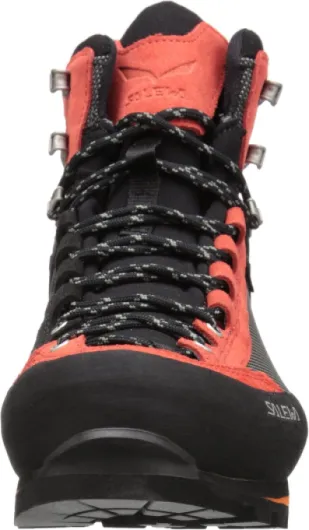
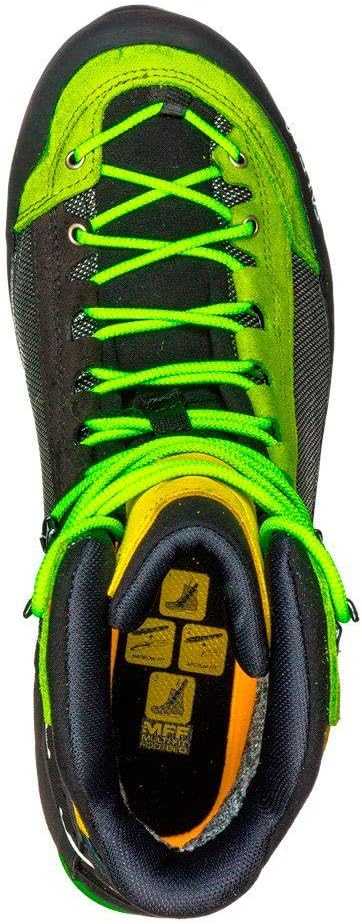
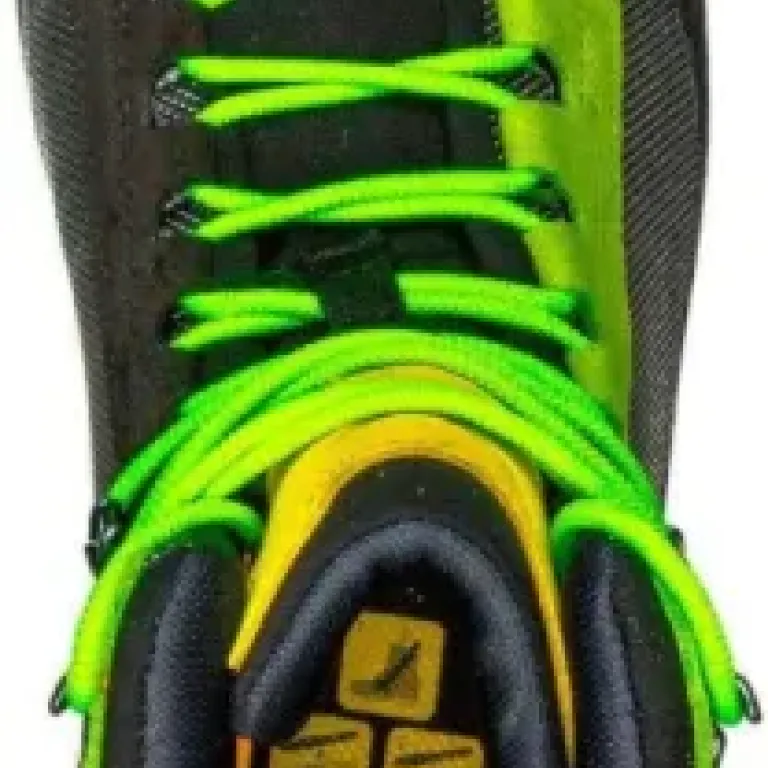
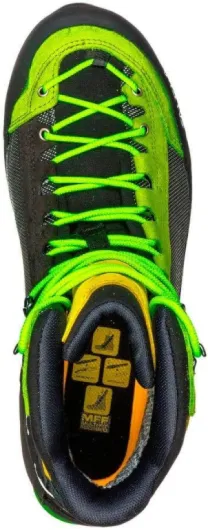
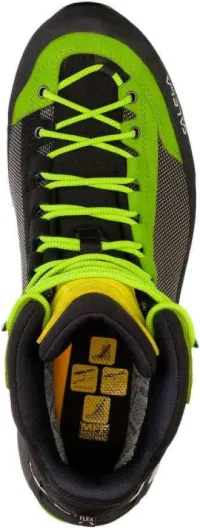
Design-wise, these are not subtle. The Cactus Sulphur Spring colour is basically a green/yellow combo that stands out a lot on the trail. Personally, I don’t really care what my boots look like as long as they work, but if you prefer dark, neutral colours, this shade is a bit loud. The positive side is that they’re easy to spot in a gear pile or hut boot room. The overall shape is quite slim and technical, more like an approach shoe scaled up than a big boxy trekking boot.
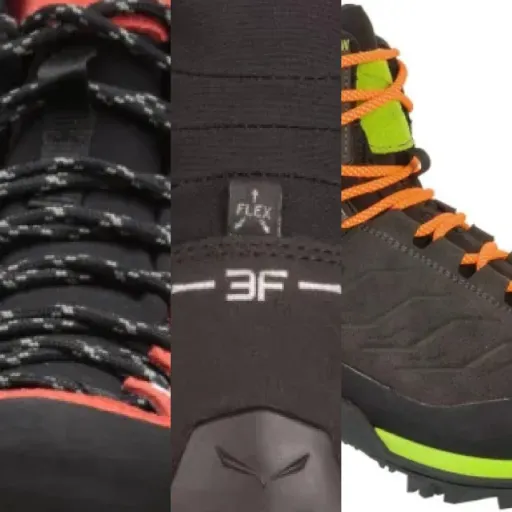
The cut is mid-top, with a fairly low but flexible collar at the back (Salewa calls it Flex Collar). On steep descents, you actually feel that extra rear movement: your ankle can roll forward naturally without feeling blocked by a rigid cuff. That part I really liked, especially when coming down long scree slopes or rocky paths where you’re taking big steps and your legs are already tired.
One thing that stands out on the design is the full rubber rand all around the boot. It’s not just a tiny bumper at the front; the sidewalls are well protected. After a few days scraping against sharp rocks and kicking steps in firmer snow, the upper still looked pretty clean, just some cosmetic marks on the rubber. No peeling or weird gaps so far. The lacing also goes fairly low towards the toes and uses proper metal hooks and eyelets, which feel sturdy and haven’t bent or loosened on me.
In terms of fit, these run on the narrower side, especially in the midfoot. My feet are medium width and I was fine, but if you have very wide feet or a big forefoot, I’d strongly suggest trying them on before buying. The heel cup is quite tight, which helps prevent heel lift but also makes the first few outings a bit unforgiving until the boot shapes to your foot. So from a design point of view: well thought out for technical use, but definitely not a wide, relaxed fit.
Comfort: secure and precise, but not a slipper
Comfort is where opinions on these boots usually split, and I get why. Out of the box, they feel quite stiff and narrow, especially around the midfoot and heel. My first full day in them was about 18 km with 1200 m of ascent and descent on mixed rocky terrain. I didn’t get blisters, but my feet definitely felt tired and a bit squeezed at the end of the day, especially the outer side of my forefoot. So yes, there is a break-in period, even if Salewa likes to talk about blister-free guarantees.
After 3–4 outings, things improved noticeably. The upper softened a bit, and the insole shaped more to my foot. What I appreciated then was the secure heel hold: no heel lift on steep climbs, which is usually where I get hot spots with looser boots. The climbing-style lacing also helps you tune the fit. I often loosen the forefoot slightly for the approach, then tighten it a bit for scrambling or via ferrata, and finally relax it again for long descents. Once I started doing that, the pressure points mostly disappeared.
The downside is that underfoot cushioning is not very plush. The boot is stiff and protective, but you do feel you’re standing on something quite hard compared to more cushioned trekking boots. On long, easy trails or forest tracks, my feet felt more beaten up at the end of the day than in my softer leather boots. On the other hand, on sharp rocks and scree, the rigid sole saves your feet from getting poked all the time, so it balances out depending on terrain.
If you’re used to trail runners or soft hiking shoes, these will feel harsh. If you’re used to alpine boots, you’ll probably find them acceptable and even fairly comfortable for what they are. My take: comfort is decent once broken in, but they’re not forgiving, and they’re definitely not the kind of boot you forget you’re wearing. For technical days, I’m happy with them. For casual walks or very long approach days on easy paths, I’d choose something softer.
Materials & build: solid, a bit on the heavy side
The boot mixes synthetic textile with 1.6 mm suede for the upper, backed by a Gore-Tex Performance Comfort membrane. Underneath you get a nylon midsole reinforced with about 27% fiberglass, and a Vibram Mulaz outsole. So it’s clearly built for stiffness and durability rather than softness and flex. When you hold it in your hand, you feel it: the boot doesn’t really bend much at the forefoot, and the torsional rigidity is strong, which helps on rocky traverses and when using crampons.
The Gore-Tex lining has behaved as expected for me. I walked several hours in wet grass and shallow slushy snow; my socks stayed dry. Breathability is decent for a waterproof boot, but don’t expect miracles: on hot days with a heavy backpack, my feet still ended up sweaty. That’s normal for this kind of boot. Inside, the lining and insole are nothing fancy but feel robust. No early wear on the heel lining, which is where some cheaper boots start to fray quickly.
The rubber rand is probably my favourite material choice here. It wraps around the whole boot and takes most of the abuse from rocks and crampon straps. After around 150 km and a couple of crampon days, I only see cosmetic scratches. No delamination, no cuts going through to the upper. The synthetic areas also seem to handle abrasion better than full leather in wet conditions: they don’t soak up water, and drying time is shorter once you’re back in the hut or at home.
The downside of all this is weight and stiffness. At around 675 g per shoe, plus the rigid midsole, you feel them when you’re just walking on easy trails. They feel overbuilt if your day is mostly dirt paths and gentle slopes. But once you hit rough ground, you start to appreciate the way the materials protect your foot and keep the boot stable. So it’s a clear trade-off: comfort and lightness versus protection and precision. Salewa clearly leaned toward the second option with these.
Durability after real use
In terms of durability, these boots give a pretty solid impression. After around 120–150 km in mixed conditions, there’s very little to complain about structurally. The upper has the usual scuffs from rocks, but nothing that looks like it’s about to tear. The rubber rand is scratched but still fully attached, with no peeling at the edges. The stitching around the lacing and along the rand is intact, no loose threads so far.
The sole wear is reasonable. I tend to be hard on heels, and there is some rounding of the heel lugs, but the profile is still clearly there and grip hasn’t noticeably degraded yet. On the front and midsole area, the lugs are only slightly worn. For the amount of scree and rock I’ve walked on, that’s decent. I’d expect to get several more seasons of regular alpine use out of them before the sole needs resoling or the grip drops too much.
Inside, the lining around the heel – where many boots start to fail – still looks good. No holes or shiny worn patches yet. The insole is basic and has compressed a bit, but that’s standard; if you’re picky about cushioning, you’ll probably swap it for a better aftermarket insole anyway. The hooks and eyelets are all still straight, and the laces haven’t frayed despite some rough tightening.
Of course, I can’t speak for five-year durability yet, but compared to other boots I’ve owned, the build quality feels trustworthy. Nothing gives the impression of being cheaply made or rushed. If you abuse them daily on very rough terrain, you’ll eventually kill them like any boot, but for regular alpine trips and a few bigger outings per year, I’d say they’re built to last a good while.
Performance on trail, rock and snow
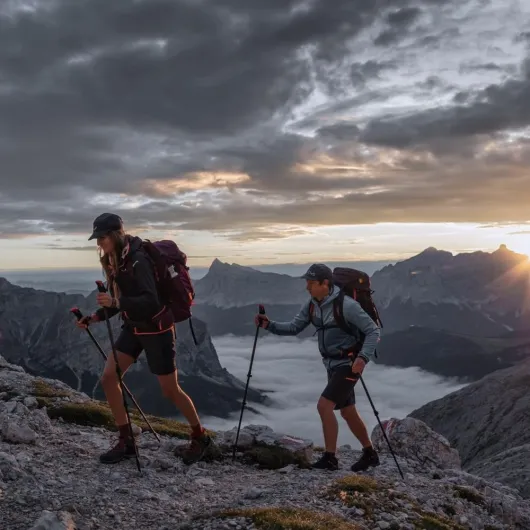
On real terrain, the Crow GTX behaves like a proper technical boot. The Vibram Mulaz sole has a fairly aggressive lug pattern and a well-defined heel brake. On steep, loose descents (gravel and broken rock), I felt stable and didn’t experience unexpected slips. On wet rock, grip is good but not magical – it’s still a hard, durable compound, not a soft approach shoe rubber. You can edge well on small holds thanks to the stiffness, which is great for scrambling and via ferrata.
I used them with semi-automatic crampons (heel clip, front strap) on a mixed day: some glacier walking and a bit of steeper, icy snow. The heel welt and stiffness of the sole handled it without any drama. No flexing that would pop the crampon off, and foot placements felt precise enough for front-pointing on short steep sections. For serious technical ice climbing these wouldn’t be my choice, but for glacier travel and classic alpine routes, they’re absolutely fine.
In wet conditions, the Gore-Tex membrane did its job. Several hours in wet snow and slushy ground, plus some stream splashes, and my socks stayed dry. The only time I felt moisture inside was from sweat on a warm day, not from leaks. The ankle support is also solid without feeling like a cast. On traverses with a heavy pack, my ankles felt well supported, and the Flex Collar helped keep things comfortable on long descents.
Where they perform less well is on long, flat approaches or very easy terrain. The stiff sole that’s great for edging and crampons becomes a bit of a hindrance when you just want a natural, rolling stride. After 10+ km on a mostly easy valley trail, my feet felt more fatigued than in lighter shoes. So performance is excellent for what they’re built for (rough alpine ground, snow, scrambling), and just average or even slightly annoying on mellow hikes where such a technical boot isn’t really needed.
What these boots are actually made for
The Salewa Crow GTX sits in that middle ground between a classic trekking boot and a proper alpine boot. On paper it’s sold as a versatile mountaineering and alpine trekking boot. Translation: it’s meant for rocky ridges, via ferrata, glacier approaches and long days on rough high-mountain terrain, not for flat forest trails. The sole is compatible with semi-automatic (combi) crampons, which is a big plus if you sometimes go on snow or glacier but don’t want a pure winter boot.
They use a GORE-TEX Performance Comfort lining, so the idea is to handle wet conditions and some snow without turning your feet into a sauna straight away. The upper is mostly synthetic with some suede (about 1.6 mm), plus a full rubber rand around the boot. On the ground, that means you can bash them into rocks and scree without crying at every scratch. Weight-wise, a single shoe is around 675 g, so it’s not ultralight, but it’s in line with other technical boots in this category.
Salewa pushes their 3F system quite a bit: basically, it links lacing, heel and sole to improve support around the ankle and heel. There’s also a climbing-style lacing that goes fairly close to the toes, which lets you fine-tune the front of the boot more than on a normal trekking shoe. In practice, this does help lock the foot in, especially on steep traverses or when edging on rock. It also means you spend a bit more time adjusting lacing in the morning.
If you’re just looking at the spec sheet, the picture is pretty clear: this isn’t some lifestyle “outdoor look” boot, it’s a technical, stiff mid-top meant for mountains. If you mainly walk on easy paths, you’ll probably find it too rigid and overbuilt. If you like scrambling, via ferrata, and occasionally strapping on crampons, it starts to make sense.
Pros
- Very stable and stiff sole with good grip on rock, scree and snow
- Compatible with semi-automatic crampons and secure heel hold for technical terrain
- Robust construction with full rubber rand and decent long-term durability
Cons
- Quite stiff and narrow out of the box, with a noticeable break-in period
- Heavier and less cushioned than regular hiking boots, tiring on easy long trails
Conclusion
Editor's rating
For me, the Salewa Crow Gore-Tex is a solid all-round mountain boot that makes sense if you spend real time in rough alpine terrain. It’s stiff, protective, and works well with semi-automatic crampons, which covers a lot of classic routes, via ferrata and glacier approaches. The grip is reliable, the build feels tough, and after a short break-in, the fit is secure with very little heel lift. I feel confident in them on rock, scree and snow, which is the main point of a boot like this.
On the flip side, they’re not particularly forgiving. Out of the box they’re quite stiff and a bit narrow, and the underfoot cushioning is nothing special. On long, easy trails they feel like too much boot: heavy, rigid, and a bit tiring. If your mountain days are mostly mellow hikes or valley walks, there are better, cheaper and more comfortable choices. Also, if you have very wide feet, I’d definitely try them on first, because the midfoot hold is pretty tight.
I’d recommend these to people who do regular alpine trekking, via ferrata, and occasional glacier routes, and want one boot that can cover all of that without going into full expedition-boot territory. If you’re a casual hiker, or you mainly walk on soft paths and don’t touch snow or technical terrain, I’d skip these and go for a lighter hiking boot or even trail shoes. In short: a capable, trustworthy tool for the right user, but not a comfy all-rounder for everyone.