
Summary
Editor's rating
Value for money: who should actually buy these
Design: technical look and a stiff build
Comfort: secure and supportive, but needs break-in
Materials: solid mix of leather, synthetic and Gore-Tex
Durability and build quality after real use
Performance on the trail: where these boots make sense
What you actually get with these Salewa boots
Pros
- Very secure fit with excellent heel hold and good ankle support
- Waterproof Gore-Tex lining that keeps feet dry in wet conditions
- Sturdy build and Vibram outsole that feel durable on rocky, technical terrain
Cons
- Quite stiff and heavy compared to lighter hiking shoes
- Runs warm, not ideal for hot summer hikes
- Needs a noticeable break-in period before becoming comfortable

Specifications
View full product page →| Brand | Salewa |
Solid mountain boots, but not for everyone
I’ve been using the Salewa Mountain Trainer Mid Gore-Tex (men’s, size 11 UK, Asphalt Fluo Orange) for a few weeks on mixed terrain: rocky trails, muddy forest paths and a couple of wet, cold days. I’m used to wearing mid-range hiking boots from brands like Salomon and Scarpa, so I wasn’t coming from sneakers. That helped, because these Salewa boots are clearly built more for serious trekking than casual Sunday walks.
First thing: they feel sturdy and pretty stiff out of the box. This isn’t the kind of boot you slip on and forget in 5 minutes. I needed a few outings to break them in properly. The ankle support is obvious right away, and the sole feels quite rigid compared to more “hiking-shoe” style footwear. If you mostly walk on flat gravel paths, it may feel like overkill.
I tested them in light to moderate rain and on wet, grassy slopes. The GORE-TEX lining did its job: no water got in, and my socks stayed dry. The flip side is that they run on the warm side. On cooler days it’s fine, but I wouldn’t pick these for hot summer hikes unless you’re mostly at altitude. They’re also not light trainers; they’re more in the “solid trekking boot” category.
Overall, my first impression is: very secure, very protective, but not the most relaxed boot. If you like a flexible shoe, you’ll probably find these a bit much. If you want something that holds your ankle, grips well on rocks and keeps your feet dry in autumn/winter, they start to make sense. Just don’t expect them to feel like running shoes, because they don’t.
Value for money: who should actually buy these
In terms of price, the Salewa Mountain Trainer Mid GTX usually sits in the mid-to-upper range of trekking boots, roughly in the same bracket as high-end Salomon, Scarpa, or Lowa models with Gore-Tex. For that money, you expect good protection, waterproofing and durability, and on those points they deliver. You’re paying for a solid leather-and-textile build, a Vibram sole and a proper Gore-Tex membrane, not a fashion logo.
Where the value depends a lot is how and where you hike. If you mainly do easy, short walks on gentle terrain a few times a year, these boots are overkill. You’ll be carrying extra weight, dealing with a stiff sole and warm lining for no real benefit. In that case, a lighter hiking shoe or a cheaper mid-boot would make more sense and save you money. You’d be paying for features you don’t really use.
If, on the other hand, you do regular hikes with elevation, rocky paths, wet conditions and maybe multi-day treks, they start to look like a better deal. The ankle support, grip and waterproofing come into play, and the sturdier build should last longer than a light shoe. Over a few seasons, that can make the cost easier to justify. Also, the fact that they’re comfortable once broken in, and that heel hold is strong, reduces the risk of throwing them in a closet after two painful outings.
Compared to some competitors, they’re a bit heavier and stiffer, but also feel a bit more protective. So value-wise, I’d say they’re good for serious hikers and just average for casual users. If you know you want a robust mountain boot and you’re okay with the weight and break-in time, the price is reasonable. If you’re unsure or you mostly walk easy trails, you can probably spend less and be just as happy.
Design: technical look and a stiff build
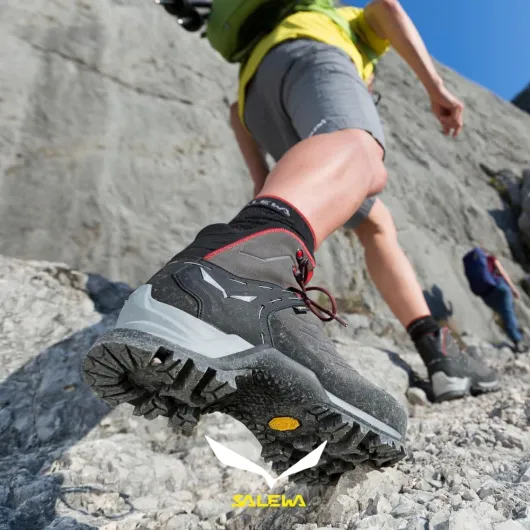
Design-wise, these Salewa Mountain Trainer Mid GTX boots lean clearly towards the technical side. The Asphalt Fluo Orange colourway is quite practical: dark grey hides dirt reasonably well, and the orange details give some visibility without screaming for attention. After a few muddy hikes and some rock scrapes, the upper still looks good, just dusty, which is exactly what I want from a trekking boot. No weird peeling or early scuffs beyond normal use.
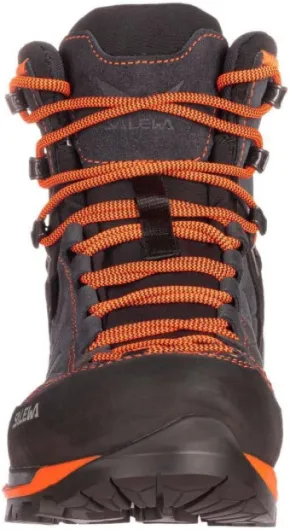
The shape of the boot is relatively narrow in the midfoot with a bit more room in the toe box than I expected from looking at it. I have average-width feet and they fit me well, but if you have very wide feet you might feel squeezed at first, especially before the upper softens. The lacing system is a strong point: it runs low towards the toes, so you can adjust tension very precisely. I liked being able to tighten the heel and midfoot while leaving the toes a bit looser on longer hikes.
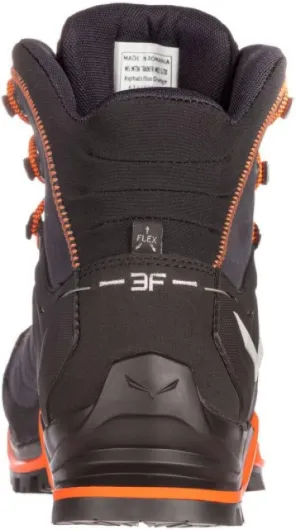
The ankle design is quite high and padded, with that Flex Collar at the back. In use, it gives good rearward flex when you go downhill, but sideways it still feels very supportive. It’s not a floppy mid, it’s a proper supportive collar. That’s good for stability, but it also means you always feel like you’re wearing a boot, not a shoe. If you like that locked-in feeling, you’ll appreciate it. If you want something that disappears on your foot, you won’t get that here.
One detail I noticed: the rubber rand around the toe and lower sides adds a lot of protection but also contributes to the stiff, structured feel. It’s reassuring on scree and rocky paths, but it also makes the boot less forgiving when walking on flat, hard surfaces like pavement. In short, the design clearly prioritises protection and support over lightness and flexibility. For mountain trekking and rough trails, that makes sense. For casual everyday wear, it’s overkill and a bit tiring.
Comfort: secure and supportive, but needs break-in
Comfort is where you really need to know what you want. Out of the box, these boots felt quite stiff and a bit unforgiving. The first short walk (about 5 km on mixed terrain) went fine, but I could feel pressure points around the ankle and the top of the foot where the laces cross. Nothing dramatic, but clearly not a slipper-like feel. After two or three outings, things started to loosen up and the upper molded better to my foot.
The heel hold is excellent. I had zero heel lift on climbs, which is often where I get blisters with some boots. The 3F system and the long lacing really help lock the heel down. On the downside, if you overtighten the laces, you’ll feel it quickly on the top of your foot because the tongue and upper don’t have tons of give. I ended up using a slightly looser lacing on flat sections and tightening a bit more for steep uphill or technical bits.
Underfoot, the cushioning is on the firm side. You feel protected from sharp rocks, but you also feel the overall stiffness of the sole. For long days on rocky trails, I actually prefer that, because my feet feel less fatigued from constant flexing. On hard pavement or very flat, easy gravel, it can feel a bit tiring compared to a softer, more flexible shoe. It’s clearly tuned for mountain-type terrain, not city walks.
In terms of warmth and moisture, my feet stayed dry from the outside, but they did get a bit sweaty on faster hikes. The Gore-Tex lining breathes okay, but with the leather and the fairly padded build, this isn’t a cool, airy boot. For cold and wet autumn/winter hikes, I like that. For hot summer days below the tree line, I would pick something lighter and more breathable. So overall, comfort is good once broken in, as long as you accept the stiff, protective style. If you want soft and flexible, this isn’t it.
Materials: solid mix of leather, synthetic and Gore-Tex
The upper is mainly suede leather with abrasion-resistant textile panels. In hand and on foot, the leather feels thick enough to inspire confidence, not like thin fashion leather. After several hikes with rocks, roots and some brush, the suede shows normal marks but nothing that looks like it’s about to tear. The textile inserts help with some flex and breathability, though you still feel this is more leather boot than mesh shoe.
Inside, you get a GORE-TEX Performance Comfort lining. In practice, this means the boot is properly waterproof up to the lower part of the collar. I walked through wet grass, puddles and light streams that covered the foot but not the top of the boot, and my socks stayed dry. The price you pay is warmth: the combination of leather and Gore-Tex keeps heat in. In cold, damp weather it’s great; in milder conditions you start to feel a bit hot, especially if you push the pace.
The sole is synthetic with a Vibram WTC outsole. The rubber feels grippy and reasonably firm. It’s not a soft, quickly-wearing compound like on some trail runners, but more of a durable trekking rubber. After a few outings on rocky terrain, I could see light wear on the lugs but nothing worrying. The Bilight midsole doesn’t compress much, which is good for long-term support but means you don’t get that plush, bouncy feeling some people like.
Inside, the insole is a basic foam one. It’s fine, but nothing special. I swapped it out for my usual aftermarket insoles after the second long hike, and that improved comfort for me. If you have sensitive feet or do long days, I’d plan on doing the same. Overall, the materials feel robust and built for autumn/winter trekking. They’re not super breathable and they’re not ultra-light, but they feel like they’ll last more than one season if you take basic care of them.
Durability and build quality after real use
Durability is always hard to judge long term, but after a few weeks of use on rough ground, I can at least say the build quality feels solid. The stitching around the leather and textile panels is clean, and I didn’t see any loose threads or glue marks out of the box. After scraping them on rocks and walking through brush, the suede has cosmetic marks but nothing structural. The rubber rand around the toe has taken a few direct hits and hasn’t separated or shown cracks.
The outsole shows light wear on the lugs, mainly at the heel where I brake hard on descents, but it’s minimal so far. Given the firmness of the Vibram rubber, I expect it to hold up better than softer, trail-running-style soles. The midsole hasn’t compressed or lost its shape yet, which is a good sign for long-term support. Some cheaper boots feel noticeably flatter after a handful of long hikes; that hasn’t happened here.
Inside, the lining still looks intact. No peeling fabric or weird wrinkles. The only part that felt a bit basic is the stock insole, which compressed quite quickly. That’s not unusual; many brands skimp there. Swapping to a better insole both improves comfort and probably extends how long your feet feel good in them. The hooks and eyelets for the laces are metal and feel sturdy; no bending or paint flaking so far.
Given the overall construction, these boots seem built for several seasons of regular trekking use if you don’t abuse them completely and you let them dry properly between outings. They’re made in China, but honestly, the quality control on my pair looks good. If something fails early, it will probably be from extreme use, not from poor initial build. So on durability, I’m pretty confident giving them a thumbs up, especially compared to lighter, more “fast hiking” options that wear out faster.
Performance on the trail: where these boots make sense
On the trail, these Salewa Mountain Trainer Mid GTX boots really show what they’re made for. On steep, rocky paths, the Vibram WTC outsole grips well. I used them on wet stones and muddy sections, and I didn’t feel any sketchy slipping beyond what’s normal when it’s really greasy. The lugs bite into soft ground reasonably well, and the heel brake helps on descents. You feel confident stepping on edges and uneven rocks thanks to the stiff sole and solid sidewalls.
The ankle support is a big plus on rough terrain. I twisted my foot a couple of times on loose rocks, and the boot prevented my ankle from rolling too far. You feel that the design is meant for carrying a backpack over mixed and technical terrain, not just strolling. The Flex Collar does help when going downhill: your ankle can move backwards without the collar digging painfully into your Achilles, which I’ve had with stiffer boots in the past.
Waterproofing performance was solid. I walked through wet grass for over an hour and splashed through shallow puddles, and my feet stayed dry. In continuous heavy rain, the upper got soaked on the outside but nothing came through inside. Obviously, if water goes over the collar, that’s it, but that’s normal. The only downside is that once the outside is wet, the boot takes a while to dry, especially in cooler conditions. It’s not a quick-dry shoe.
One thing to be aware of: the stiffness that helps on technical ground makes them feel a bit clunky on easier, flat trails. If your typical outing is a 5–10 km walk on forest roads or gentle paths, these will feel like overkill and you might get tired faster than with a lighter shoe. But if you’re doing longer hikes with proper elevation, rocky sections and maybe a heavier pack, the performance is pretty solid and you feel well supported. That’s really their sweet spot.
What you actually get with these Salewa boots
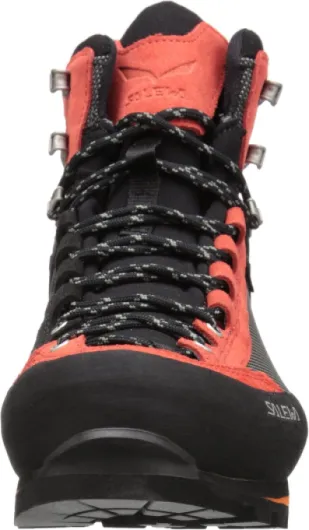
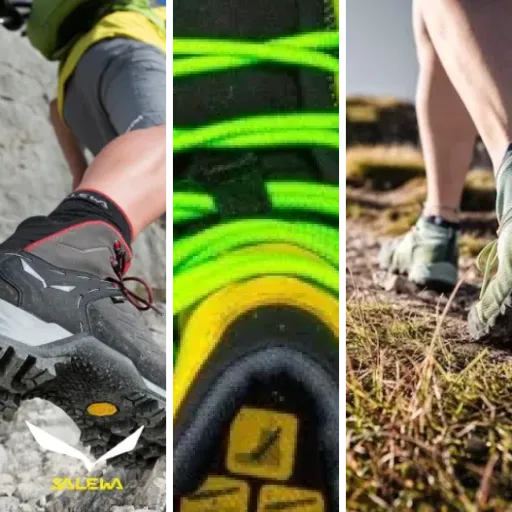
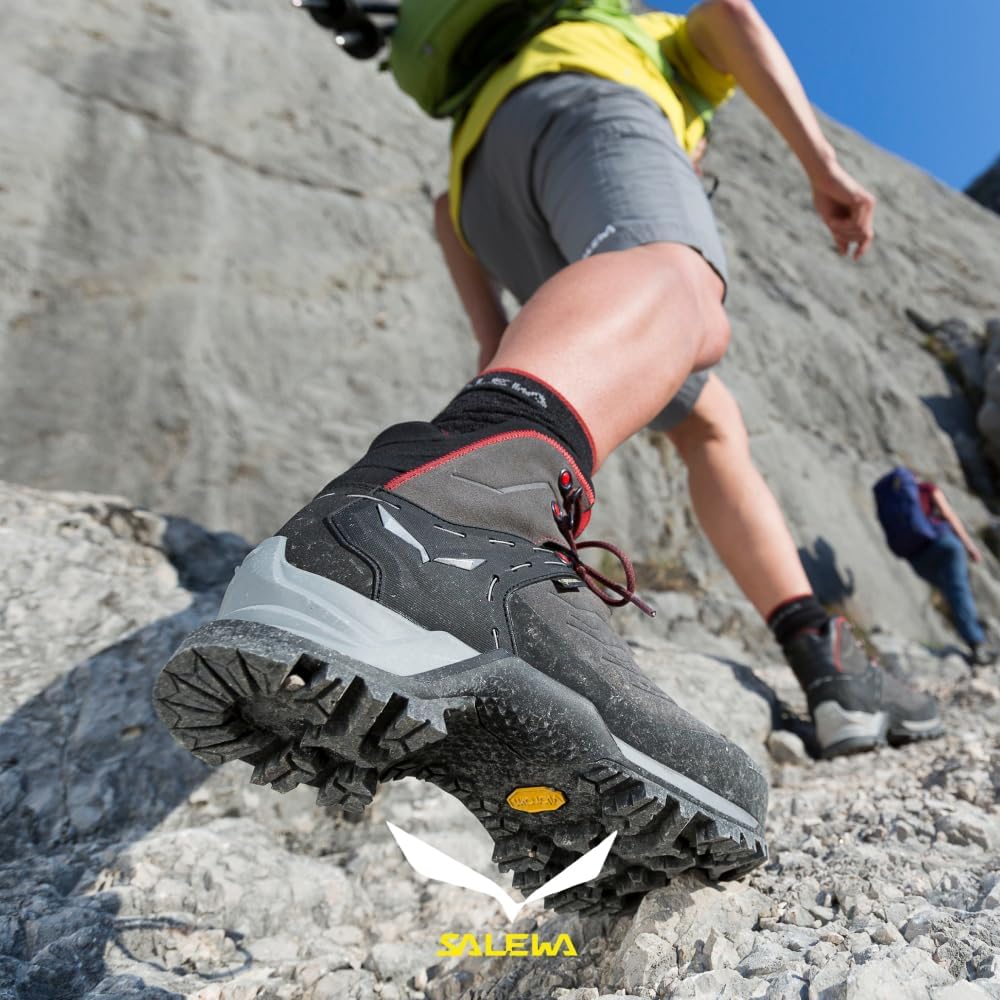
On paper, the Salewa Mountain Trainer Mid GTX is a lightweight trekking boot with a suede and textile upper, GORE-TEX Performance Comfort lining, and a Vibram WTC outsole. In reality, when you pull them out of the box, they look and feel like proper mountain boots, not casual hikers. My pair in Asphalt Fluo Orange has a dark grey base with bright orange accents, which makes them easy to spot but not too flashy. It’s more “technical gear” than fashion sneaker.
The shoe is mid-cut, with a fairly high ankle collar and what Salewa calls a Flex Collar, a kind of curved back at the heel to give more movement when you bend your ankle downhill. The lacing goes quite far towards the toes, more like an approach shoe than a classic hiking boot. That’s part of their 3F system that links lacing, heel and sole for better hold. You can really fine-tune tightness at the midfoot and forefoot if you like your foot locked in.
The midsole is a 2-layer Bilight construction, which basically means they’ve tried to mix cushioning with a shaped, supportive platform. It doesn’t feel marshmallow-soft underfoot; it’s more of a firm, cushioned base that spreads pressure on rocks. The outsole has fairly aggressive lugs with a pronounced heel brake for descents, and the front has a protective bumper for your toes, which I did test by kicking a few rocks unintentionally. It works.
In the hand, each boot feels substantial. Officially it’s around 700 g per shoe, and it matches what you feel: not ultra-heavy, but definitely not a featherweight trail shoe. If you’re coming from trail runners, you’ll notice the extra heft. If you’re used to leather trekking boots, it will feel pretty normal. All in all, the presentation is clear: these are built for proper outdoor use, not for walking the dog in the park.
Pros
- Very secure fit with excellent heel hold and good ankle support
- Waterproof Gore-Tex lining that keeps feet dry in wet conditions
- Sturdy build and Vibram outsole that feel durable on rocky, technical terrain
Cons
- Quite stiff and heavy compared to lighter hiking shoes
- Runs warm, not ideal for hot summer hikes
- Needs a noticeable break-in period before becoming comfortable
Conclusion
Editor's rating
The Salewa Mountain Trainer Mid Gore-Tex is a solid choice if you’re looking for a stiff, supportive trekking boot for real hikes rather than casual strolls. It offers good waterproofing, strong ankle support and a grippy Vibram sole that feels at home on rocky, uneven terrain. Once broken in, the fit is secure with excellent heel hold, and the build quality suggests they’ll last several seasons if you treat them halfway decently. They’re especially well suited to autumn and winter conditions, or cooler mountain climates.
They’re not perfect, though. They’re on the heavy and warm side, and the sole is quite stiff, so for easy, flat trails or summer heat, they’re a bit too much. You also need a few outings to break them in; they don’t feel instantly comfortable like softer hiking shoes. If you mainly do short walks on gentle ground, you’re paying for features you probably won’t use and carrying more boot than you need.
So, who should get them? Hikers who regularly tackle mixed and technical terrain, carry a backpack and want a boot that prioritises protection and stability over lightness and flexibility. Who should skip them? Casual walkers, people who run hot and those who prefer a flexible, sneaker-like feel. For the right user, they’re a pretty solid, confidence-inspiring boot. For the wrong user, they’ll just feel heavy and stiff.