
Summary
Editor's rating
Value for money: good boot, but not cheap
Design: low-key look, more trainer than classic boot
Comfort: almost no break-in, but runs a bit warm
Materials: good leather and Vibram sole, but some compromises
Durability: looks promising, but not a tank
Performance on the trail: solid grip and stability for day hikes
What you actually get with the Mercury IV Mid GTX
Pros
- Comfortable out of the box with minimal break-in needed
- Good grip and stability on typical hiking terrain thanks to Vibram sole
- GORE-TEX and leather combo keeps feet dry in rain and wet grass
Cons
- Runs warm and not very breathable in hotter weather
- Price is on the higher side compared to basic hiking boots

Specifications
View full product page →| Brand | Mammut |
Light boots that don’t feel like bricks on your feet
I’ve been using the Mammut Mercury IV Mid GTX (Black Hot Red, size 7 UK) for a few weeks now on mixed terrain: forest paths, wet grass, a bit of rocky trail, and some rainy city walks. I bought them because I was tired of heavy, stiff boots that feel like you’re dragging ankle weights. I wanted something that still supports the ankle but doesn’t kill my feet after 10–15 km.
First impression: they feel more like chunky trainers than classic leather hiking boots. At around 480 g per shoe, they’re not ultra-light trail runners, but compared to my old full-leather Meindl boots, it’s a clear difference. Walking up stairs or doing quick errands with them doesn’t feel overkill, which is nice if you plan to use them both for hikes and everyday bad-weather use.
I’ve tested them in typical autumn conditions: light rain, muddy paths, and temperatures between about 5–15°C. I haven’t taken them on a week-long mountain trek yet, but for day hikes of 10–20 km and a few longer dog walks, I’ve got a decent idea of what they can and can’t do. I also compared them to my Salomon X Ultra and some cheaper Decathlon boots I still have lying around.
Bottom line from this first round of use: they’re comfortable and light enough for regular day hikes, but they’re not magic. There are a couple of points where Mammut clearly did a good job (grip, comfort out of the box), and a few things that bug me a bit (price, warmth, break-in on the leather). I’ll break it down in the next sections so you can see if they fit your kind of hiking.
Value for money: good boot, but not cheap
In terms of price, the Mammut Mercury IV Mid GTX sits in the mid to upper range compared to other hiking boots. It’s usually more expensive than budget options from Decathlon or similar brands, and in the same ballpark as Lowa Renegade or some Salomon models. For that money, you get leather, Vibram, GORE-TEX, and a well-known brand name. The Amazon rating around 4.4/5 with over a thousand reviews suggests most people are satisfied.
From my personal use, I’d say you do feel where the money goes: comfort out of the box, solid grip, and decent materials. It doesn’t feel cheap or flimsy. At the same time, it’s not miles ahead of some cheaper boots in every aspect. If your hikes are occasional and easy, a lower-priced boot might give you 80% of the performance for less cash. Where the Mammut makes more sense is if you hike regularly, want leather for durability, and care a bit about fit and comfort.
One thing to keep in mind is that these are more suited to 3-season use (autumn/winter/spring) in mild to cool climates. If you live somewhere hot and dry most of the year, the GORE-TEX and leather combo might feel overkill and too warm, which would make the price harder to justify. On the other hand, if you hate wet feet and often deal with rain, mud and chilly conditions, they start to look like a better investment.
Overall, I’d rate the value as good but not a bargain. You’re paying a fair price for a solid, comfortable hiking boot with decent tech and build. There are cheaper options that work, and there are more expensive boots that are tougher or more technical. This sits nicely in the middle: if you catch it on sale, it’s an easy yes. At full price, it’s still reasonable if you actually use it regularly.
Design: low-key look, more trainer than classic boot
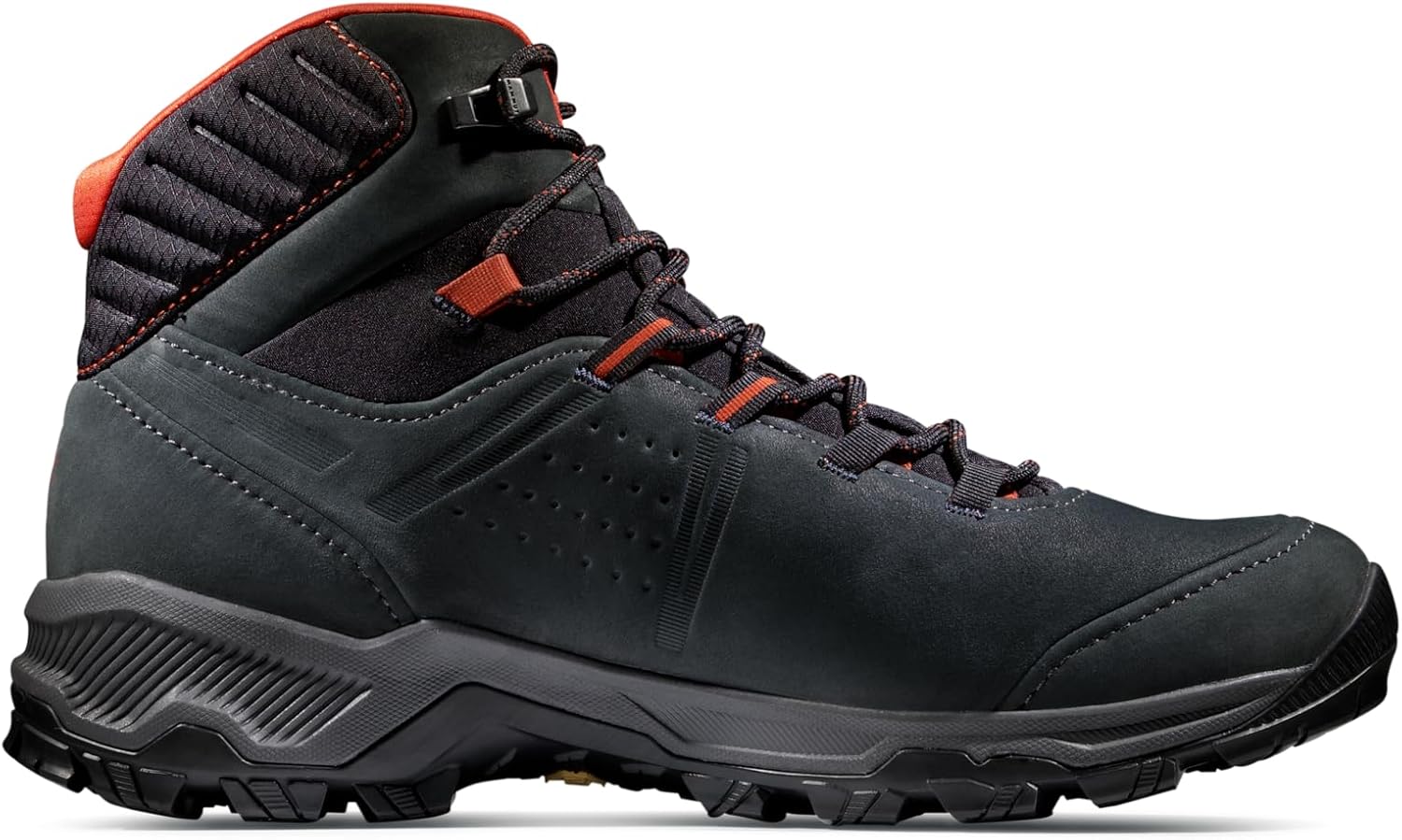
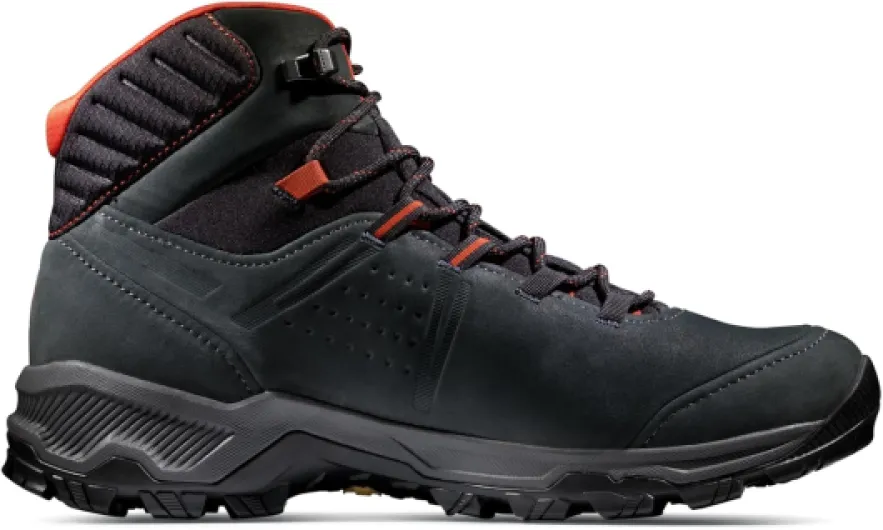
Design-wise, the Mercury IV Mid GTX is pretty low profile. The Black Hot Red version is mostly black nubuck leather with a few red details on the logo and lace loops. If you’re into loud colors, this is going to feel a bit boring, but personally I like that I can wear them in town without looking like I’m about to climb Everest. Compared to my Salomon boots, these look more understated and a bit more "urban".
The shape is slightly slimmer than some chunky hiking boots, especially around the midfoot. The toe box is not huge but not cramped either. I’d say it’s medium width. If you have very wide feet, you might feel a bit squeezed at first. The mid-cut height hits just above the ankle bone, so you get some support without the feeling of a ski boot. The collar padding is decent, not overly thick, but it wraps the ankle fairly well when laced properly.
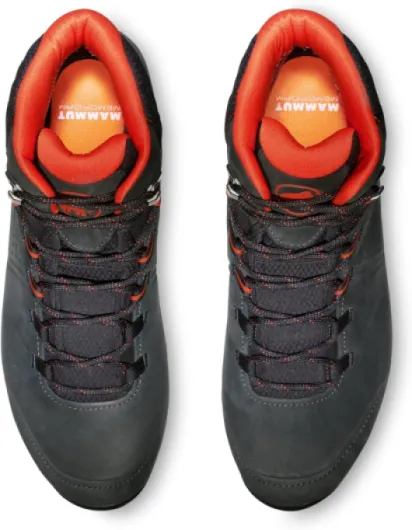
One thing I noticed: the lacing system is simple but effective. Normal eyelets at the bottom, then hooks at the top for quick tightening. You can easily lock your heel down by tightening the lower part more and then adjusting the top hooks. That helps avoid sliding forward on descents. The tongue is well padded and doesn’t dig into the front of the ankle, even when you crank the laces a bit tighter for steep sections.
Overall, I’d say the design is practical and discreet. Nothing fancy, no useless plastic bits, no overdone branding. If you want a boot that looks like a normal black hiking boot and doesn’t scream "outdoor influencer", this does the job. It’s not stylish in a fashion sense, but it’s clean and functional. The only small downside for me is that the red accents are a bit random – I would have preferred all black, but that’s personal taste, not a dealbreaker.
Comfort: almost no break-in, but runs a bit warm
Comfort was the main reason I picked these up, and on that front they’re pretty good. Out of the box, I wore them for a 7–8 km walk on mixed terrain and didn’t get any blisters. The leather was a bit stiff around the forefoot on the first day, but it relaxed quickly. After 2–3 outings, they felt much more natural. Compared to my older full-leather boots that needed a week of pain to break in, these are much easier.
The 3D memo foam in the lining and insole is noticeable. The heel area, especially, feels nicely cupped, and there’s enough cushioning under the heel and midfoot to take the edge off rocks and roots. If you’re used to running shoes, you’ll still feel this is firmer, but for a hiking boot, it’s on the comfortable side. I did a 15 km hike with some decent elevation and didn’t feel that "brick foot" sensation at the end of the day.
On the downside, the combination of GORE-TEX + leather means they run a bit warm. In cool weather (5–10°C), it’s perfect. In 15–18°C with some climbing, my feet started to overheat, even with decent socks. Ventilation is clearly not their strong point. If you mostly hike in hot summer conditions, I’d look for something more breathable. But for autumn, winter and early spring, the warmth is more of a plus than a minus.
Fit-wise, they’re true to size for me in 7 UK. I’d call the fit medium: not super wide, not super narrow. There’s enough room in the toe box to avoid black toenails on descents, as long as you lace properly. If you have very wide feet or big bunions, you might find them a bit snug and need to go half a size up. Overall, comfort is one of the strong points, especially if you’re coming from heavier boots. Not perfect, but clearly more pleasant to wear for everyday walking and day hikes.
Materials: good leather and Vibram sole, but some compromises
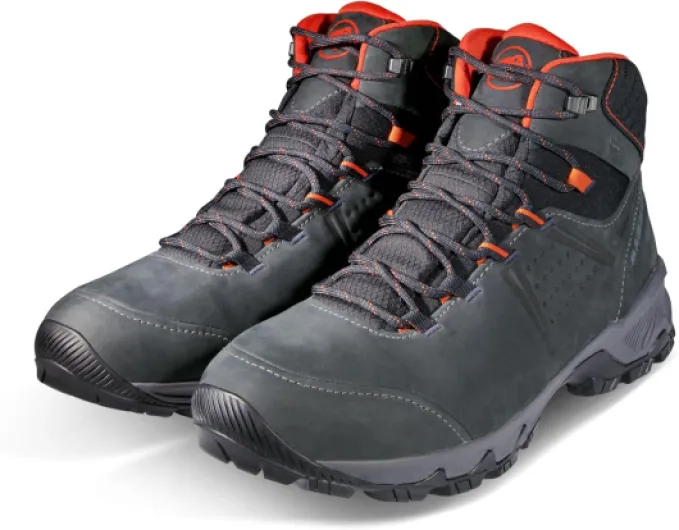
The upper is terracare nubuck leather, which is one of the main selling points. It feels decent in hand: not super stiff, not super soft either. Out of the box, it has a slightly rough texture, typical of nubuck, and it does soften after a few walks. Mammut pushes the sustainability angle (terracare, bluesign, etc.), which is nice, but from a user point of view what matters more is how it behaves: it seems tough enough to handle branches, rocks, and a bit of scraping without marking too quickly. After a few muddy hikes and a basic wipe down, the leather still looks okay.
Inside, you get synthetic lining plus the GORE-TEX membrane. It doesn’t feel luxurious or anything, but it’s smooth enough with hiking socks and I haven’t had any chafing on the heel or ankle. The insole is memory foam, which is quite soft underfoot. It molds a bit to your foot shape after a couple of uses. If you like a firmer, more responsive feel, you might swap it for your own insoles, but for casual hikers the stock one is fine.
The sole is Vibram rubber with a decent lug pattern. The rubber compound has good grip on dirt and rocks, and doesn’t feel too hard. It’s not a super soft sticky rubber like approach shoes, but for hiking it’s a good compromise between traction and durability. The midsole is EVA, which is standard these days. It gives basic cushioning without being bouncy. After several long walks, there’s no obvious compression or weird creasing.
Overall, the materials are pretty solid for the price range, but not premium luxury either. Leather upper and Vibram sole are nice to have compared to cheaper all-synthetic boots. On the flip side, the lining and laces feel a bit generic, nothing special. I’d keep an eye on the laces over time – they’re fine now, but they don’t give that "built to last forever" vibe. Still, no real red flags so far, just a reasonable mix of durability and comfort-oriented choices.
Durability: looks promising, but not a tank
After a few weeks, I obviously can’t give a multi-year verdict, but I can talk about early signs. The leather upper is holding up nicely: no cracks, no weird creases, and it doesn’t scratch too easily. Mud and dirt wash off with a damp cloth and a bit of brush work. I’d still recommend treating the nubuck with a suitable spray to help it age better and keep the water beading off the surface.
The Vibram sole shows minimal wear so far, even after several hikes on rocky paths and some tarmac sections. The lugs still look almost new. That’s a good sign, especially if you plan to use them partly in town or on harder surfaces. The stitching around the upper and sole looks clean, with no loose threads yet. The toe area has some light scuffing, which is normal, but nothing that affects function.
Inside, the lining and insole are also in good condition. The memory foam hasn’t flattened completely yet, though I can feel it’s starting to mold to my foot shape. That’s expected. I think in a year or so of regular use, many people will probably replace the insole anyway, but that’s standard for most hiking boots. The only slightly weaker point in terms of feel are the laces – they work, but they don’t feel as tough as the rest of the boot. I wouldn’t be shocked if they’re the first thing to fail.
Overall, durability seems decent to good, but I wouldn’t classify these as indestructible mountaineering boots. They’re lighter, more comfortable, and that usually means a bit less beefy construction. For normal use (weekend hikes, holidays, some daily wear in bad weather), I’d expect them to last several seasons if you clean and treat the leather from time to time. If you abuse them every day in harsh terrain, you’ll probably hit their limits faster.
Performance on the trail: solid grip and stability for day hikes
On the trail, the Mercury IV Mid GTX performs reliably for what it’s built for: day hikes and moderate terrain. The Vibram sole grips well on dirt, forest paths, and dry rock. On wet rock, it’s like most hiking boots: you still have to watch your step, but I didn’t have any scary slips. In mud, the lugs bite decently, and they shed dirt reasonably well, though if you go through deep sticky mud, they’ll clog like any other boot.
Stability is good for a mid-cut. The ankle support is enough to feel safer on uneven ground compared to low-cut shoes, but it’s not a rigid boot. You can still move your ankle, which I actually like for long walks. The heel lock is decent: when laced properly, I had minimal heel lift, even going downhill. The EVA midsole gives enough cushioning that sharp rocks don’t feel too brutal underfoot, but you still feel the terrain, which is useful for balance.
Water resistance has been fine so far. I walked through wet grass, shallow puddles and light rain without any water getting in. The gusseted tongue and GORE-TEX membrane do their job. I haven’t stood in ankle-deep water for 10 minutes, so I can’t comment on extreme situations, but for typical rainy hikes, they’re clearly up to the task. The trade-off is, as mentioned earlier, less breathability and warmer feet.
Where they’re less ideal is for very technical or heavy load hiking. If you’re carrying a huge backpack or doing steep, rocky alpine routes, you might want something stiffer and more supportive. These boots are more in the "comfortable all-rounder" category. For weekend hikes, day trips and general outdoor use, they perform well and feel secure. They’re not going to turn you into a mountain goat, but they handle normal hiking conditions without drama.
What you actually get with the Mercury IV Mid GTX
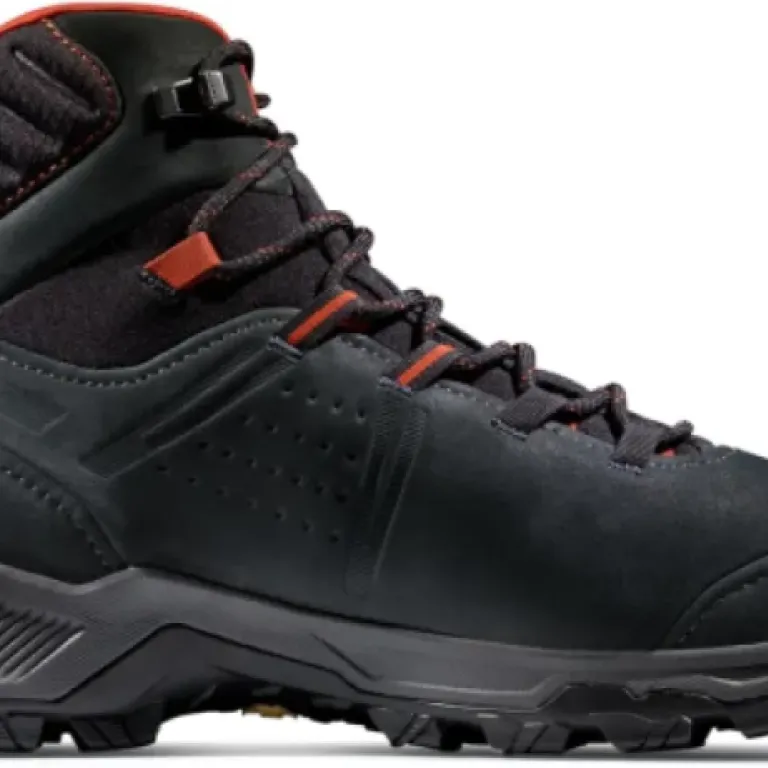
On paper, the Mercury IV Mid GTX is a mid-cut hiking boot with a leather upper, GORE-TEX membrane, rubber Vibram sole, and memory foam in the insole and lining. It’s marketed as a lightweight, all-round hiking boot for day hikes rather than hardcore alpine stuff. The pair I have is the Black Hot Red colorway – basically black with small red accents, nothing flashy. In size 7 UK, each boot is around that 480 g mark, so not super light, but definitely lighter than traditional mountain boots.
The boot sits around the ankle (mid-top height). It has a lace-up closure with standard metal eyelets and hooks at the top. The tongue is gusseted with an elastic GORE-TEX part, which is supposed to help keep water and dirt out. Inside, you get synthetic lining and a memory foam insole that’s removable. The outer is terracare nubuck leather, which is supposed to be more responsibly produced, and the sole is a Vibram rubber outsole with a fairly aggressive tread pattern.
The boot is clearly aimed at people who do regular hikes on mixed terrain: forest trails, gravel, light mountain paths, maybe a bit of wet rock, but not ice or heavy snow. I’d put it in the same category as Salomon X Ultra, Lowa Renegade, that kind of boot – so more comfort and versatility than heavy-duty mountaineering. It’s also sold as water-resistant thanks to GORE-TEX, so it’s meant to handle rain, puddles and wet grass without turning your socks into sponges.
From a user point of view, the promise is: you get a boot that’s supportive enough for uneven ground, still comfortable for longer walks, and that you can keep for several years because of the leather upper and decent build. That’s the theory. In practice, some of that checks out, some is more "good but not mind-blowing". I’ll go into the details in the next sections.
Pros
- Comfortable out of the box with minimal break-in needed
- Good grip and stability on typical hiking terrain thanks to Vibram sole
- GORE-TEX and leather combo keeps feet dry in rain and wet grass
Cons
- Runs warm and not very breathable in hotter weather
- Price is on the higher side compared to basic hiking boots
Conclusion
Editor's rating
After using the Mammut Mercury IV Mid GTX for a while, my overall take is pretty straightforward: it’s a solid, comfortable hiking boot for people who do regular day hikes and want something lighter than classic leather boots but still supportive. The mix of leather upper, Vibram sole and GORE-TEX membrane works well for typical European autumn and winter conditions. Grip is good, water stays out, and the ankle feels supported without being locked in a rigid shell. Comfort out of the box is clearly one of its strengths.
It’s not perfect though. The boot runs on the warm side, so it’s not ideal for hot summer hiking. Breathability is limited, and if you tend to have sweaty feet, you’ll notice it. It’s also not the toughest boot on the market – fine for normal hiking, less suitable for heavy loads or very technical alpine routes. And the price is on the higher side compared to entry-level options, so if you only hike a couple of times a year on easy paths, you’re probably paying for features you won’t fully use.
I’d recommend the Mercury IV Mid GTX to hikers who go out regularly, like weekend forest or mountain trails, want dry feet in the rain, and appreciate a boot that feels closer to a sturdy trainer than to a rigid mountain boot. If you often walk in cooler, wet conditions, it fits very well. If you mostly hike in hot weather, prefer ultra-light shoes, or need something for heavy backpacking, I’d look elsewhere. Overall, it’s a good, no-nonsense choice that gets the job done without trying to be flashy.